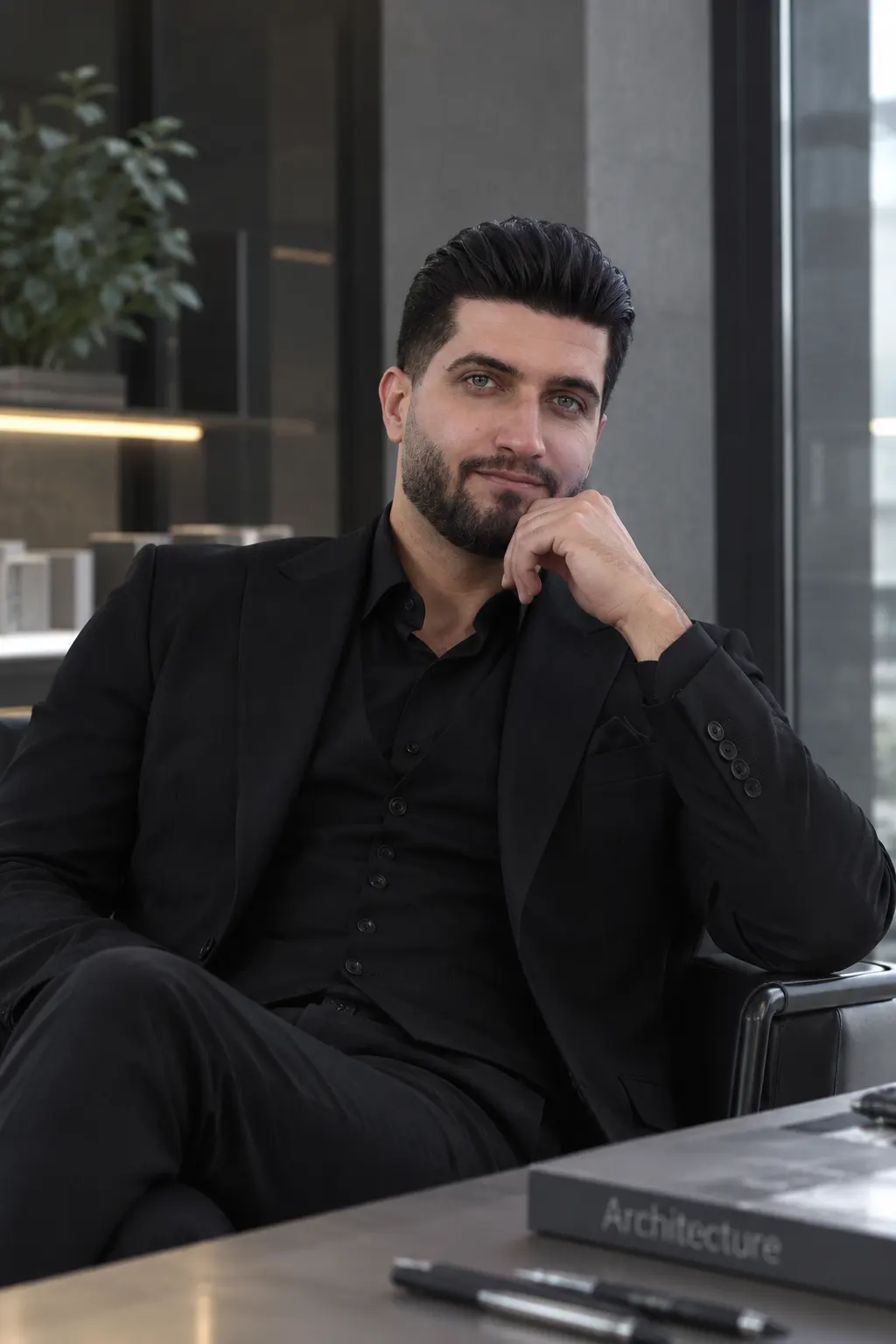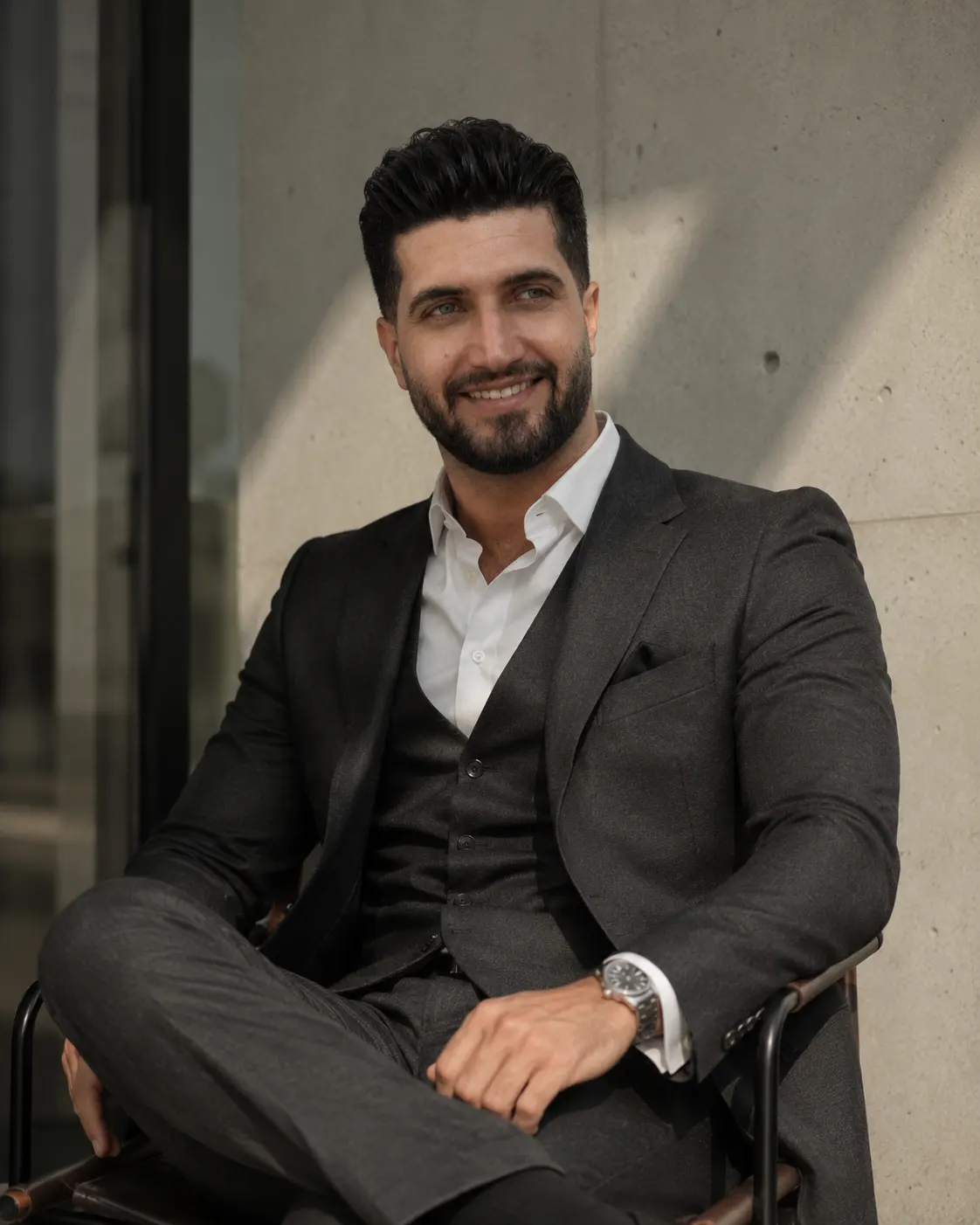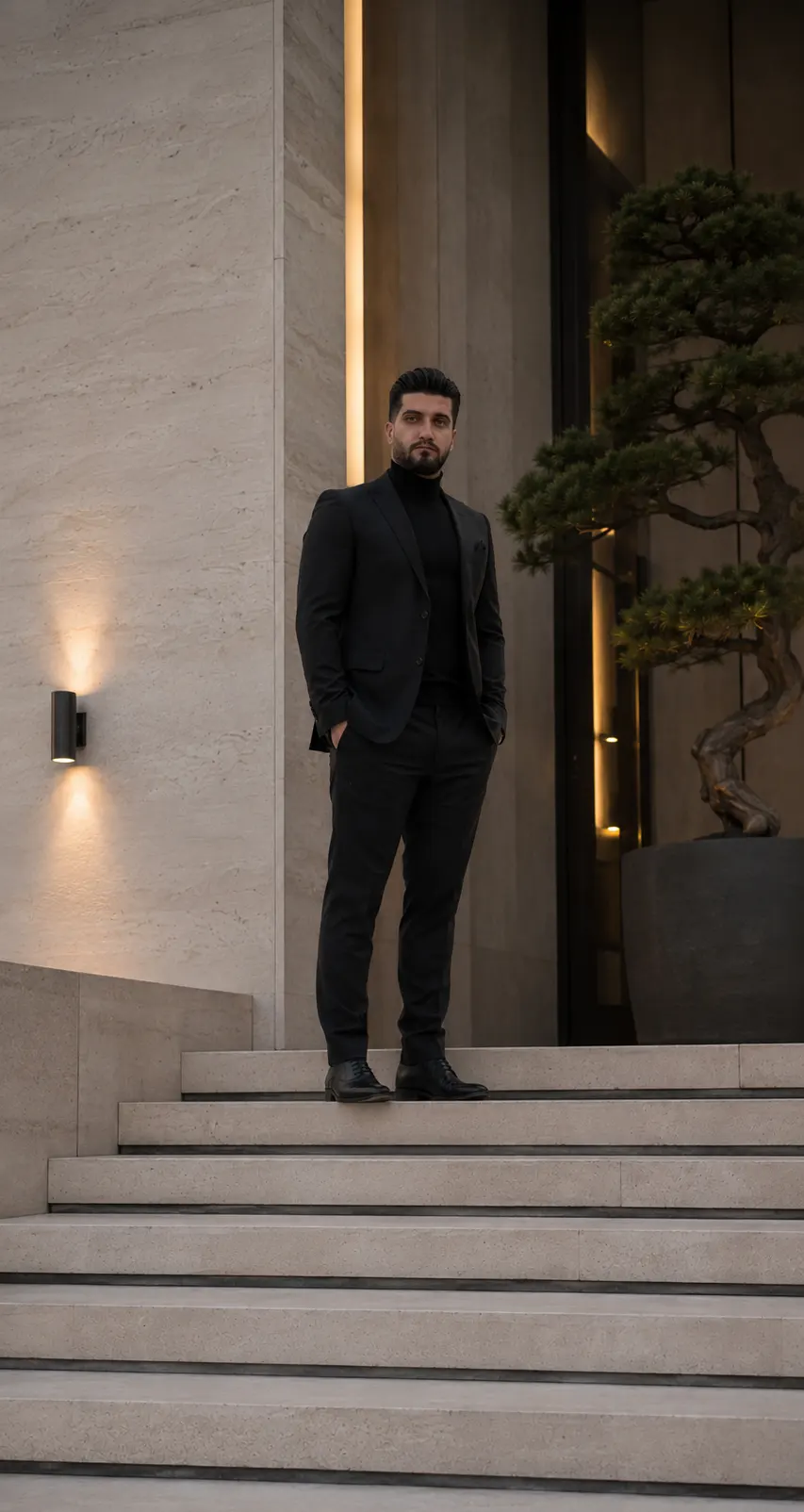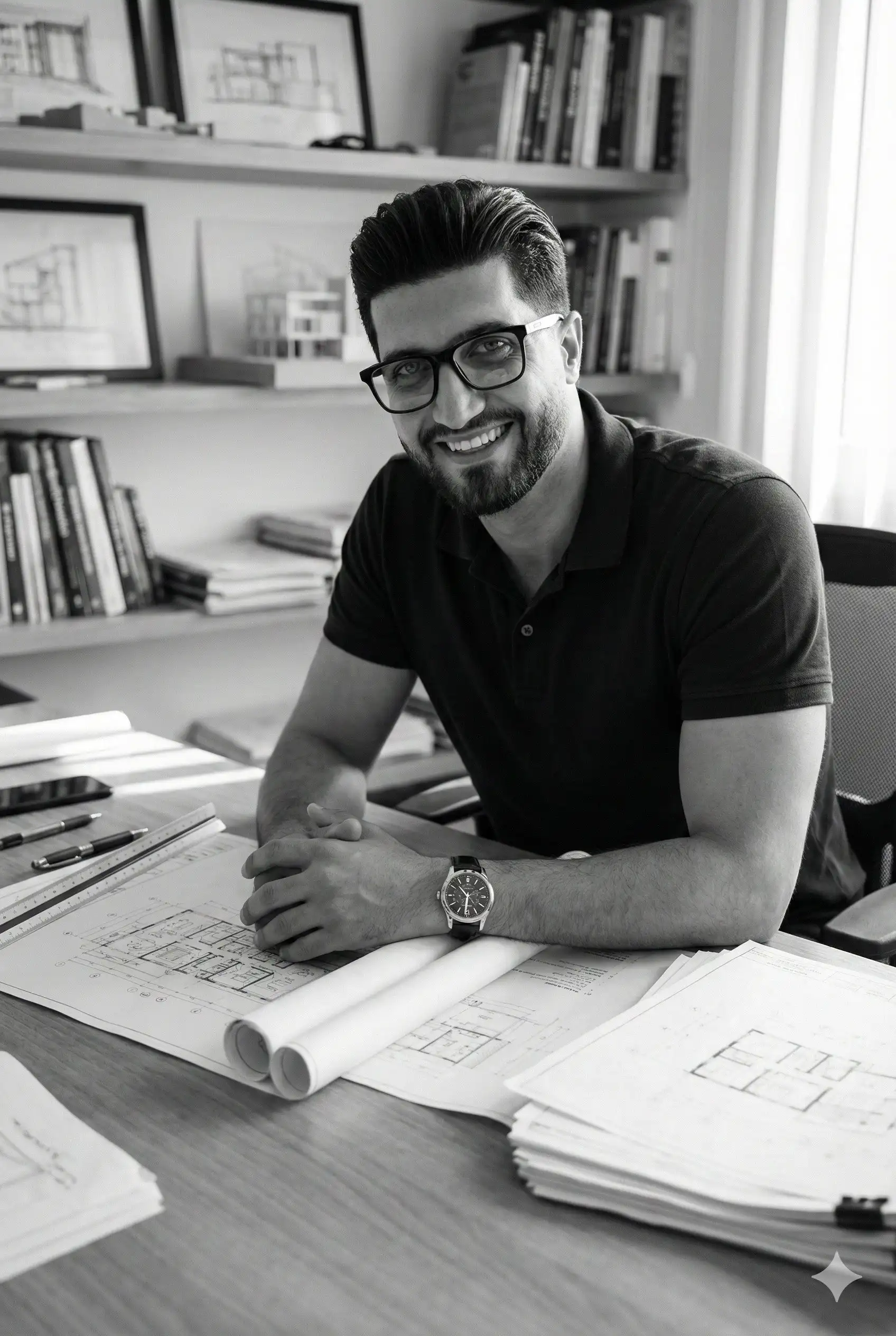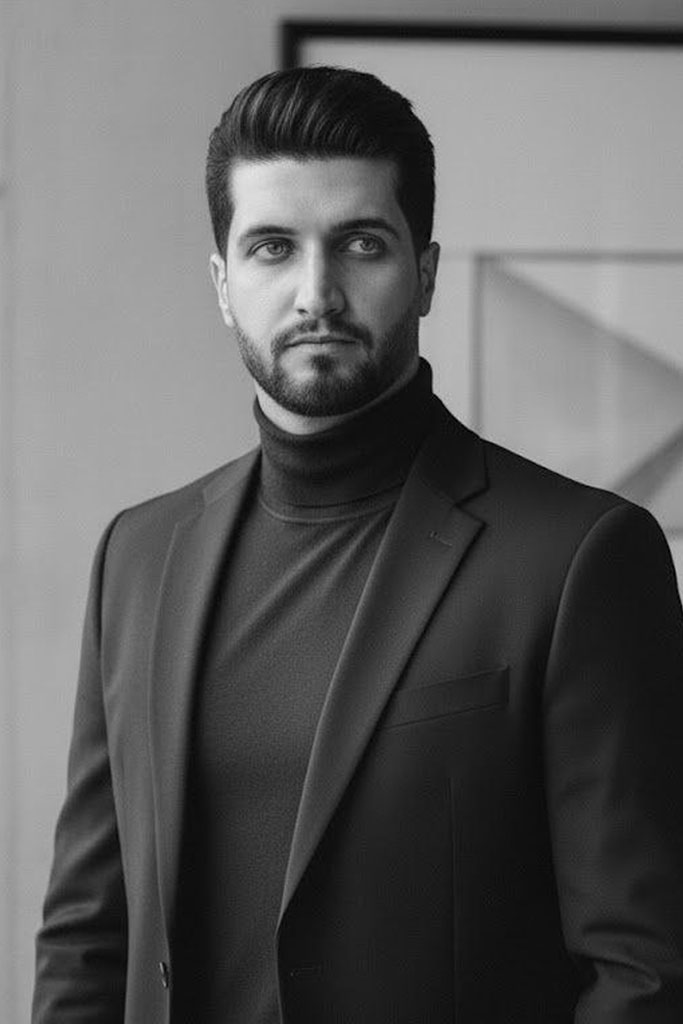
Mostafa Farid
Architect & Co-Founder
Mostafa Farid is an Iranian architect, architectural designer, and co-founder of Farid + Arjmand Architects. Born in Tehran in 1989, he began his architectural education in 2008 after ranking among the top national university entrance candidates. He graduated in Architecture from Qazvin University in 2012.
His professional career began while still at university, working alongside Saber Arjmand on urban design projects, municipal developments, and architectural education. Their long-term collaboration eventually led to the establishment of Farid + Arjmand Architects, an independent architectural practice specializing in contemporary architecture, facade design, villas, luxury residences, and interior architecture.
Professional Background
Farid + Arjmand Architects initially focused on architectural facade design, gradually expanding into architectural design, interior design, villa design, landscape architecture, executive documentation, and multidisciplinary project coordination.
In 2015, the studio entered a new phase with the Azita Residential Project, integrating architectural design with construction execution. Since then, the practice has completed projects across residential, commercial, office, hospitality, restaurant, and industrial sectors.
Throughout his career, Mostafa Farid has designed projects both in Iran and internationally. His portfolio includes luxury residential palaces, villas, and high-end developments throughout Baghdad, Iraq, alongside numerous architectural projects across Iran.
Among the studio’s notable works are Hachirud Project, Bisheh Palace, Dastoor Palace, Palestine Villa, Pardis Villa, and several luxury residential palaces in Baghdad.
Design Philosophy
Design serves the client—not the architect.
This principle defines Mostafa Farid’s approach to architecture.
Architecture should never become a platform for personal expression alone. Every project begins with understanding the client, the site, the culture, the climate, and the practical realities of construction before any formal language is explored.
Rather than imposing a signature style, every project develops its own architectural identity through careful analysis and thoughtful design decisions.
For Mostafa Farid, successful architecture is measured not by how recognizable the architect becomes, but by how naturally the building responds to the people who use it.
Good concepts solve problems—they do not invent them.
Architectural concepts should emerge from the real conditions of a project rather than unlimited artistic freedom.
Site constraints, existing structures, urban regulations, climate, natural light, structural systems, and client requirements all provide opportunities for architectural thinking.
Instead of beginning with a predefined form, Mostafa Farid believes that architecture should grow from careful analysis, transforming limitations into design opportunities.
This methodology has become a defining characteristic of many residential renovations, luxury villas, and facade design projects developed by Farid + Arjmand Architects.
Modern architecture relies on materiality and visual mass. Classical architecture relies on geometry and shadow.
Although these architectural languages appear fundamentally different, both are governed by clear design principles.
Modern architecture derives its identity from proportion, material quality, structural expression, and visual weight.
Classical architecture creates its character through geometry, hierarchy, depth, proportion, and carefully controlled shadow.
For Mostafa Farid, selecting an architectural language is never an aesthetic decision alone—it is always the outcome of analyzing the project’s function, context, client expectations, and long-term performance.
The architectural style belongs to the client. The responsibility belongs to the architect.
One of the most common misconceptions in architecture is that architects should always design within a single recognizable style.
Mostafa Farid believes the opposite.
Whether the client requests contemporary, neo-classical, classical, or minimalist architecture, the architect’s responsibility is to transform that vision into architecture of lasting quality rather than forcing a personal aesthetic onto the project.
Every project developed at Farid + Arjmand Architects follows this principle, allowing each building to develop its own architectural identity while maintaining consistent design quality.
Timeless Architecture
For Mostafa Farid, architecture is never judged solely by its appearance.
Buildings become valuable when they continue serving their users decades after construction—through functional planning, durable materials, thoughtful proportions, and coherent architectural identity.
Timeless architecture is the result of informed decisions made throughout the design process rather than short-term visual trends.