
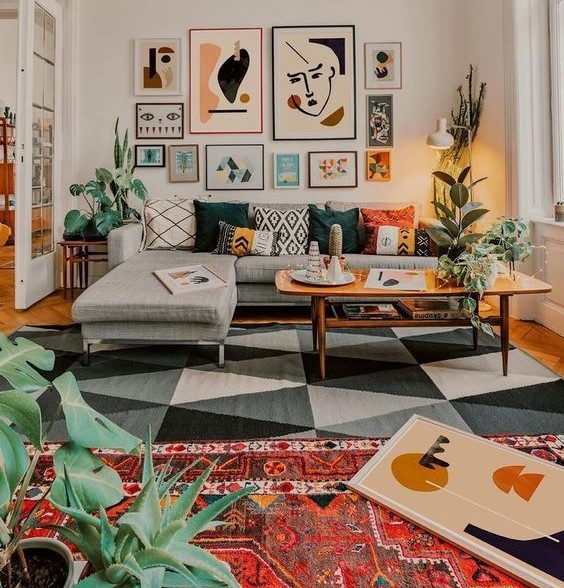
Bohemian, or boho, interiors combine colour, texture and personal objects to create an individual space. Visual freedom does not mean abandoning organisation. A room should remain comfortable to move through and use before becoming a collection of accessories.
The term and its background
In artistic usage, “bohemian” became associated with unconventional lives among artists and writers, particularly in Europe. Reducing contemporary boho decoration to migration from Bohemia or to one ethnic group oversimplifies its background. The existing bohemian decorating guide illustrates the approach, while Farid + Arjmand projects show broader architectural work.

Colour and texture
In bohemian interior design, select shared colours that connect rugs, cushions, curtains and objects. White walls can provide a quiet background, but they are not a requirement. Warm and deep colours are possible too. Test combinations under the room’s lighting instead of treating a palette as a guaranteed emotional effect.
Furniture and layered decoration
Old and new pieces can sit together, combining timber, fabric and metal. A matching suite or consistently low furniture is not compulsory. Layered textiles can add depth, but should remain stable, cleanable and clear of doors. One meaningful object may create a stronger focus than a crowded group of unrelated accessories.
Balance in a smaller room
Place the main furniture first, then concentrate patterns in selected areas. Keep storage accessible and preserve circulation and usable seating space. Boho’s richer composition differs from minimalism, but it need not resemble a storeroom. Repeating a colour or texture gives different pieces a visible relationship.

Plants, mirrors and metallic objects
Choose plants for the available light and maintenance capacity. Woven baskets and suspended holders are options, with safe fixing and protection against water leaks. Position mirrors according to what they reflect and whether they introduce glare. An antique frame or metallic object can contribute character without dominating every surface.
A personal, workable composition
Start with a few favourite pieces and refine the arrangement over time. A bedroom may need less visual intensity than a living room, according to its user. The aim is not to copy a ready-made image, but to create a personal space that remains useful in everyday life.