
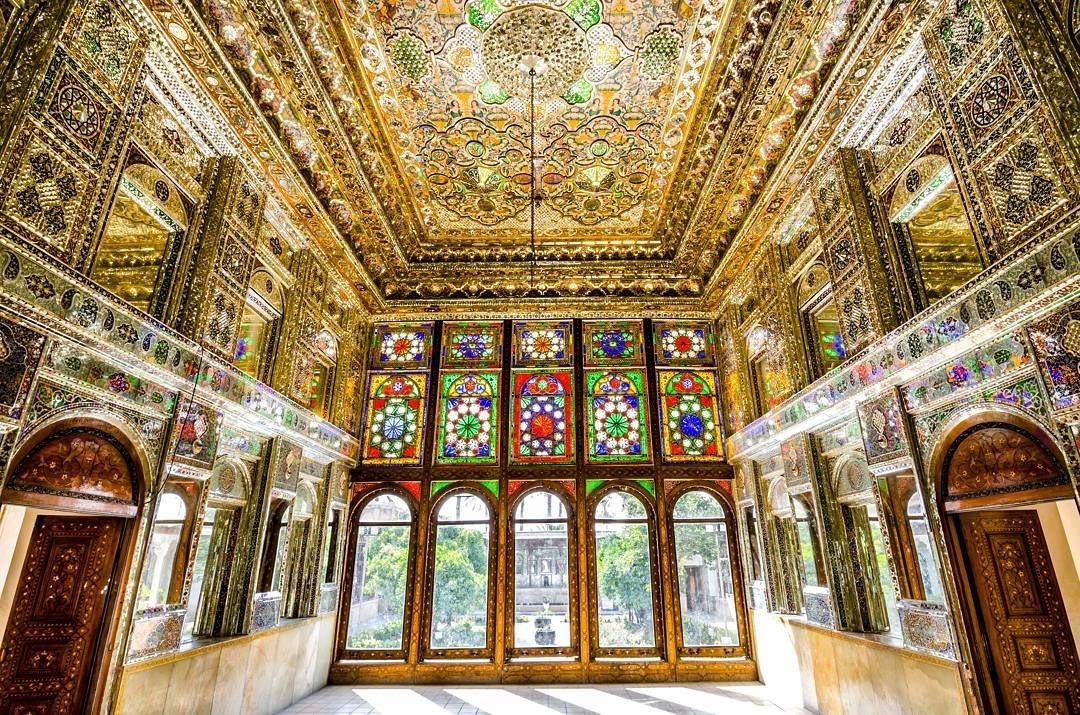
Traditional Persian architectural crafts bring together skilled workmanship, material knowledge and design. From glazed tiles and carved plaster to timber screens and coloured glass, these elements help shape the character of a building and the experience of its spaces.
Their role extends beyond decoration. A patterned window changes how daylight enters a room, while the depth of a plaster relief becomes visible through light and shadow. Understanding these crafts offers a way to appreciate historic Iranian architecture and consider how handmade details can be used in contemporary design.
What Are Architectural Crafts?
Architectural crafts are building elements and finishes whose character depends on skilled making, shaping, assembling or decorating. In traditional Iranian architecture, craftspeople worked with materials such as clay, gypsum, wood and glass to create details suited to a particular space.
Examples include:
- Handmade tiles and decorative tilework
- Carved plaster and ornamental stucco
- Orosi windows with timber latticework and coloured glass
- Crafted timber ceilings, doors and wall panels
- Hand-finished wooden flooring and joinery
These crafts are not a single architectural style. Their patterns, materials and methods vary across regions, periods and building types.
Persian Tilework: Colour, Pattern and Skilled Assembly
Tilework is one of the most recognisable features of Persian architecture. Glazed surfaces introduce colour and pattern to walls, entrances, domes and interior spaces. Their visual effect depends on both the design of individual pieces and their arrangement across a larger surface.
Mosaic Tilework
Mosaic tilework, often called mo’arraq, uses shaped pieces of glazed tile assembled into a larger composition. Geometric patterns, floral motifs and inscriptions can all be formed through this process.
The Mihrab from the Madrasa Imami in Isfahan, held by The Metropolitan Museum of Art, illustrates how small glazed pieces can form an intricate architectural composition.
Haft-Rang Tiles
Haft-rang, meaning “seven colours,” is associated with multicoloured tile decoration. Unlike a mosaic assembled from individually shaped pieces, the design is painted across tile surfaces that come together to form a larger panel.
Both approaches require careful coordination of pattern and layout. For contemporary applications, tile selection should also consider the intended location, moisture exposure, maintenance and installation requirements.
Decorative Stucco and Persian Plasterwork
Decorative plasterwork, known in Persian as gachbori, gives architectural surfaces depth and detail. Craftspeople shape or carve plaster to create geometric compositions, floral ornament, borders and inscriptions.
Its effect is closely related to lighting. Shallow relief produces subtle shadows, while deeper carving creates a stronger contrast between raised and recessed areas. The scale of the ornament also matters: a detail intended for close viewing may need a different treatment from one placed on a high ceiling.
In a contemporary interior, a crafted plaster feature can define an entrance, frame an opening or give emphasis to a wall. Its design should respond to the room’s proportions and lighting rather than simply fill an empty surface.
Orosi Windows: Timber Latticework and Coloured Glass
Orosi windows combine timber framing, patterned latticework and coloured glass. Traditionally associated with Persian houses and other historic buildings, they often incorporate vertically sliding sections.
Their appeal comes from the relationship between craftsmanship and light. The timber divides the opening into smaller shapes, while coloured glass changes the light falling across floors, walls and furnishings.
Depending on their design and position, Orosi windows can:
- Create patterns of coloured daylight inside a room
- Filter views while maintaining a visual connection with the outside
- Provide a degree of privacy through patterned screening
- Give an opening a distinctive architectural identity
- Allow ventilation where operable sections are provided
Their performance should be assessed for each setting. Pattern, glass colour, orientation and room geometry all influence daylight; traditional appearance alone does not guarantee thermal insulation or glare control.
Crafted Wood in Ceilings, Walls and Floors
Woodworking also contributes to architectural character through ceilings, doors, wall panels and flooring. Grain, joint layout, carving and surface finish can make these elements feel either restrained or highly ornamental.
Successful detailing considers more than appearance. Timber selection, moisture conditions, movement and maintenance should inform how a component is designed and installed. A carefully made joint or a well-proportioned panel can be as expressive as elaborate carving.
Using Architectural Crafts in Contemporary Design
Traditional craftsmanship can be incorporated into modern spaces without reproducing an entire historic interior. A tile panel, a timber screen or a modest plaster relief can introduce material richness while keeping the overall composition clear.
The most useful starting point is the purpose of the detail: should it filter daylight, frame a view, mark an entrance or create a focal point? Material and technique can then be selected to support that purpose.
The value of Persian architectural crafts lies in the connection between design and making. When considered as part of the architecture from the outset, handmade elements can give a space a distinctive character grounded in material, proportion and skilled workmanship.