
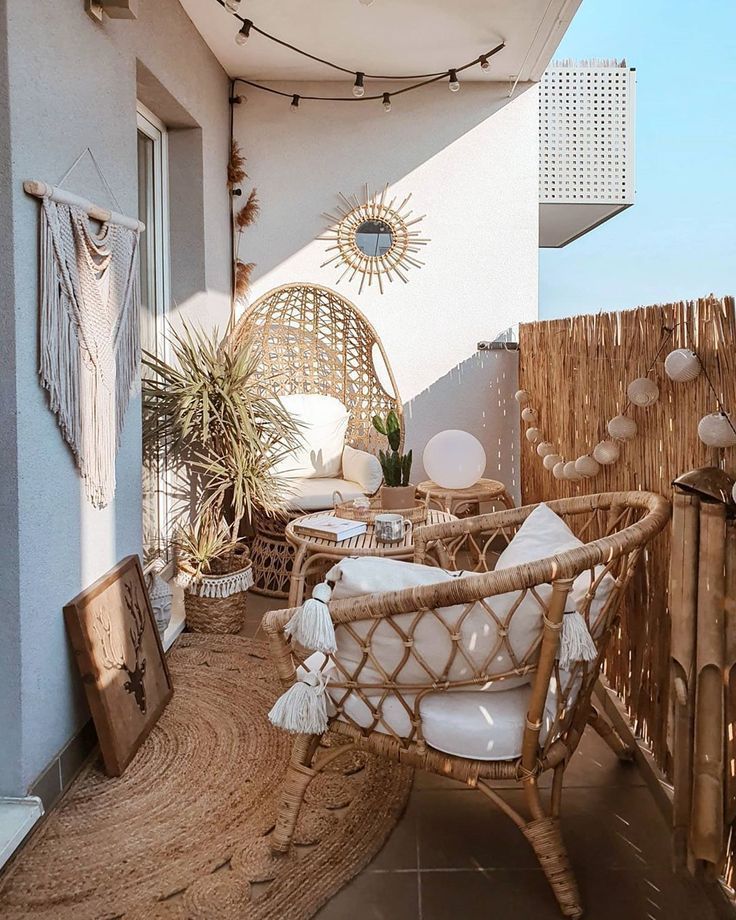
A small balcony can provide a useful outdoor place when its layout starts with dimensions and everyday use. Decoration should support sitting, planting or a short pause outdoors without blocking the door, drainage or the route through the space. A few well-chosen elements often work better than filling every corner.

Measure and define the main activity
Record the depth, length, door swing and fixed elements before choosing furniture. Decide whether the priority is a quiet seat, a small table or plants. Test the arrangement with someone seated and the door open, rather than judging it from an empty plan.
For inspiration, review residential projects with attention to how outdoor and indoor spaces connect. A layout that works in a large terrace may not suit a narrow balcony; dimensions and access take priority over a copied image.
Furniture that fits the space
Lightweight, foldable or stackable furniture can make a compact balcony easier to adapt. A shallow bench may suit one edge, while a small table can support occasional use. Check the furniture’s outdoor suitability, stability and comfort as well as its visual scale.
Hanging seats and suspended features require suitable support and a checked installation. Do not attach them to a decorative ceiling or assume that an existing railing can carry them. Keep furniture from creating an easy climbing route beside an edge, especially where children use the space.

Plants, privacy and drainage
Choose plants for the actual sunlight, wind and available maintenance. Use containers that remain stable and allow excess water to drain without staining surfaces or obstructing outlets. A vertical arrangement can save floor area, but its fixings and irrigation still need attention.
A screen or planting may improve privacy, provided it does not interfere with required guarding, safe ventilation or useful light. Plants can make the balcony more pleasant, but they should not be presented as a reliable way to remove urban air pollution.
Flooring and outdoor materials
Choose finishes suited to wet outdoor conditions and the existing construction. Check transitions at the door, falls to drainage and the ability to clean beneath pots. Adding a decorative layer should not trap water or hide a drainage problem.
Coordinate colours and textures with the adjoining room without treating the balcony as an indoor room exposed to weather. A rug, cushion or timber item needs appropriate material and care. In interior design, this threshold deserves the same attention as the main seating area.

Lighting and a restrained final composition
Plan lighting around sitting, entry and the view from inside. Use fixtures suitable for their exposure and position the light to avoid unnecessary glare toward neighbours. Decorative lighting cannot compensate for unsafe access or a crowded arrangement.
Finish with a limited group of accessories that are easy to clean and secure. Leave space to move and maintain the plants. Review the layout at night and after watering: the balcony should remain usable, with the door, edge and drainage clear.