
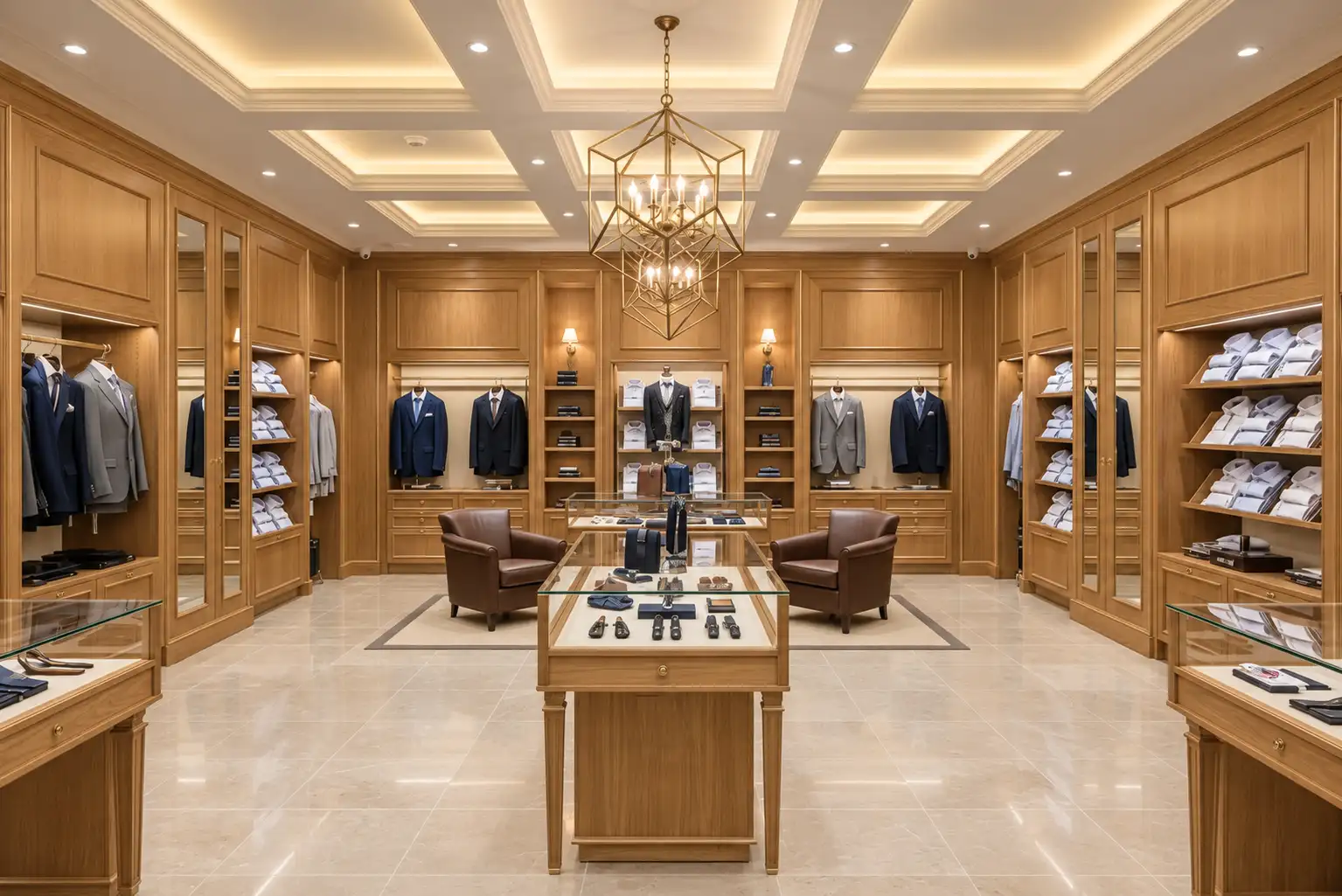
Boutique design connects product presentation with brand identity and a comfortable shopping experience. A clear, practical space can support the business, but design alone does not guarantee higher sales. Products, pricing, service and marketing remain important.
The shopfront and first display
A window and entrance establish the first impression. Select a clear group of products rather than putting the entire stock on view. Seasonal displays can change while the entrance remains legible. Coordinate facade design with the host building and shopping-centre requirements where applicable.

Plan the customer journey
In interior design, map entry, browsing, selection, fitting and payment. Avoid placing the counter across the main route. Organise merchandise for its type, dimensions and comparison needs. Staff movement and replenishment also need space without repeatedly interrupting visitors.
Identity and materials
Modern, classical and vintage languages are options to test against the brand, not fixed recipes for particular products. Modern decoration is not automatically unsuitable for a historically themed perfume shop, and vintage styling cannot guarantee its success. Choose maintainable finishes that support the merchandise rather than compete with it.
Circulation, fitting rooms and storage
The existing interior circulation reference offers ways to read spatial relationships. Make fitting rooms easy to find, with privacy, appropriate lighting and space for belongings. Check possible queues at payment and popular displays. Storage and staff facilities belong to the brief even when they do not appear in promotional images.

Light and product colour
Test lighting on actual products, especially fabrics and colours. Combine clear general light with appropriate accent lighting while controlling glare in mirrors and the window. A rendered image is not enough to evaluate colour appearance. Include lamp replacement and maintenance access in the design.
Flexible fixtures and daily operation
Design racks and shelves for product weight, dimensions and changing collections. Review reach, stability and cleaning. Plants and accessories are optional when they do not conceal merchandise or obstruct circulation. A successful boutique connects its visual identity with daily work rather than treating decoration as a permanent display.