
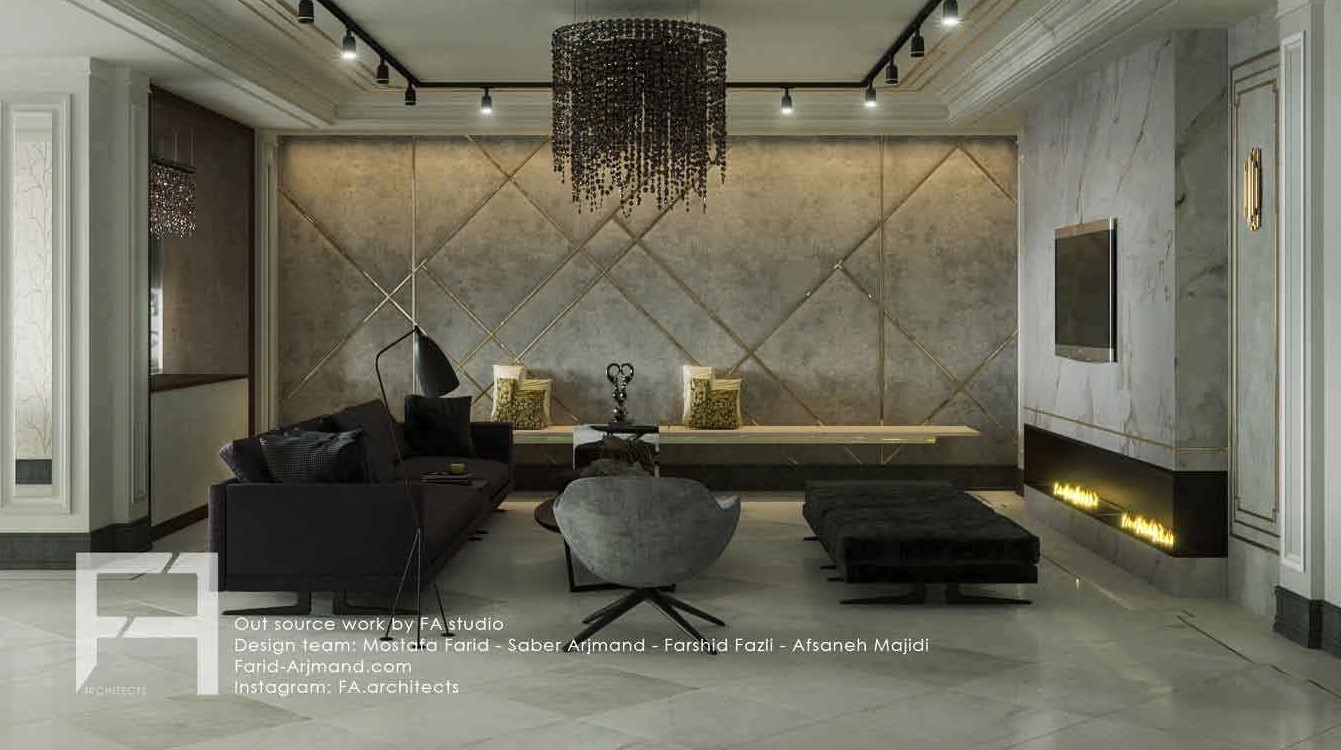
Modern Interior Design
Modern architecture has roots in the late nineteenth century and developed through movements of the twentieth century. Simplicity, innovation and the relationship between form and function became important principles. A simple interior still needs a clear plan: reducing decoration does not mean removing organisation or leaving the room empty.
Characteristics of modern architecture
Steel, glass and concrete expanded the possibilities of construction and spatial planning. Many modern movements reduced traditional ornament, but classical architecture did not disappear and modernism was not limited to skyscrapers. This introduction to modern design discusses the role of clear lines and purposeful elements.
An open plan may rely less on traditional room divisions, yet structure, circulation and activities still organise it. The Eiffel Tower illustrates exposed metal construction in the late nineteenth century; it is not an example of modern interior design or a summary of all modernist principles.

Modern style in interior decoration
Architectural ideas become tangible through furniture, materials and movement in interior decoration. Straightforward lines and limited unnecessary detail are common, but every choice should respond to use. Personal objects or decorative accents can remain when they have a considered place in the composition.
Natural and artificial lighting
Large windows can bring daylight into a room, although size alone does not ensure comfort. Orientation, shading, curtains and privacy all affect the result. In an existing building, lighter window treatments may improve daylight without abandoning privacy. Artificial lighting can combine general, task and accent layers; spotlights are an option rather than a requirement for a modern room.
Colour and visual balance
White, grey, cream and other neutral colours provide a flexible background. Stronger colours can appear in selected furniture, cushions, walls or artwork. A grey sofa with warm accent cushions is one simple example. The area and intensity of each colour should relate to the room and its light, rather than adding many competing colours. Simple geometric patterns may also provide interest without overwhelming the scheme.

Flooring and furniture
Flooring influences the continuity of the space. Wood, laminate, stone and ceramic finishes should be chosen for their use, maintenance and appearance. A rug can define a seating area while leaving part of the floor visible, but the amount of coverage is not a fixed rule. Consider comfort, cleaning and the activities of the room.
Modern furniture often uses clear lines and restrained detail, with plain or geometric fabrics, leather and metal among the options. Appearance is only part of the decision: the piece should be comfortable, durable and appropriately sized. Check room dimensions and the space needed to open doors before purchasing.

Layout and materials
Compared with compositions that strongly emphasise symmetry in classical interiors, a modern layout may use asymmetrical balance. An L-shaped seating arrangement is one possibility, not a requirement. Symmetry can also work when it serves the room and the people using it.
Metal, glass, leather and exposed concrete are among the materials used in this approach. In interior design, their role should connect to function and daily use. Concrete or glass does not automatically make a room modern; proportions, connections and the quality of the details matter.

Applying the style to different spaces
Modern principles can be used in living rooms, kitchens, bedrooms and bathrooms, as well as offices, shops, hotels, restaurants and cafés. Each space has different requirements. Layout, materials and lighting should respond to its activities and dimensions, while connected areas can share a consistent design language.
Modernism and related movements
The Chicago School, Art Nouveau, Constructivism and minimalism have different historical contexts; they cannot all be treated as direct subdivisions of one style. An unsuccessful combination of classical and modern elements is not automatically postmodernism. Postmodern design has a specific historical and theoretical context and uses references deliberately.

Modern, contemporary and minimalist design
Modern has a historical association with twentieth-century design movements. Contemporary refers to design of the present and changes over time. Minimalism emphasises reducing elements and concentrating on essentials. These approaches can look similar, but the terms are not interchangeable. Discuss reference images, materials, detail and everyday needs rather than relying only on a style label.
Creating a warm and liveable modern room
Simplicity does not require a cold atmosphere. Wood, tactile fabrics, a controlled warm palette and balanced light can make a room comfortable while keeping its lines clear. A limited, purposeful material palette is often more coherent than numerous unrelated surfaces. A main material, a supporting material and a few accents can provide a useful starting point.
Map circulation, views and daily activities before choosing furniture. Check the sofa, table and cupboard doors against the actual plan. In renovation, structure, services and budget must influence the design from the outset. Removing a wall or moving a kitchen is more than an aesthetic decision.
Privacy and construction details
A large window without solar control can cause glare or unwanted heat. Curtains, shading and glazing should suit orientation and privacy. Provide lighting for activities first, then highlight selected surfaces or artwork. Coordinate brightness and colour temperature across connected spaces. Test real material and colour samples under the light of the room before approval.
Common mistakes
Making every surface white, eliminating all texture, using harsh lighting or buying oversized furniture for its appearance can weaken the result. Visible cables and inadequate storage also conflict with the intended order. Acoustic comfort, cleaning and maintenance deserve attention alongside visual design, so that the room remains useful after everyday occupation.
For historical background, see the Victoria and Albert Museum introduction to modernism. Choosing a style for a current project also depends on its users and the characteristics of the space.