
Children’s bedroom design: a room that grows with them
A child’s bedroom brings together sleeping, play and storage, with a study area added when it becomes useful. Needs and preferences change as children grow. Rather than trying to accommodate every stage of adolescence immediately, make the permanent elements flexible and keep smaller decorative choices easy to replace.

Plan spending over several years without treating five years as a compulsory replacement cycle. Rooms may be shared or passed between siblings, and suitable furniture can be reused if it remains safe and appropriate. Our bedroom design article explains the general principles before adapting them to a child’s needs.

Wall finishes and a colour palette
Consider cleaning, wear and the finish before choosing a wall colour. A washable product may suit frequently touched areas, but a matt appearance alone does not establish that a finish can be cleaned. Check the manufacturer’s specifications, view physical samples beside the furniture and observe them in the room’s daylight. Include the child’s preferences when their age allows.


Colour and the experience of a room
An introduction to the colour wheel can help with coordinating hues. Colour associations are not medical prescriptions or fixed psychological outcomes. Perception changes with lighting, saturation, the size of a coloured surface and personal experience. A wall colour cannot guarantee intelligence, memory, lower blood pressure or academic success.

Red
Saturated red creates a strong visual accent. It can be used in a small area or an individual piece, balanced by quieter colours if that suits the user. Red is not inherently prohibited in a child’s bedroom, and saturation alone does not establish medical harm to eyesight. Blue and brown are also not automatically unsuitable for play or study.

Yellow
Yellow can suggest brightness and warmth, with a different effect depending on whether it is pale or highly saturated. Test it with white, green or blue in the actual room. Do not promise improved memory or infer anger or crying from a wall colour alone.

Blue
Blue may recall the sky or sea and appeal to some children. Darker shades can appear visually heavier depending on illumination and adjacent surfaces, but they should not be equated with depression. Choose a shade through observation rather than claims that it lowers body temperature or blood pressure.

Green
Green has visual associations with nature and can form part of an appealing palette. Its shade and relationship to other colours matter more than labelling it the best choice for everyone. It is not a treatment for stress or a guarantee of sleep or school performance. Discuss it with the child and test it in the room’s real light.

Purple
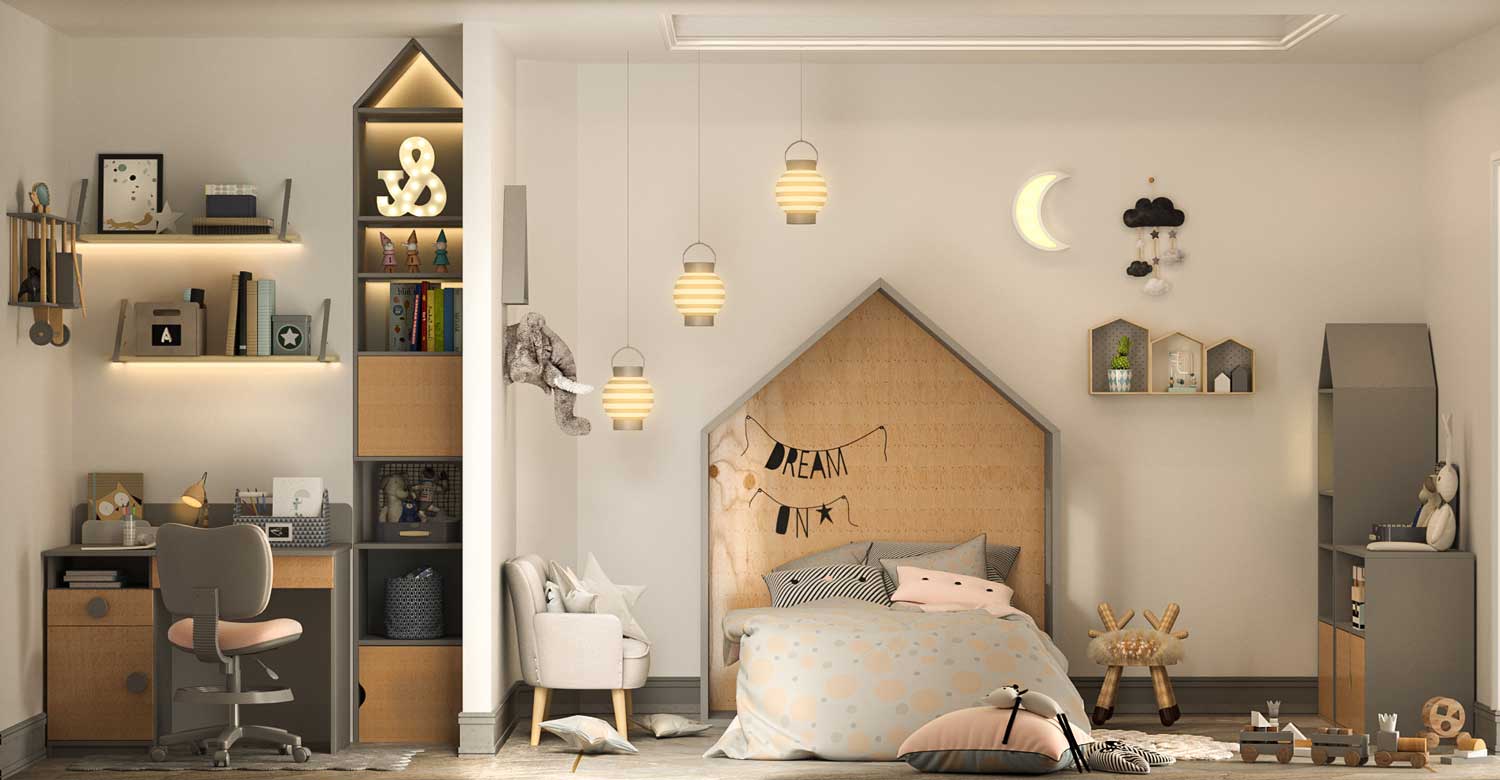
Light or dark purple can be part of the overall palette or a focal detail. It does not guarantee creativity or confidence. Choose according to individual interests rather than gender or school results. The following bedroom image is a colour reference, not an endorsement of every furnishing for a child.

Lighting and decorative accessories
General, reading and night lighting serve different functions. A decorative fitting may complement the room, but its appearance does not replace useful illumination. Controllable, steady light is generally a more practical starting point for everyday lighting than continuously moving effects. This example from the Jordan project shows light integrated into a decorative composition.

Favourite toys and objects give a room personality without requiring a separate set of themed decorations. Coordinate their colours without restricting play, provide a place to put them away and choose small objects with the child’s age in mind. The following images illustrate composition and colour rather than certifying the safety of every item shown.


Highlighting one detail can allow the surrounding composition to remain quieter. Check glare, switches and cable locations before installation, and test the real use of a lighting effect instead of copying its appearance from a photograph.


More examples can be seen in the practice’s project portfolio. Select relevant ideas rather than reproducing an entire photographed room without reviewing its dimensions and suitability.
A layout suited to age and everyday use
In interior design for a child’s room, establish sleeping, playing and storage needs first. Keep the play area clear of the main entrance route where possible. Accessible storage can support participation in tidying, with its height and construction selected for age and safety. Add a study table when it is needed and choose proportions appropriate to the user.
Safety and furniture details
Review the stability of wardrobes and shelves, edges and cable routes before decorative styling. Follow manufacturer instructions for anchoring tall furniture, and avoid placing beds or climbable furniture beside windows. Choose blind cords, electrical equipment and small decorations with the child’s age and applicable local requirements in mind.
Select beds, mattresses and sleep equipment according to product instructions and the intended age range. A decorative photograph does not confirm that all of its contents are appropriate. Also consider cleaning, rug stability and a clear exit route without toys or furniture in the way.
Study and night lighting
Position task lighting to avoid direct glare and shadows from the writing hand. Where night lighting is wanted, provide controllable brightness and suitable placement for the base and cables. Review daylight control alongside artificial lighting without assuming that all children prefer the same light colour.
Shared rooms and personal space
Where space allows, give each child storage for personal belongings and a small area reflecting their interests. Matching every item is unnecessary: a shared palette with limited individual differences can unite the room while retaining personality. Check that one child’s use of a desk or cupboard does not obstruct the other’s movement.
A flexible budget
Prioritise useful beds, storage and lighting. Keep rapidly changing themes in textiles, posters and lightweight accessories so the room can adapt as tastes change. Measure the furniture and check door and window operation before buying; an attractive oversized piece can consume essential play and circulation space.