
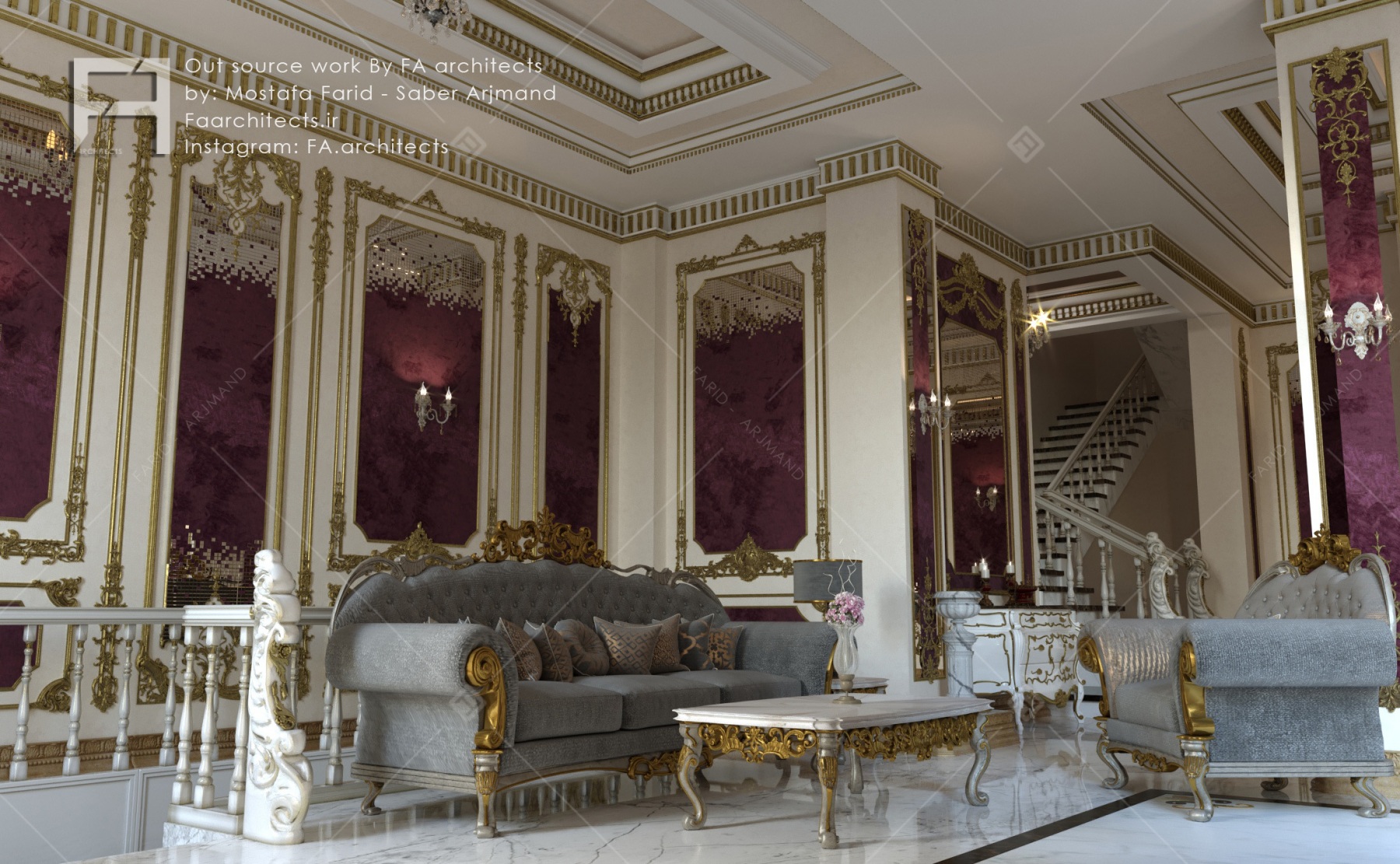
A classical interior is more than ornament
Classical interior design draws on ordered compositions and historical traditions that developed well beyond ancient Greece and Rome. Symmetry, proportion and a hierarchy of elements often organise the room. A gold finish or an ornate sofa does not establish the style on its own.
Luxury is not exclusive to classical design. The quality of interior design depends on how planning, materials, comfort and details work together. This article concerns the interior; the historical development of classical architecture and facade styles are related but separate topics.
For the historical background, see classical architecture.

Use symmetry without sacrificing function
Balanced arrangements can organise walls, furniture and lighting around an entrance, fireplace or other focal point. The composition should be tested against actual room dimensions and circulation rather than forced into perfect symmetry at every cost.
A door, radiator or storage need may require a carefully balanced alternative. Visual order can come from repeated proportions and materials even where every object is not mirrored.

Adapt columns and mouldings to the room
Columns, pilasters, cornices and framed wall panels can reference classical language. Their scale should suit the ceiling height and wall width. A small room does not need every historical element, and large ornamental pieces can overwhelm the available space.
Coordinate mouldings with doors, switches, ventilation grilles and built-in furniture. Continuous alignments and clean junctions make the design convincing. Historical knowledge is useful, but a contemporary room is not an archaeological reconstruction.

Develop a coherent colour and lighting scheme
White, cream, muted greens, earthy colours and selected metallic accents are possible choices, not compulsory rules. Stronger colours can also work when their relationships are considered. A saturated colour alone does not turn a room into postmodern design.
Combine general, task and accent lighting. A crystal or brass chandelier may provide a focal element, but it is not mandatory and should not be the only source. Check glare from seated positions and test finishes under both daylight and the proposed artificial light.
Choose flooring and furniture for real use
Stone, timber, patterned floors and textiles can support different interpretations of classical interiors. Choose the product and assembly for traffic, cleaning and moisture exposure. A border or central motif can organise the room without requiring a highly complex pattern.
Furniture traditions such as Louis XV, Louis XVI and Queen Anne differ from one another. Do not combine their labels as though they describe one identical form. Select proportions, upholstery and seat comfort that suit the project rather than equating classical furniture with one local showroom category.

Keep accessories purposeful
Artwork, mirrors and decorative objects should reinforce the composition without making the room difficult to use or clean. Leave visual space between significant pieces. Expensive accessories cannot compensate for awkward furniture placement or unresolved lighting.
Reference collections such as classical interior inspiration can help compare visual directions, but images are starting points. Room dimensions, material specifications and user needs must be assessed independently.

Contemporary materials and execution
Wallpapers, upholstered panels and prefabricated mouldings can offer alternatives to more labour-intensive finishes. Their quality, price, weight and moisture resistance vary. Factory production does not automatically make every product waterproof, cheaper or suitable for every location.
Review samples, fixing methods and junctions before installation. Execution services should coordinate the decorative work with building services and the agreed furniture layout, so that later changes do not break the composition.
Apply the language to different building types
Classical interiors can be used in homes, offices, hotels, restaurants and entrance lobbies. Each programme has different demands for circulation, durability and maintenance. The exterior and interior may share references without requiring identical ornament everywhere.
Begin with a measured plan and a clear brief. Adjust the level of detail to the space and budget, then test the whole room as a place for everyday use. The strongest result combines a readable order with comfort and carefully made details.