
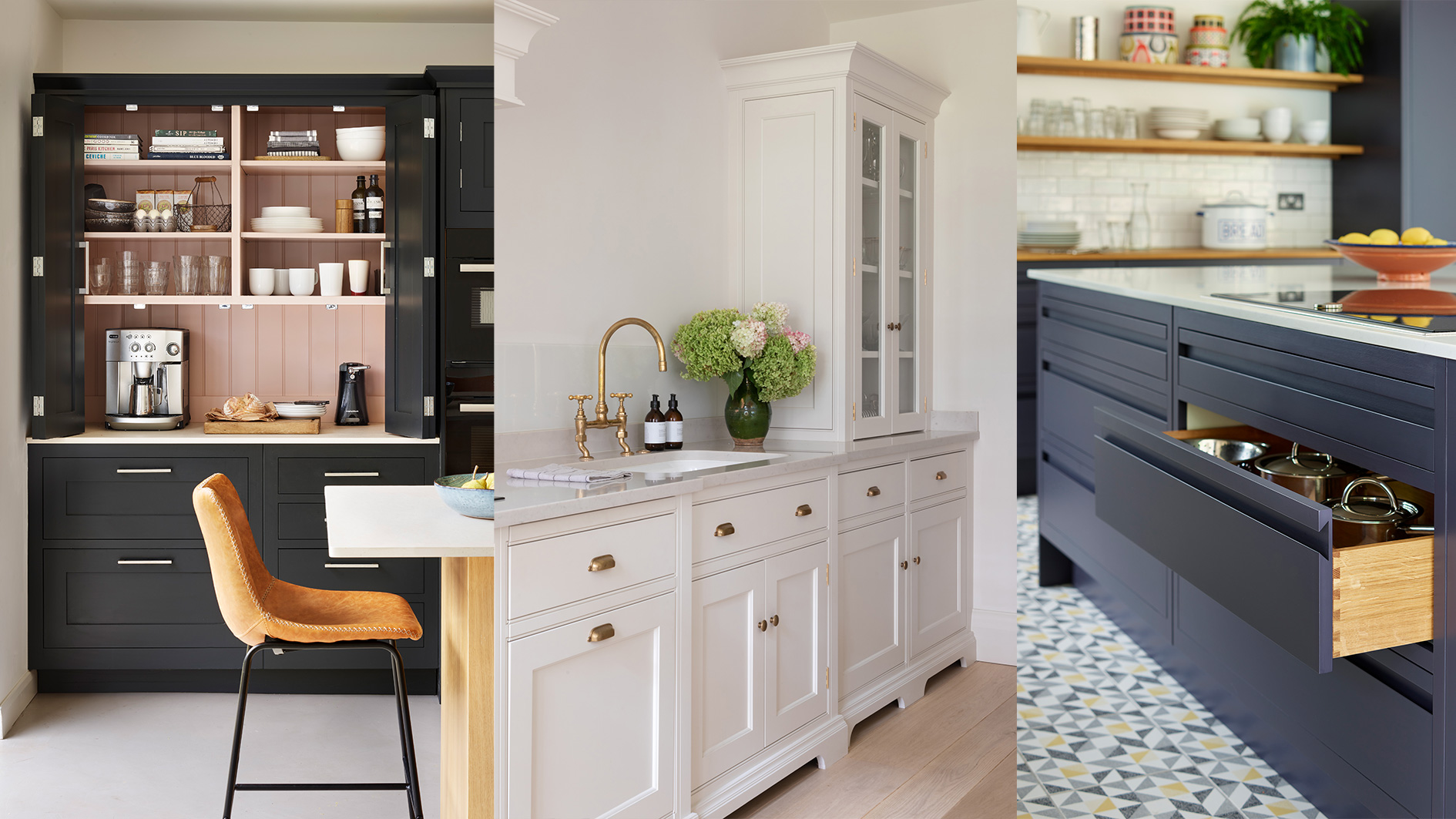
Kitchen cabinets influence both daily function and the appearance of the home. In an open-plan kitchen, visible cabinetry also relates to the living area. Begin with storage needs, room dimensions and appliance positions rather than colour alone.

Separate style, core and finish
Modern, classical and neoclassical describe appearance. MDF, solid timber and other boards describe materials, while veneer, laminate, painted surfaces and glossy coatings describe finishes. Treat these as separate decisions so that a familiar trade name is not mistaken for a complete specification.

Classical and framed cabinet options
Profiled doors, crowns and framing can support a classical composition. Vacuum-wrapped MDF uses a shaped substrate and applied covering; timber and timber veneer offer other possibilities. Detailing, finish quality and the relationship to room scale matter more than ornament alone.

Painted and neoclassical options
Polished, matt-painted and market-labelled “Enzo” doors can have different substrates and coatings. The name alone does not establish origin or durability. A glossy surface is not proof of a fully waterproof cabinet; edges and joints remain important around moisture.
Simple modern cabinets
Flat MDF doors, high-gloss coatings and textured wood-effect surfaces can support a quieter composition. The existing cabinet inspiration reference provides visual examples rather than certification of a particular board. Compare real samples and technical data.
Specify for everyday use
Through interior design, sink, cooking, refrigeration, drawers and circulation are coordinated first. Check appliance ventilation and clearances, accessible corner storage and hardware quality. Compare carcasses, doors, worktops, installation and repairability separately in the budget. The most expensive or reflective finish is not automatically the best choice.