
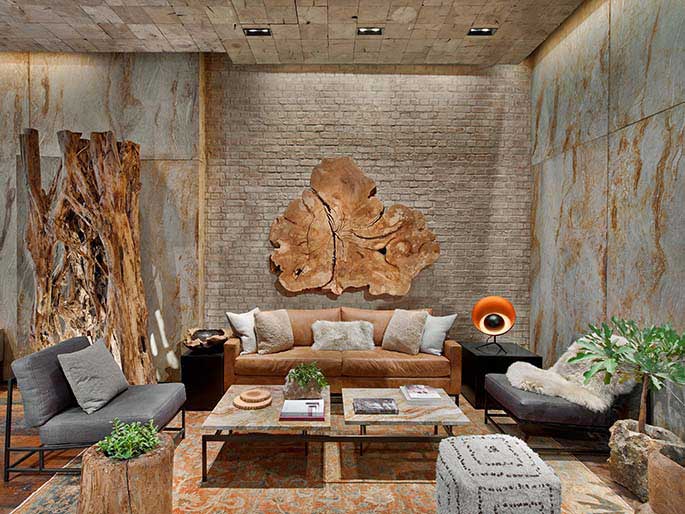
A home can draw from nature through light, views, colour and materials, rather than plants alone. In interior design, these choices should respond to use, privacy and maintenance without assuming the same psychological response from everyone.

Colours inspired by the seasons
Flowers, sky, soil and foliage offer a broad palette. A calm base can support a limited accent in furniture or artwork. The room need not imitate a season literally. Test samples in the actual light and beside surrounding finishes before applying colour across a large area.

Brick as a focal surface
Brick introduces rhythm and texture and can be used on a selected wall rather than throughout the room. Colour, lighting and joints alter its appearance. The Penthouse interior project illustrates the importance of coordinating materials with spatial identity. Check weight, fixing and cleaning requirements for the product rather than relying on a natural appearance.
Visual rhythm and movement
Branch lines and patterns of foliage can inspire the arrangement of art, lights and textiles. This is movement of the eye through a composition, not a requirement for physically moving objects. Balance heights with empty space and avoid installations that interfere with circulation or everyday use.
Contrasting colours and textures
Natural scenes often combine rough and smooth surfaces or contrasting colours. Use contrast to support a focal point; more colours do not automatically improve a room. Pair warm and cool tones within a coherent base and evaluate the combination with the actual furniture and daylight.

Timber and the quality of finishes
Timber offers varied grain, colour and finishes for floors, ceilings and furniture. It may feel warm to many users, but is not a treatment or a guarantee of reduced stress. A resource on variety in interior design explores differences within a composition. Select finishes for exposure, use and the required care.
Daylight, views and planting
Arrange furniture to preserve useful outdoor views, while controlling glare and protecting privacy. Choose plants for the room’s light and realistic care arrangements, with surfaces protected from watering. Natural origin alone does not establish sustainability: service life, sourcing and repairability also matter.
A practical starting point
Start with one clear improvement, such as a better garden view, a tactile finish or a more coherent palette. Assess its effect on use before expanding the intervention. This article focuses on nature within interiors; complete garden design and detailed material specifications belong in separate discussions.