
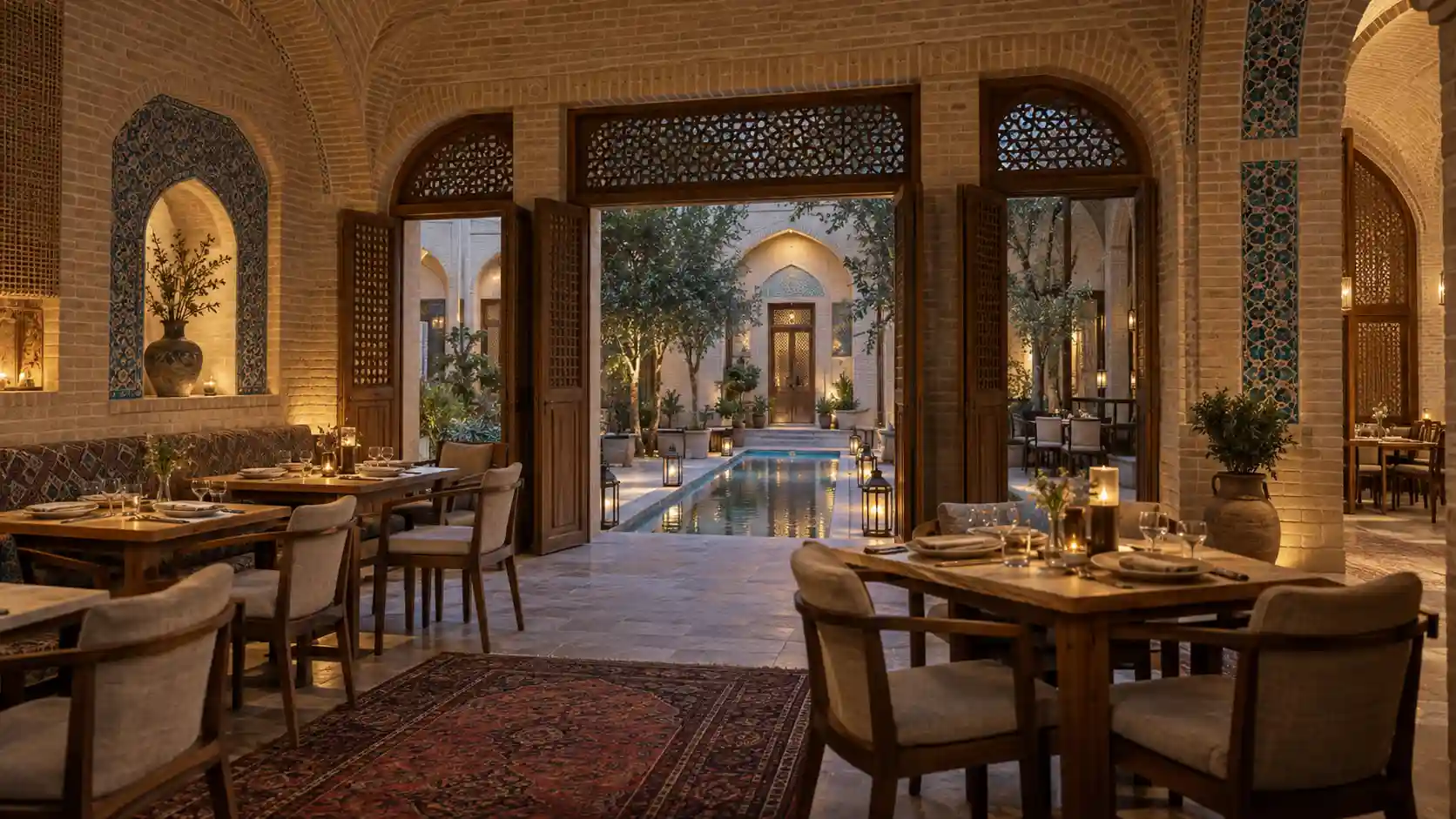
An Iranian-inspired traditional restaurant starts with the experience it intends to create, rather than a collection of decorative objects. Its identity should relate to the menu, audience and service model. This guide focuses on Iranian architectural references while recognising regional differences instead of treating every tradition as one style.

Choose a clear architectural reference
Iranian architecture varies with region, climate and period. Inspiration may come from an entrance sequence, an internal courtyard or the relationship between seating and light. Defining that reference helps select materials and proportions, and avoids assembling unrelated historical motifs.
A vestibule, arcade or courtyard is not required in every restaurant. Reinterpret the spatial idea for the actual site while maintaining access, circulation and services. The longevity of a historical building also cannot establish the safety of a new detail inspired by it.
Resolve restaurant operations first
Professional restaurant and cafe design coordinates kitchens, storage, seating and staff and guest routes. A traditional identity does not remove those requirements. The original restaurant design article and our coffee shop design principles provide further discussion of layout and circulation.
Design quality alone does not guarantee a successful brand; food, service and management also matter. Architecture can support the experience through comfortable space and coordinated, buildable details, rather than promise commercial results.

Connect the entrance, exterior and interior
An entrance, sign and carefully chosen materials can express the venue’s identity without copying a historical building in full. Consider the urban setting and local requirements, and connect the exterior’s language with the interior so that arrival prepares guests for the experience.
Inside, an entrance pause or the rhythm of arches and windows may organise movement and create atmosphere. These features should make the space easier to understand and use, rather than obstruct circulation or complicate cleaning.

Use water, coloured glass and materials thoughtfully
Water can provide a visual or acoustic focus when the space and maintenance resources support it. Review cleanliness, leaks, floor safety and circulation. A basin should not narrow a passage or create a slippery surface.
Coloured glass and patterned timber screens can shape daylight, but their effect on table lighting and the appearance of food needs testing. Brick, tile, wood and finishes inspired by traditional materials should be selected for durability and cleaning as well as character.
Balance traditional seating with everyday comfort
Low traditional platforms are one option, rather than the only authentic form of seating. Comfortable chairs and tables can serve different guests while sharing a consistent palette and detailing. Assess sitting, dining, table service and usability before committing to fixed furniture.
A coherent restaurant uses a considered selection of references. Every project does not need a dome, water feature, coloured glass and dense decoration. Iranian identity can also emerge through spatial organisation, light and the quality of hospitality.