
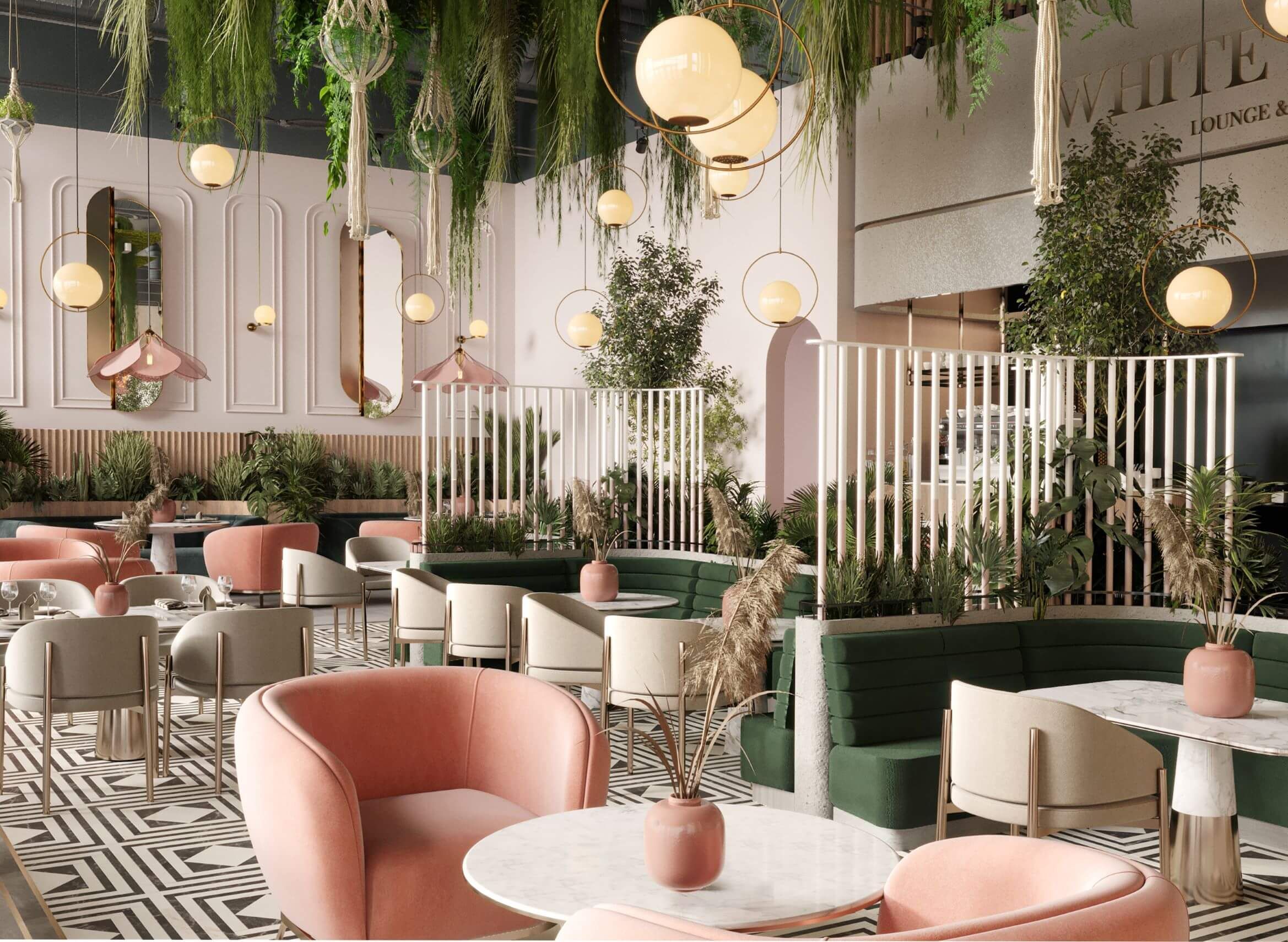
Cafe design organises both the customer experience and staff work, from arrival and ordering to seating and departure. Attractive decor does not guarantee commercial success; location, service, menu and management also matter. Start by defining the audience, activities and expected length of visits.
A coherent identity
A cafe can be quiet, celebratory or centred on a particular theme. Its concept should still support daily use. Coordinate the interior with arrival and the street; the cafe facade design article discusses that connection without expanding this article into a full exterior design guide.

Music cafes
Live performance, a music collection or instrument displays are different interpretations. Assess sound, sightlines and staff routes while keeping ordering and seating legible. The cafe interior reference offers visual inspiration, not a verified layout for every site.
Books and architecture
Provide reading light, suitable seats and separation from louder activity in a book cafe. An architecture-themed cafe might host discussion, model displays or professional meetings. Storage, display space and flexible arrangements are more useful than a theme label alone.
Traditional cafes
Courtyards, furnishings and local details can inform identity. This need not mean copying a historical house or filling every corner with objects. Consider cleaning, comfort and the relationship between finishes, menu and service without obstructing movement.
Cafe galleries
Coordinate viewing routes with tables and ordering. Display methods and lighting should protect work from constant contact. Changing exhibitions become easier when the layout supports them; distinguish protected display areas from active service zones.

Performance spaces
Short performances need a legible location and seating that does not block circulation. Test the transition between everyday operation and an event before buying furniture. Not every customer will want to participate, so provide a considered relationship between the activities.
Cafe restaurants
Food service changes preparation, storage and staff requirements. Seating can be combined or separated according to the brief. Connect ordering, delivery and clearing clearly. Detailed kitchen and restaurant planning deserves its own study.
Test daily use
Through interior design, the concept becomes an operational plan. Use actual chair, table and door dimensions to test customer and staff routes. Review sound, light, cleaning and adaptability. No universal percentage makes design half of business success; the objective is a clear, usable environment.