
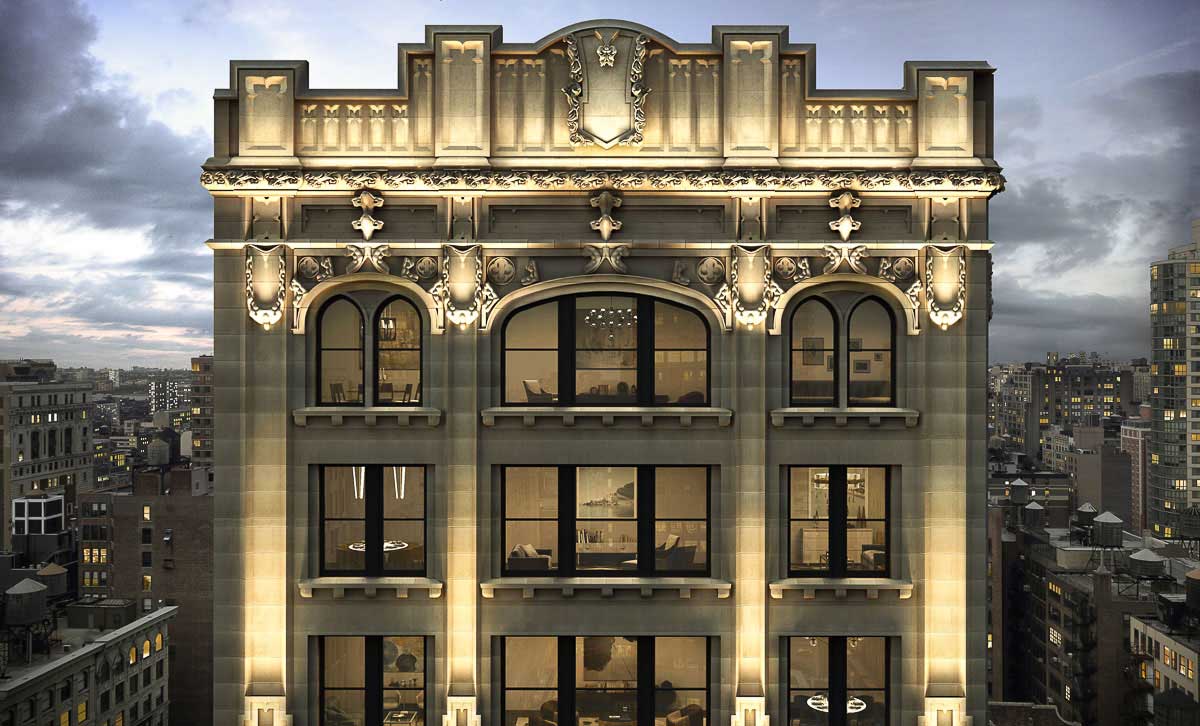
Proportion, rhythm and symmetry establish a classical facade before its materials are selected. A stone elevation is not automatically classical, and higher spending does not guarantee architectural quality. Reviewing building facade principles helps connect the material palette with massing and openings.
Natural stone
Stone can form wall surfaces, frames and projecting details, with variation in colour, veining and workability. Water absorption, frost resistance and staining differ between products. Panel weight, dimensions and fixing methods shape the construction details. Stone remains subject to inspection and cleaning rather than being maintenance-free.

Fibre cement boards
These boards offer different finishes and may suit parts of a facade system where the specified product and details are appropriate. The material name alone does not establish fire or moisture performance of the complete assembly. Review product evidence, fixings, joints and edges, and whether the intended frame details can be constructed reliably.

Brick
Brick can support a classical composition through courses, frames and proportions, or serve a contemporary design. The outcome depends on bonding and detailing rather than the age of the material. Joints, moisture, salts and surface pollution need appropriate attention. Reviewing different facade systems can broaden the comparison of envelope construction methods.

Granular decorative coatings
Coatings such as Bayramix are generally applied as granular decorative finishes over a prepared substrate, rather than cut into panels like stone. Composition, thickness and application conditions depend on the product. Colour and texture choices can be useful, but substrate quality, exposure and repairability should guide the specification.

Coordinate materials with the composition
During facade design, establish frame depth and opening rhythm, then test how the chosen material can deliver them. Consider the weight of projections, fixings, joints and drainage. A limited palette may improve visual clarity and maintenance, while still requiring complete technical detailing.
Sample before ordering
Review a sample that includes the main surface, joint, corner and projecting detail in daylight. Compare supports, fixings, waste, labour and maintenance as part of the total cost. The interior does not have to repeat the exterior style literally: coordinate the identity while respecting how each space is used.
Confirm the complete system
Request product information, installation details and a workable maintenance and replacement plan. This article addresses material selection for classical facades; architectural history and detailed pricing belong in separate discussions.