
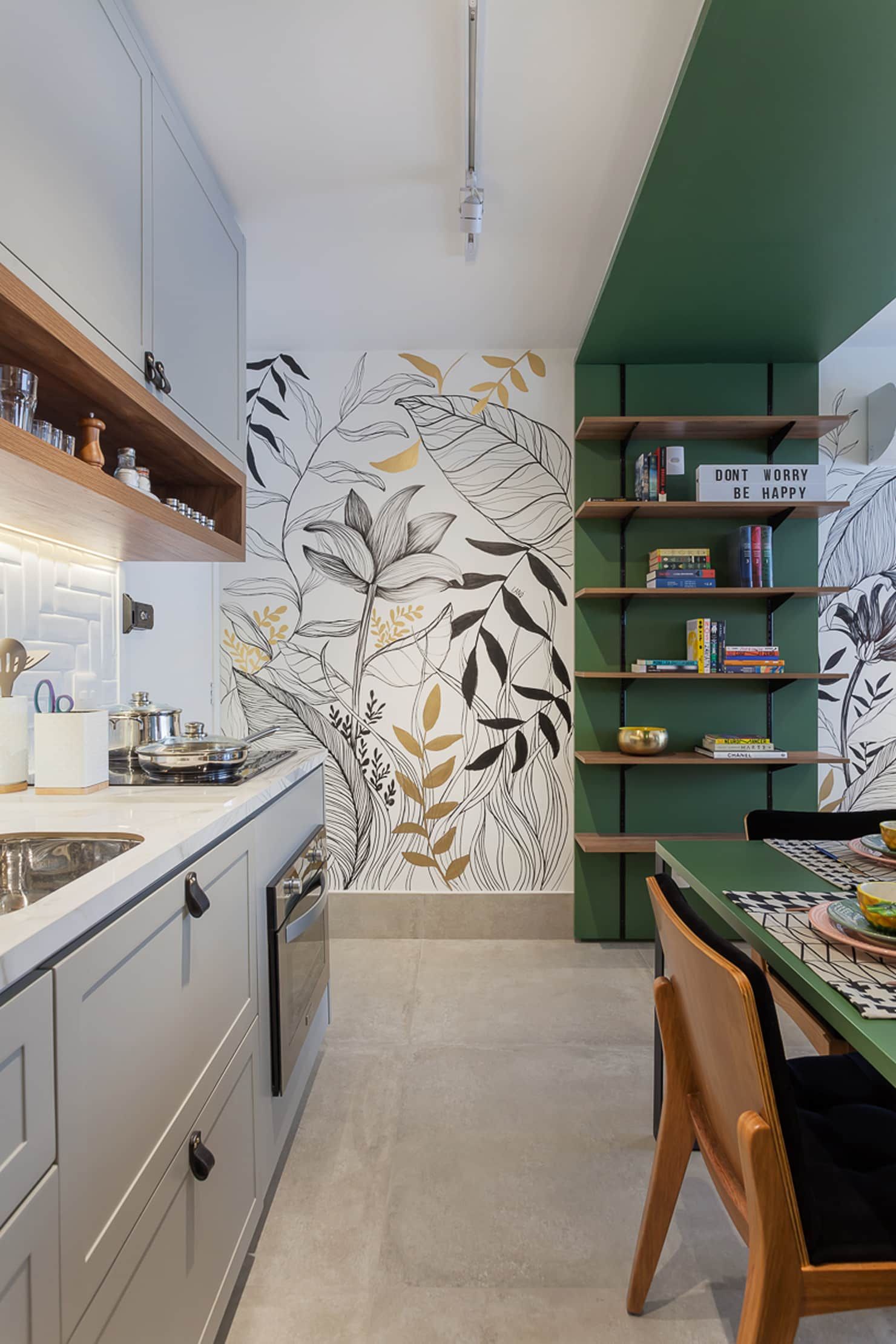
Creative home decoration begins with the way a room is used. Before buying furniture or finishes, record the dimensions, door swings and existing possessions. A coherent scheme can come from a few well chosen changes rather than adding a decorative feature to every surface.

Choose a focus and a consistent language
A framed wall, artwork or selected wallpaper can become a focal point. Keep surrounding surfaces quieter so the composition remains readable. A style provides a useful direction, but no style or product is permanently fashionable or suitable for every home.

Make the entrance and corners useful
An entrance cupboard can organise shoes and everyday items while defining a threshold. Check that it does not obstruct the door or circulation. Shelves can make a small corner useful, provided they are securely installed and do not reduce access.

Treat the kitchen as part of the home
In an open-plan kitchen, storage and visible finishes contribute to the whole living space. Plan drawers around the items actually stored. A concealed extractor must still retain its required clearances, airflow and maintenance access.

Use colour, light and furniture to define zones
Colour, rugs and furniture can distinguish activities without another wall. Layer general, task and accent lighting and choose colour temperatures deliberately. A distinctive chair or cabinet works better when its scale and function fit the room. Creating steps purely for decoration can introduce access and trip problems.
Turn individual ideas into a coordinated scheme
Through interior design, storage, movement, lighting and materials are considered together. Begin with reversible adjustments, test the layout and then order fixed items. This keeps the article focused on practical home ideas rather than a complete guide to every decorative style.