
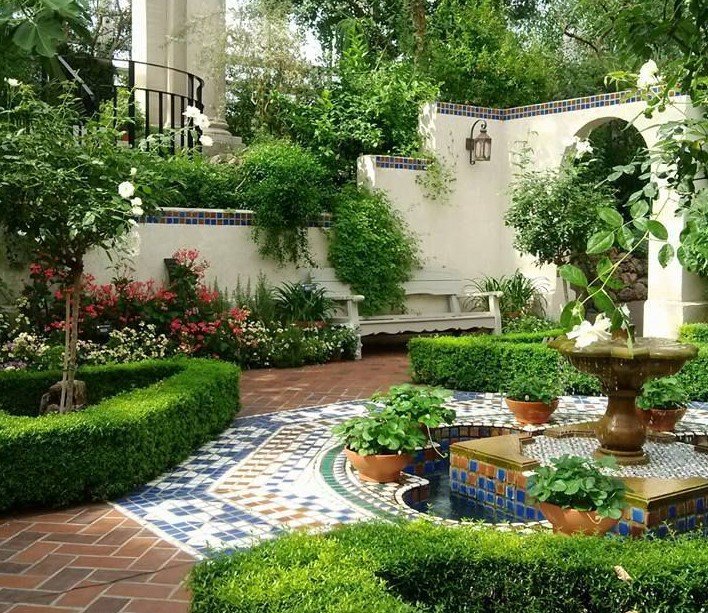
Landscape implementation ideas can work in small courtyards or extensive grounds, but site size changes the priorities and construction approach. Start with circulation, seating, shade, drainage and available resources rather than a decorative image alone. In a crowded city, a small courtyard can become a useful everyday space when access and maintenance remain practical.
Exposed-aggregate paving and ground-level lights may suit some projects, but they need appropriate detailing. Gravel can reduce the irrigated area compared with lawn, while still requiring cleaning and weed control; it does not replace every function of living planting. Landscaping examples provide visual references, but suitability depends on land, climate and budget.
Choose an approach that fits the site
Landscape architecture concerns the organisation of land and outdoor use, not decoration alone. Moroccan, Italian, French, Spanish and Persian gardens can provide references, but each tradition should be understood rather than treated as a single formula. Palms, for example, must suit winter temperatures, soil and water availability; a stylistic reference does not establish climatic suitability.

Some formal gardens use axes, geometry and symmetry, while Persian garden examples demonstrate important relationships between water, routes and shade. Contemporary approaches can use clear volumes, hard surfaces and restrained materials without being restricted to grey finishes or dark timber.
Japanese and Chinese gardens offer further references, with cultural differences that should not be collapsed into one description. A natural-looking composition is not random planting: positions and growing space remain planned. Informal design is not always cheaper to maintain, since species, irrigation, pruning and planted area determine the workload.
Small residential courtyards
Begin with an entrance route and usable seating, then arrange planting around them. Avoid covering every surface with loose gravel where it makes walking or wheeled access difficult. Select species for light conditions and mature size, and balance paving with vegetation. A solution requiring daily care is unsuitable when that care is unavailable.

Villa gardens
Coordinate the garden with entrances, terraces, views and service routes. A large site allows distinct zones but does not need to be filled with objects and planting. Consider mature tree size, root spread, proximity to buildings and access to irrigation equipment. Fruit trees also need plans for harvesting and cleaning.

Hospitals and clinics
Outdoor spaces should reflect user needs and the operating organisation. Species selection should consider toxicity, thorns, allergy potential and insects with appropriate specialist input. A plant type alone should not be credited with a therapeutic effect or major noise reduction. Clear routes, shade and access to services matter alongside planting.

Office and commercial buildings
Appearance is only part of the brief: entrance clarity, accessibility, seating and movement are also essential. Avoid planting that will obstruct signs or routes at maturity. Greenery may extend indoors or onto a roof, but each setting has different requirements for light, maintenance, loading, waterproofing and drainage.

Kindergartens
Put safety and supervision before decorative effects. Check species for toxicity, thorns, fruit and reachability, and design boundaries around age and supervision arrangements. A hedge alone does not replace appropriate safeguarding. Play surfaces, shade and clear sightlines for supervisors should form part of the layout.

Public parks and cultural sites
Public parks need clear routes, shade and a layout matched to intensity of use and water resources. Lawn is not the best answer for every climate and should not be treated as an effective acoustic barrier. At historic sites, coordinate changes with conservation specialists, protecting existing features and considering earlier planting where it is documented.
Turn the idea into construction details
In landscape design, establish levels and water routes before installing finishes. Paving needs suitable foundations, joints and edges, with slip resistance assessed in wet conditions. Drainage should not direct water towards entrances or buildings. Roof landscapes require separate checks of loading, waterproofing and drainage.
Divide the budget between infrastructure, paving, planting, irrigation and lighting. For phased construction, complete buried networks first to avoid removing finished surfaces later. Choose materials and species with maintenance cost and replacement access in mind. A successful landscape continues to work in everyday use after construction has finished.