
Introduction
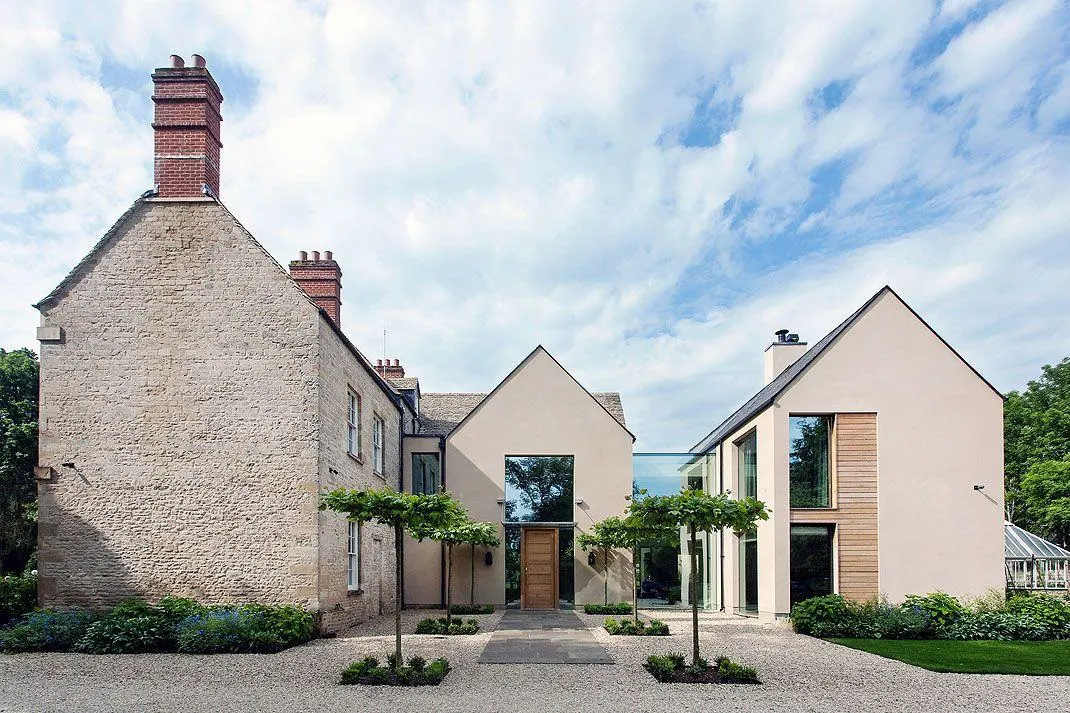
Modern English Country reinterprets the qualities of the English rural home for contemporary life. Natural materials, comfort and a close relationship with the garden remain central, while layouts become more adaptable and details more restrained. The result is a home with warmth and character, shaped around everyday use rather than a literal reconstruction of the past.
This guide focuses on that design approach: its roots, architecture, interiors and the distinctions that help identify it. The wider history of English architecture and comprehensive guides to neighbouring styles belong to separate articles.
What is Modern English Country?
Modern English Country is best understood as a contemporary approach to the architectural and interior language of English country homes. It retains the emphasis on natural materials, lived-in comfort and a sense of place, while adapting form, layout and detail to present-day needs. It is not a historical school with a universally agreed set of rules.
Its identity comes from the relationship between proportions, materials, light, colour, furniture and landscape. A pitched roof or stone wall alone is not enough. Equally, modern does not have to mean a completely white, minimalist interior. Here, modernisation is primarily about how a home works and how inherited elements are used.
The roots: from English Country to contemporary living
English country homes developed in response to climate, available materials, construction practices and everyday life. Stone, brick and timber, pitched roofs, chimneys and a connection with gardens are familiar elements within that varied tradition. Yet its appeal is also experiential: rooms that feel comfortable, personal and connected to their surroundings.
The contemporary interpretation asks which qualities remain valuable today. Kitchens can become social spaces; living and dining areas can connect more closely; selected openings can grow; and modern equipment can be integrated. An open plan is an option, not a requirement. Quiet rooms, privacy and flexible separation may be just as important to a particular household.
Form and proportion: simplicity with character
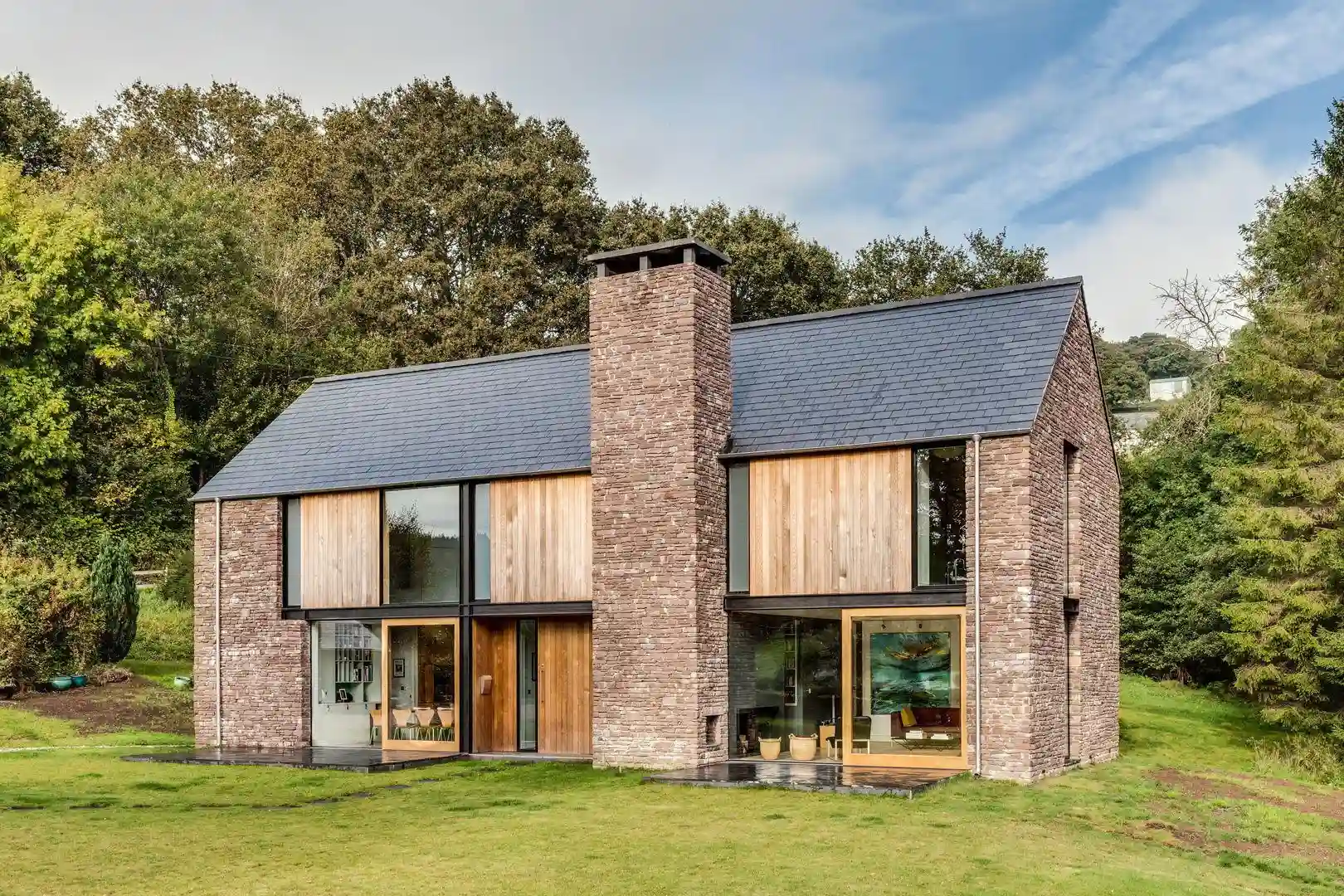
The building mass usually becomes clearer and unnecessary complexity is reduced. The roof, entrance and individual volumes should read as a coherent composition, rather than a collection of rural motifs attached to an unrelated modern structure.
Proportion remains essential when decoration is reduced. Window scale, room height, the balance of solid wall and openings, and the building’s relationship with the ground all affect whether it feels like a welcoming home. A pitched roof, chimney or traditionally influenced entrance can contribute when it belongs to the design. None is compulsory in every project.
Facade design and natural materials
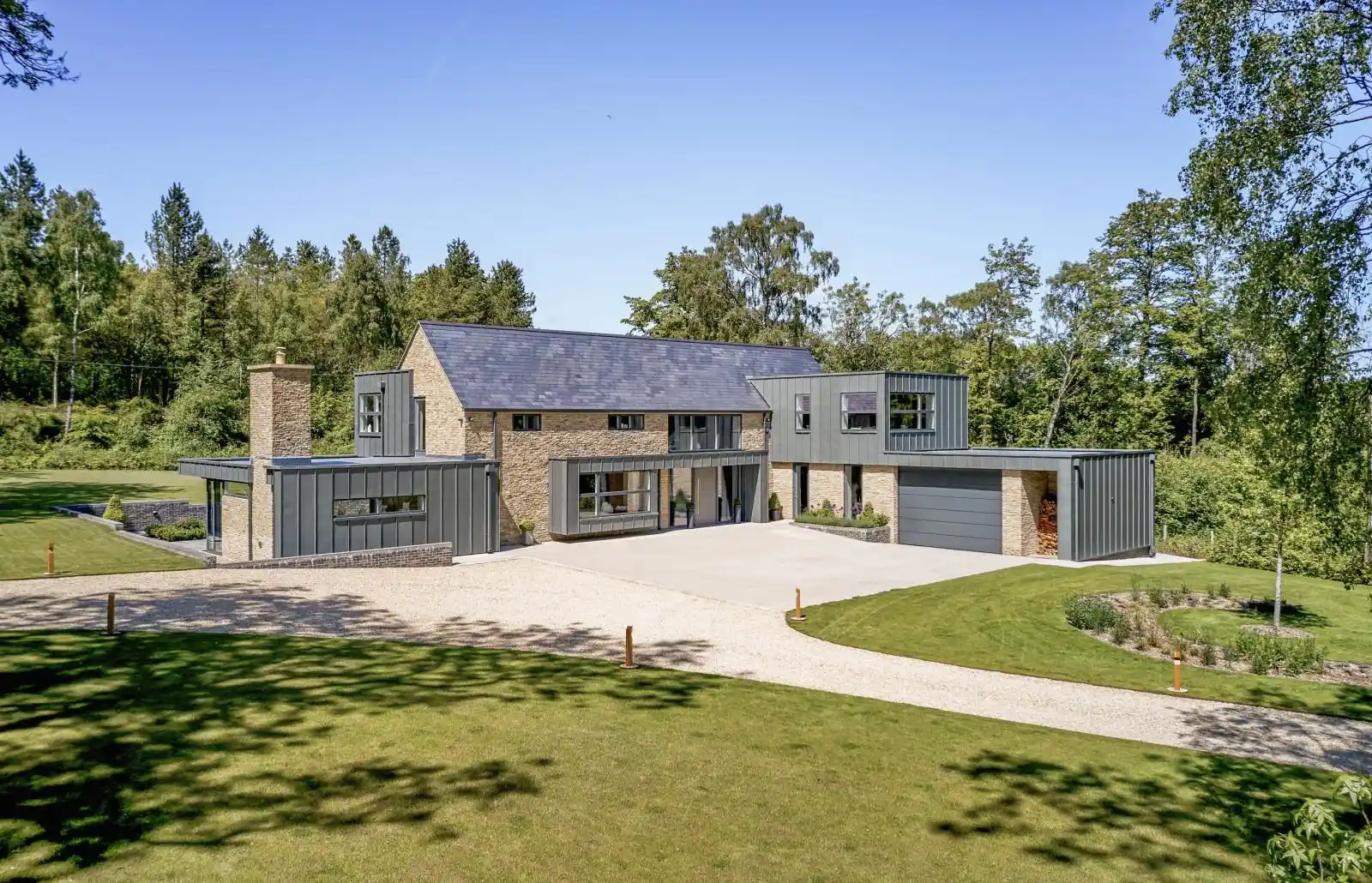
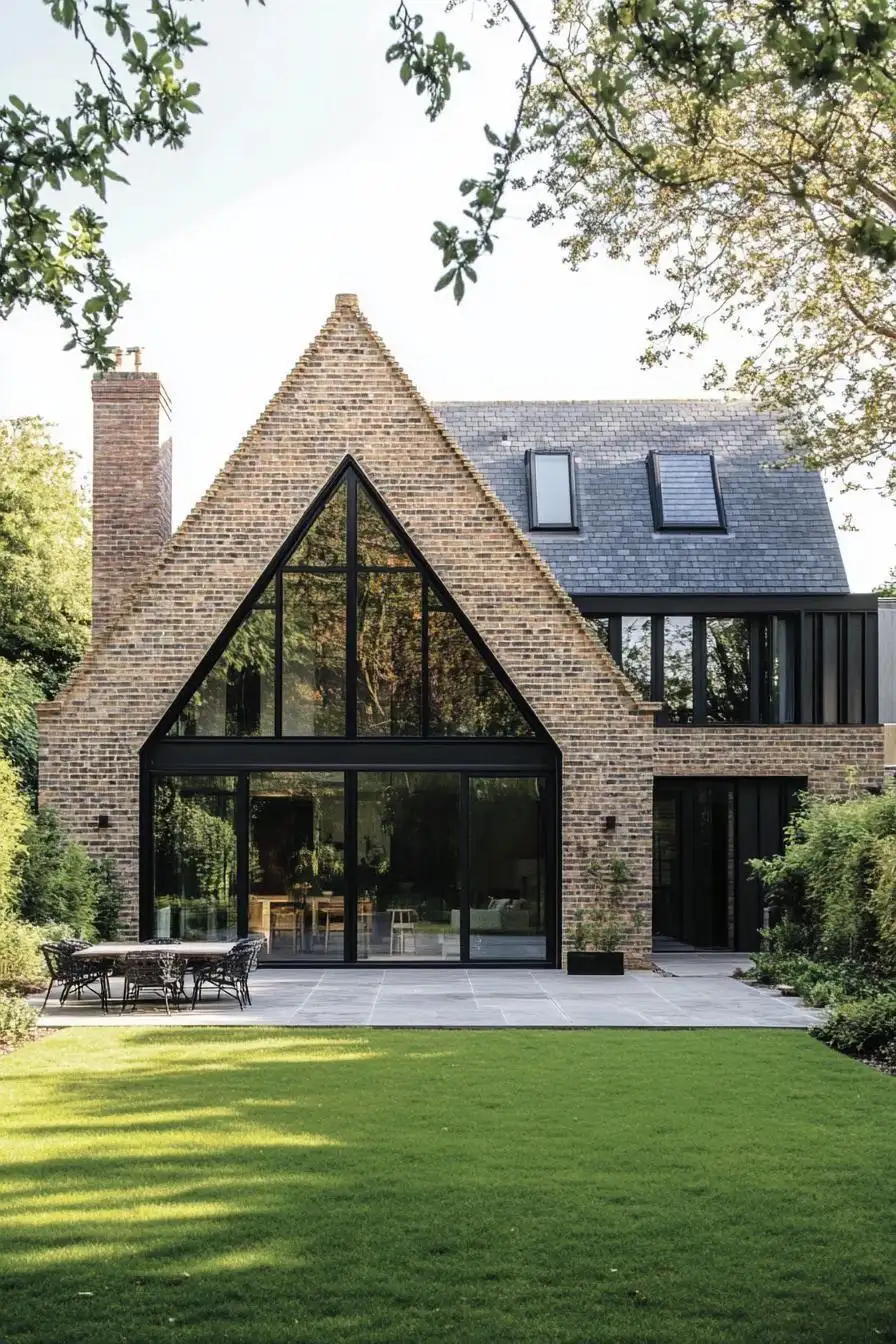
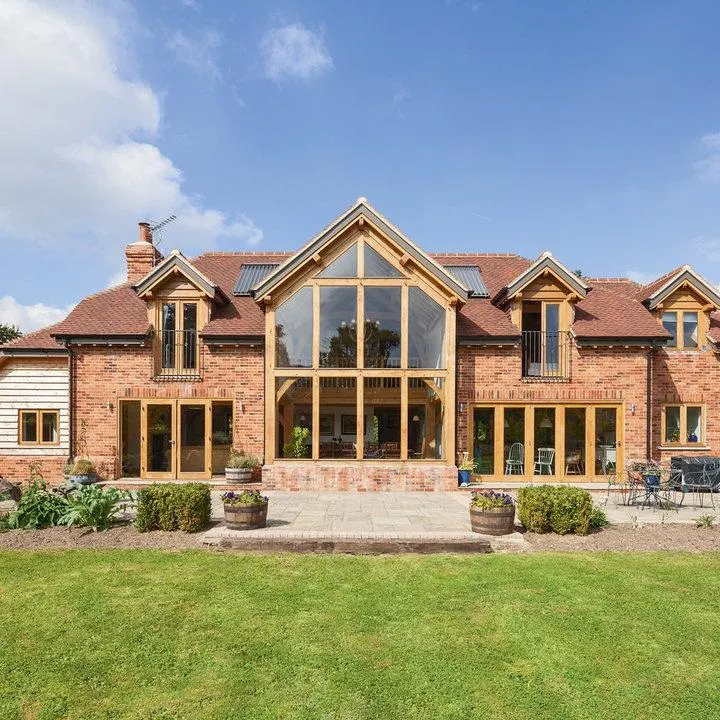
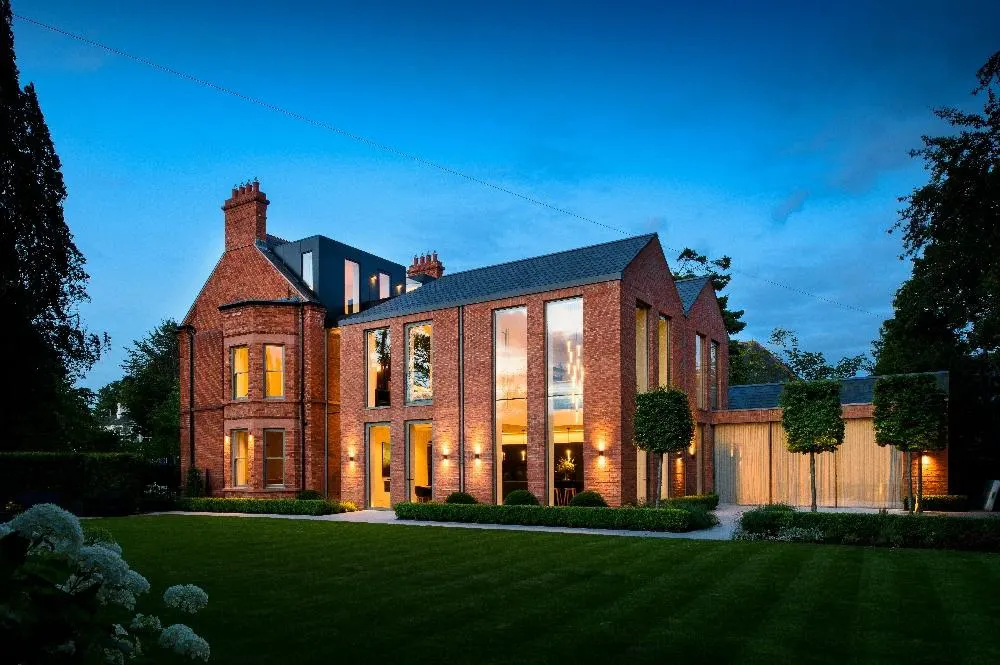
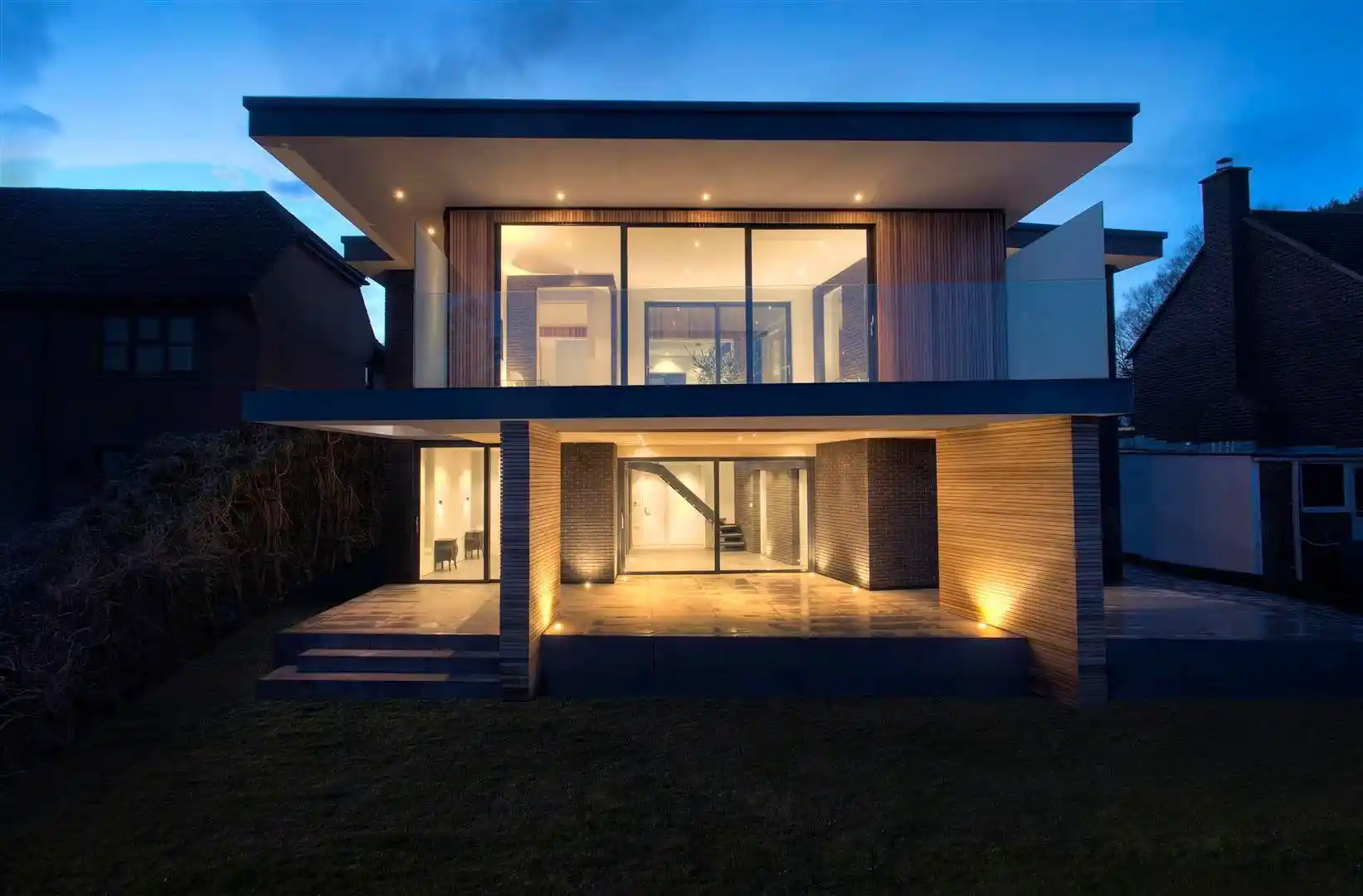
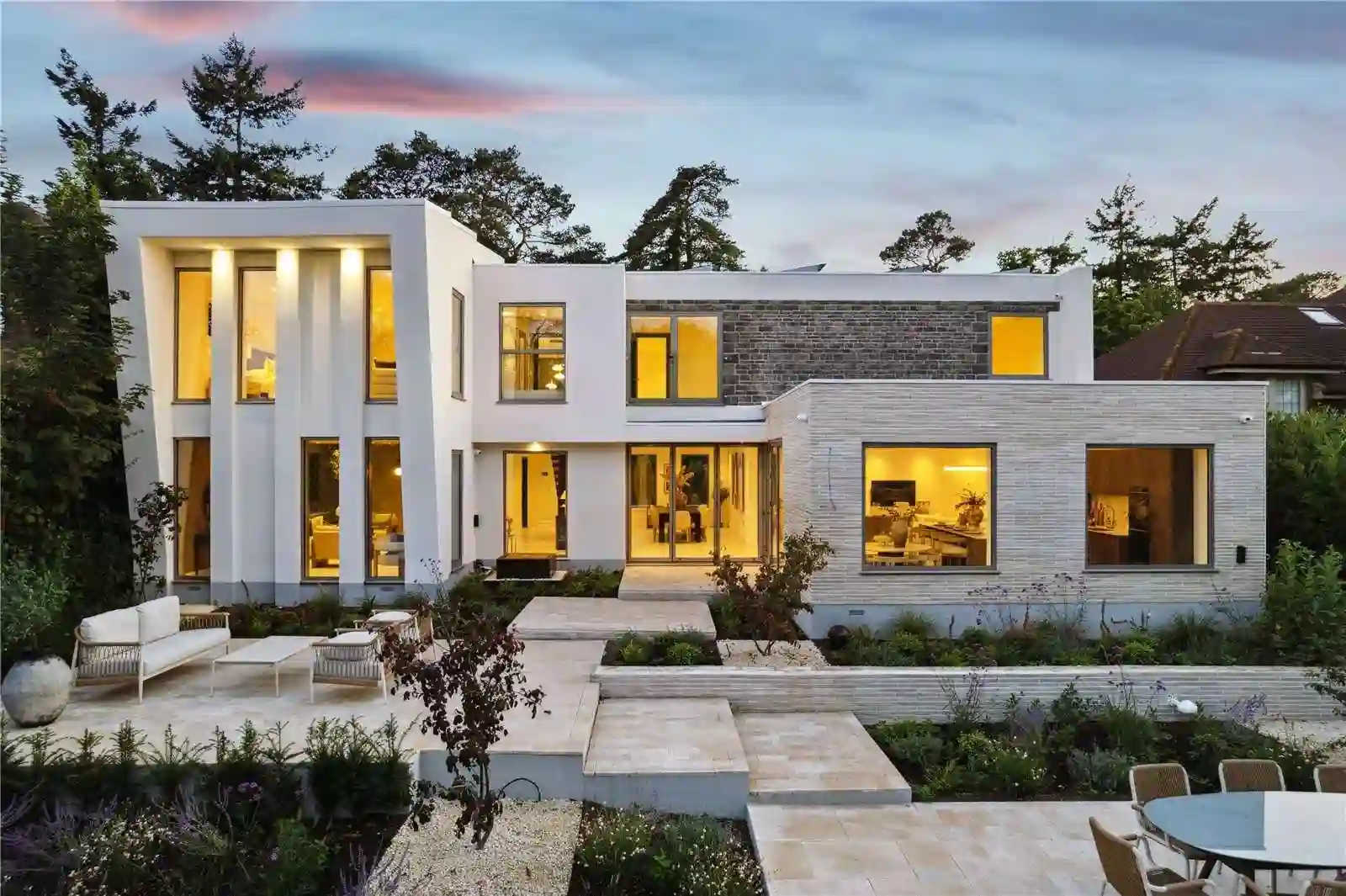
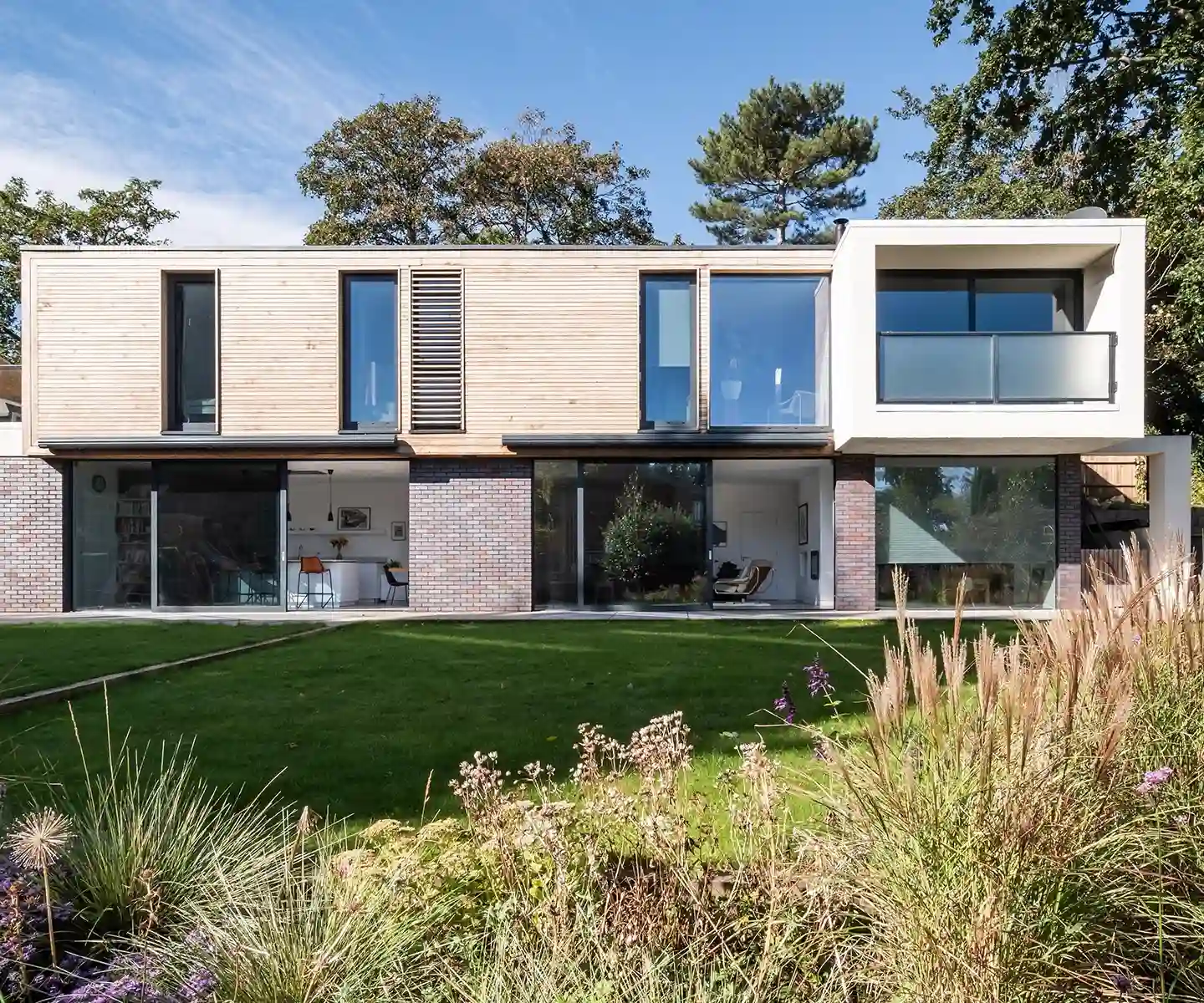
In facade design, brick, stone and timber can express the rural connection without copying historic construction details. Colour, texture, joints and transitions between surfaces shape the result as much as the choice of material itself.
Brick can provide rhythm and visual warmth; stone can establish a relationship with the setting; and timber can soften a composition through texture. Plain plaster or rendered surfaces can balance stronger materials. A small, coordinated palette is often more convincing than an assortment of finishes competing for attention.
Natural appearance should not be confused with proven environmental performance. Material sourcing, insulation, durability, construction details and maintenance need separate assessment. Those practical decisions support the architectural idea; they cannot be established from an image or a style label alone.
Windows, landscape and daylight
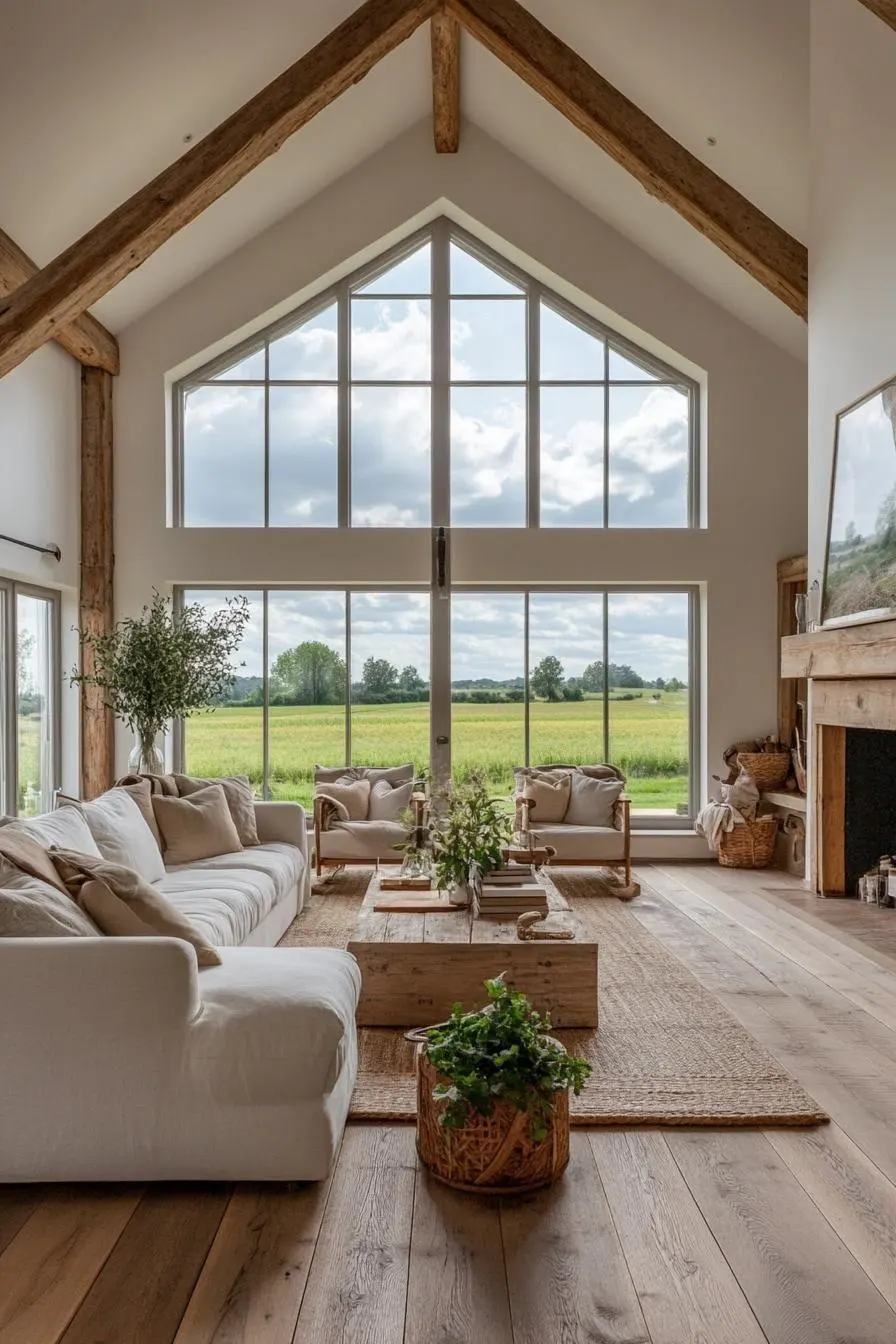
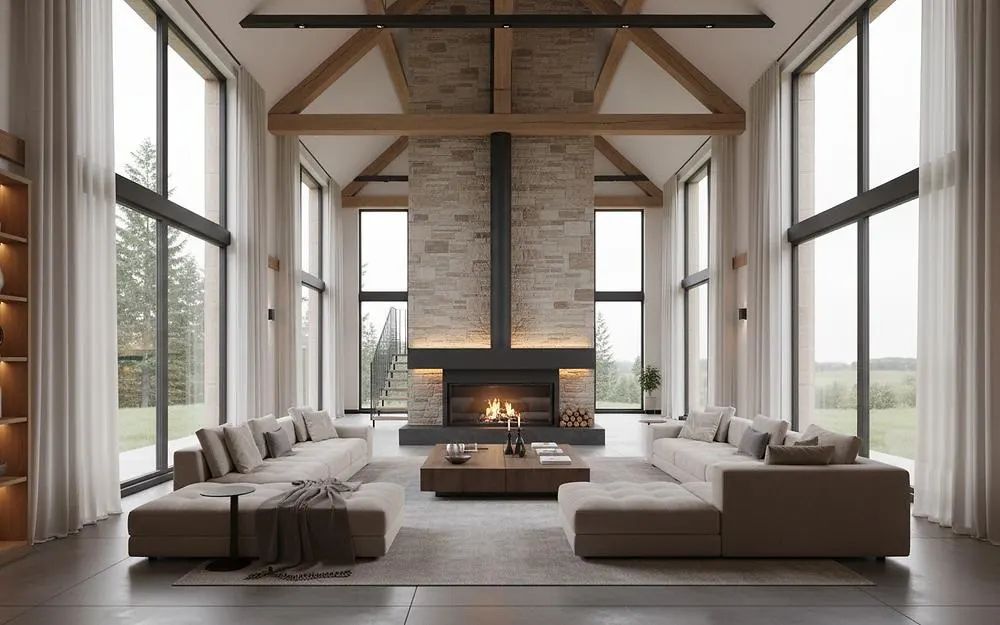
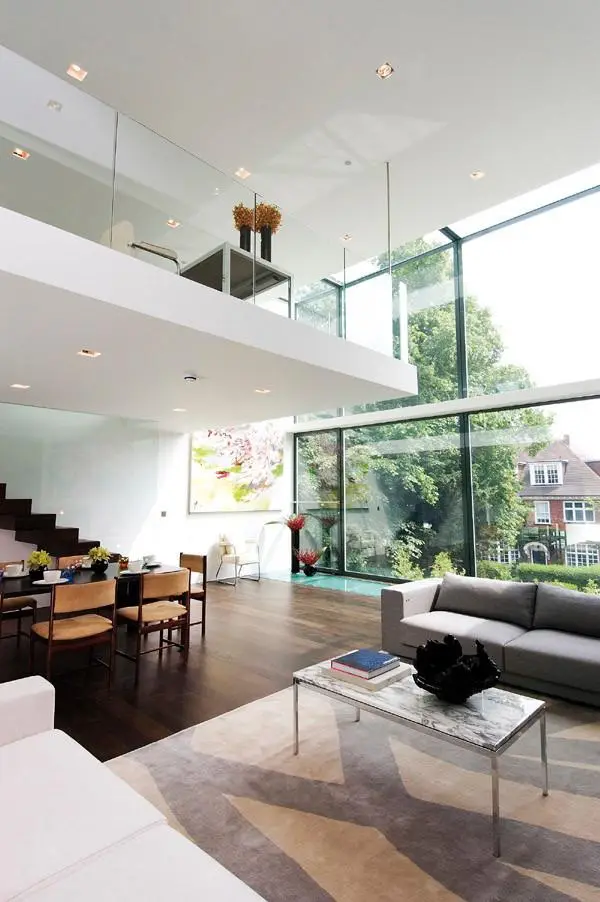
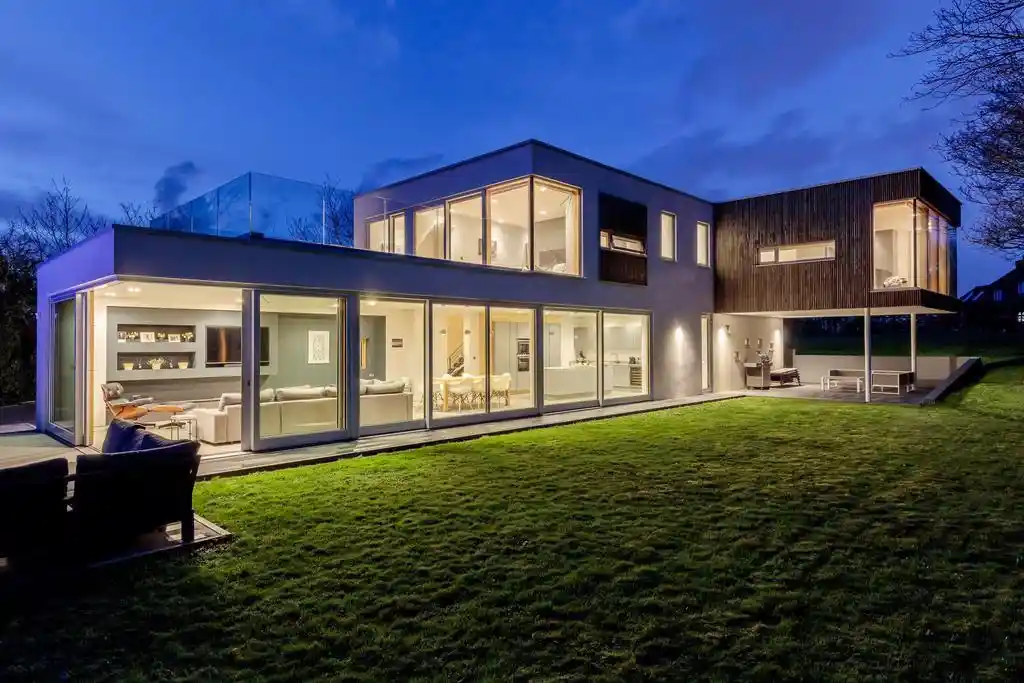
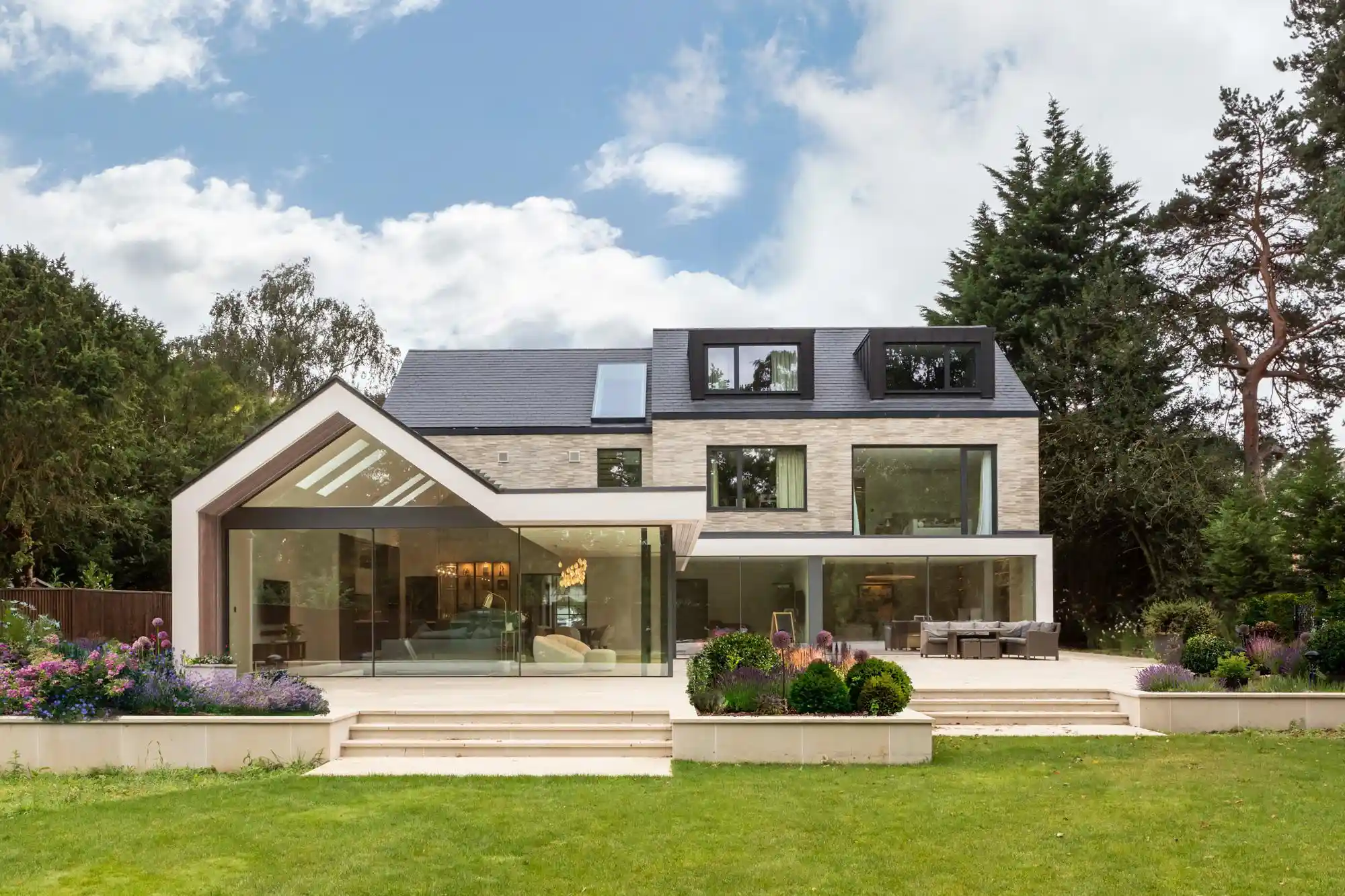
Larger openings can strengthen the connection between living spaces and the garden, while bringing changing daylight across wood, stone and textiles. Their dimensions, divisions and placement still need to work with the facade. Expansive glazing alone does not create an English Country identity.
The garden is part of the experience of the house, not simply a backdrop. The approach to the entrance, terraces, trees and views can shape how rooms are used. In climates warmer than England’s, shading, orientation, privacy and insulation must be adapted to local conditions rather than copied from an unsuitable precedent.
Interior design: warmth without clutter
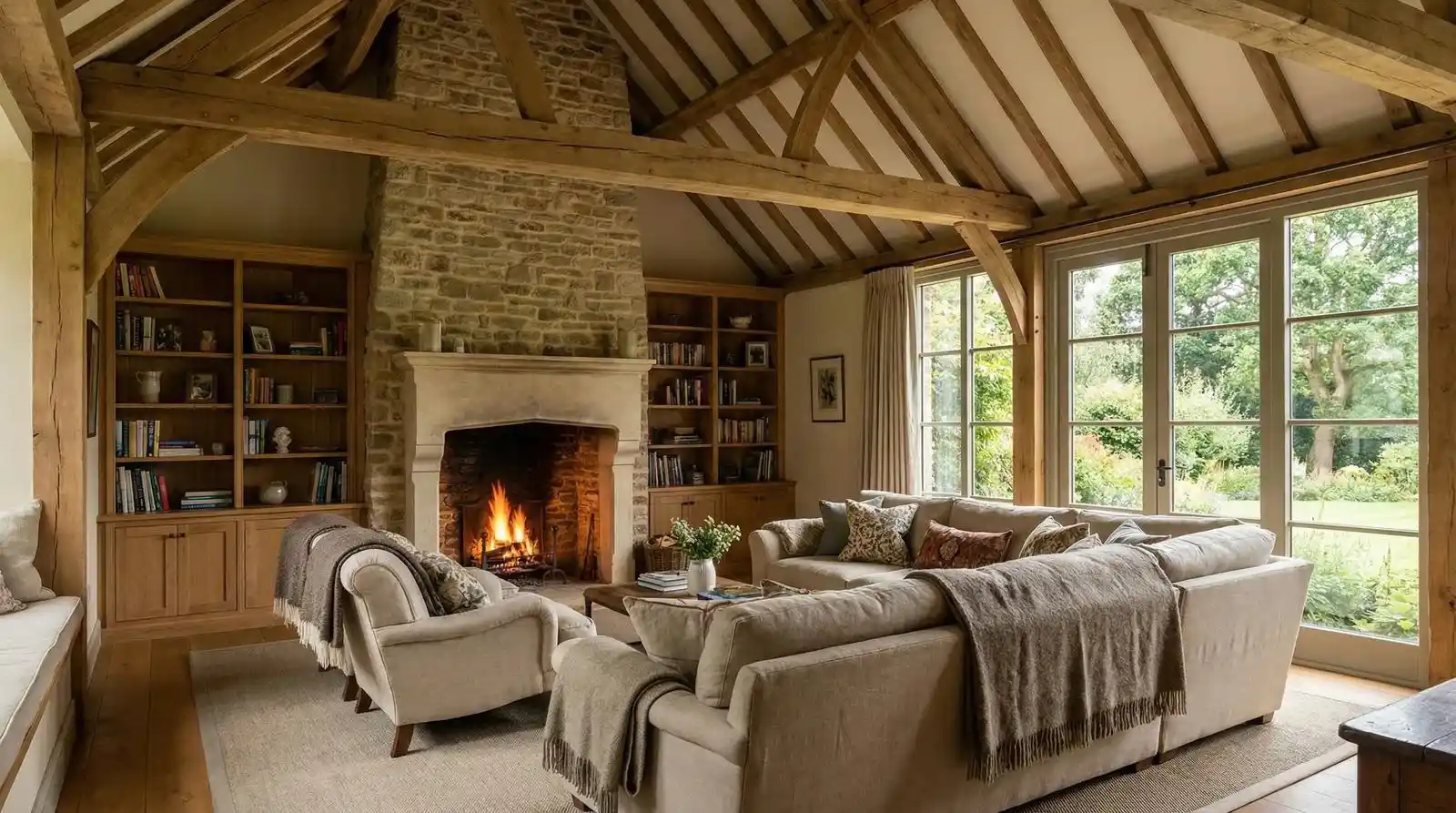
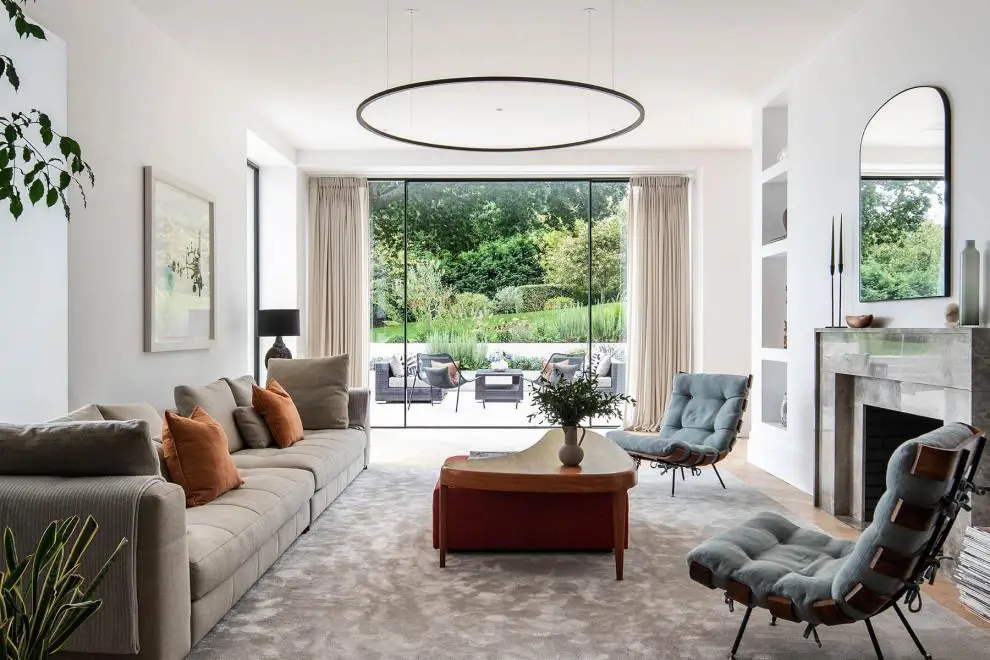
Interior design balances country-house comfort with contemporary clarity and function. A room should accommodate circulation, storage, conversation and relaxation. Its character needs to survive everyday occupation, rather than depend on an immaculate staged photograph.
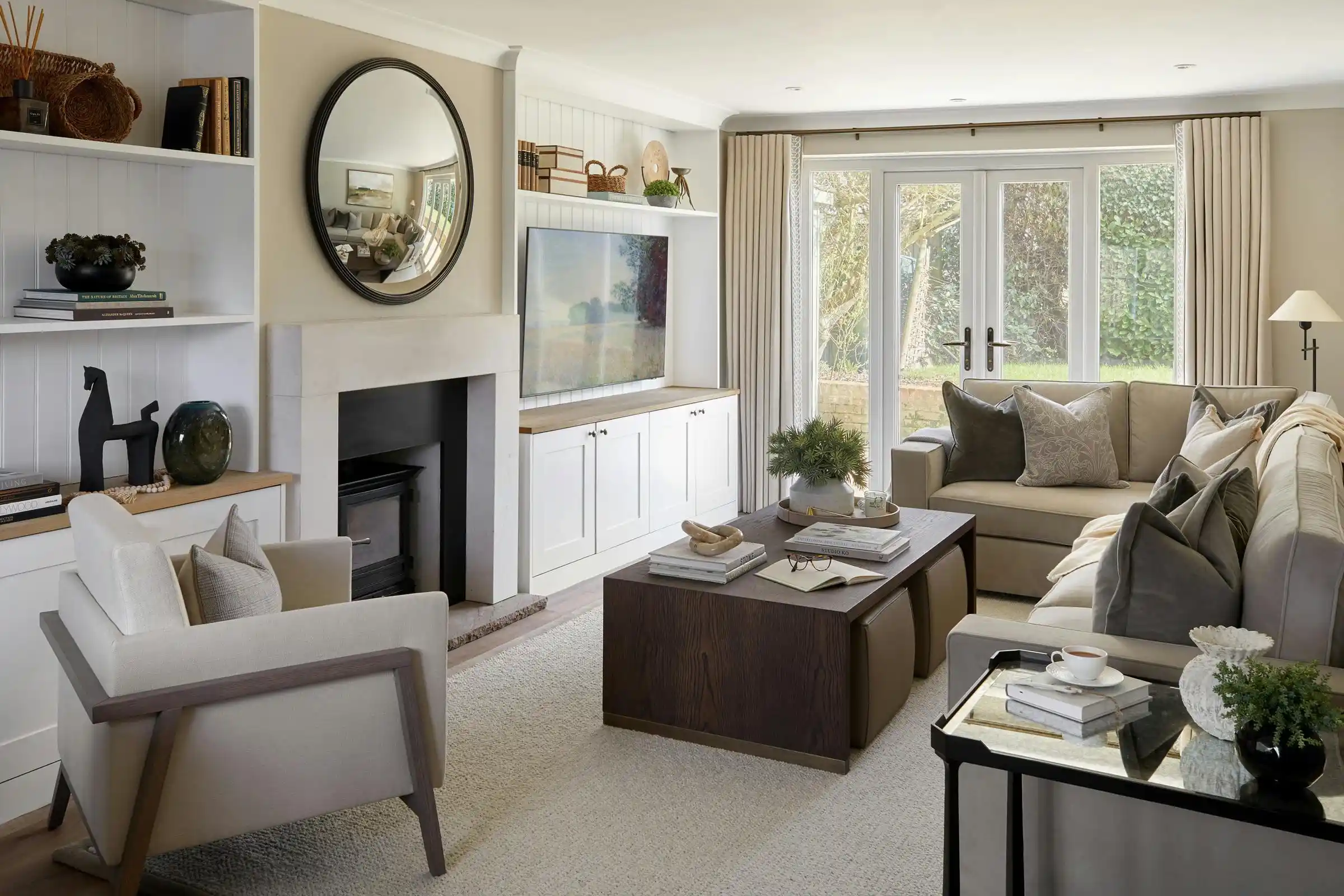
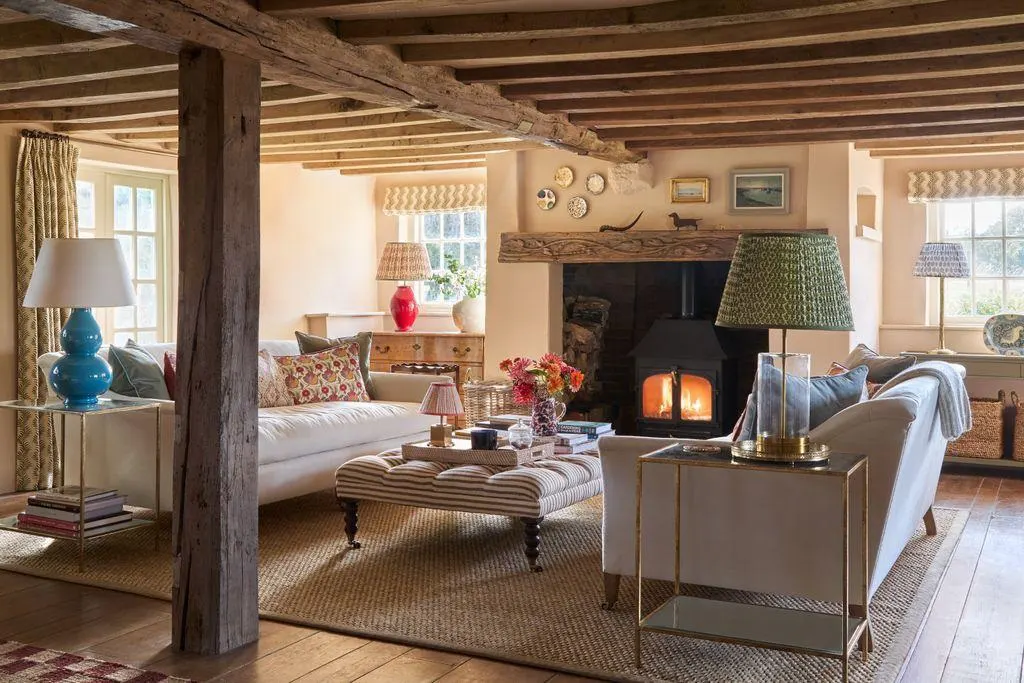
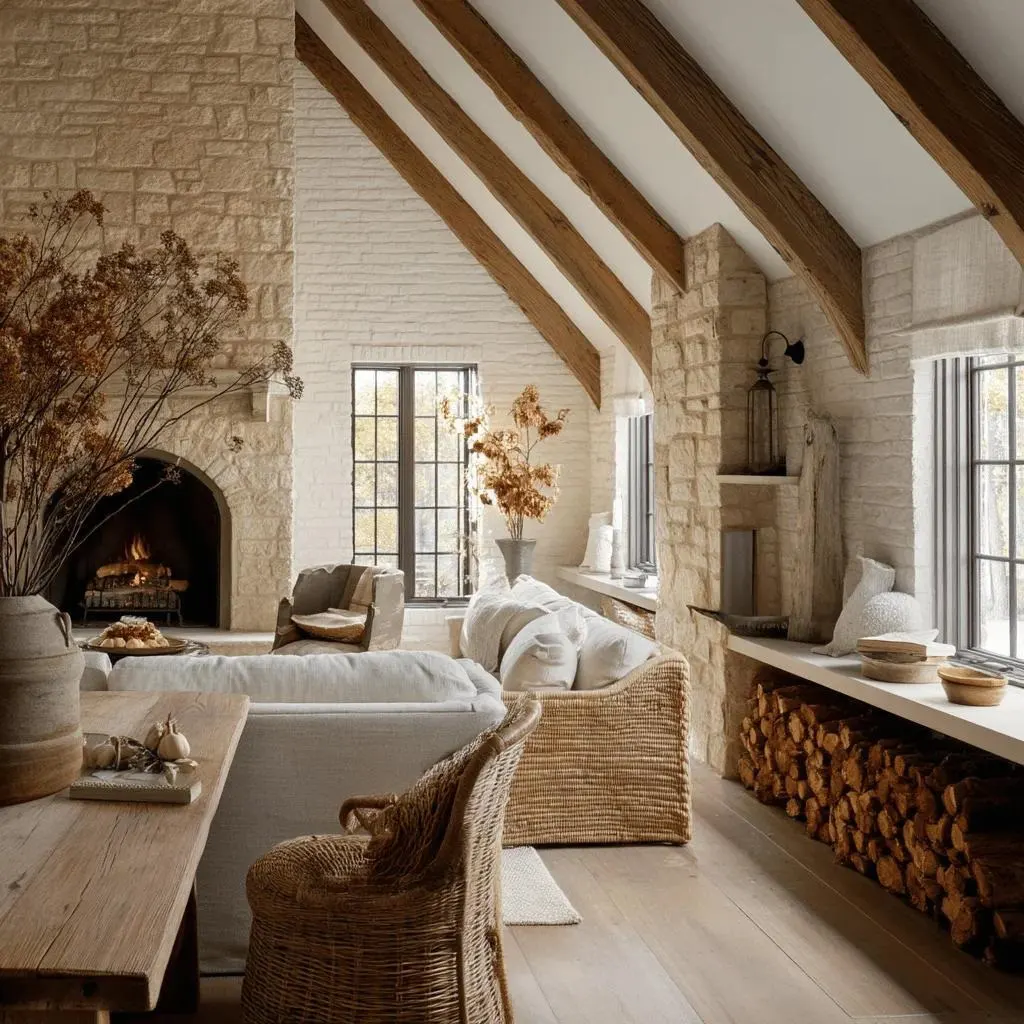
Warm whites, cream, beige and earth tones can create a calm base. Olive green, grey-blue or brown may add depth in selected areas. There is no mandatory palette: the important relationship is between colour, light and materials. Restraint should not leave the room feeling cold or anonymous.
Wood, stone and natural textiles add layers of texture. Traditional furniture can sit alongside contemporary pieces when their scale, comfort and relationship to the space are considered. A matching suite is not essential, and an old object does not need to occupy every corner. A controlled mix often gives the room a more personal character.
Lighting, accessories and the kitchen
A useful lighting scheme combines general light, task lighting and sources close to seating. Table lamps, pendants and wall lights can bring variety after dark, while visual comfort remains the priority. Books, artwork, handmade objects and plants can add personality when selected thoughtfully rather than accumulated across every surface.
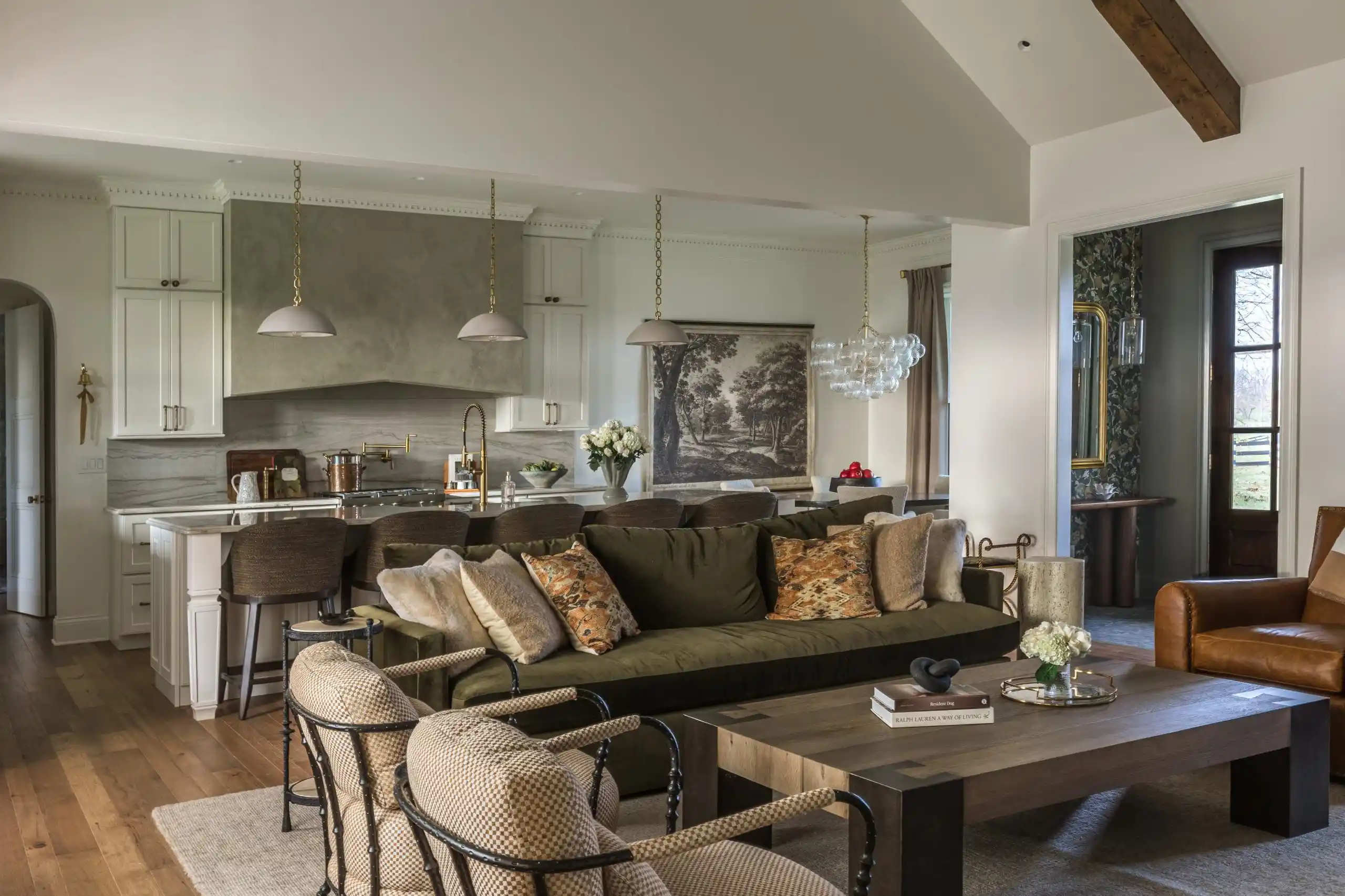
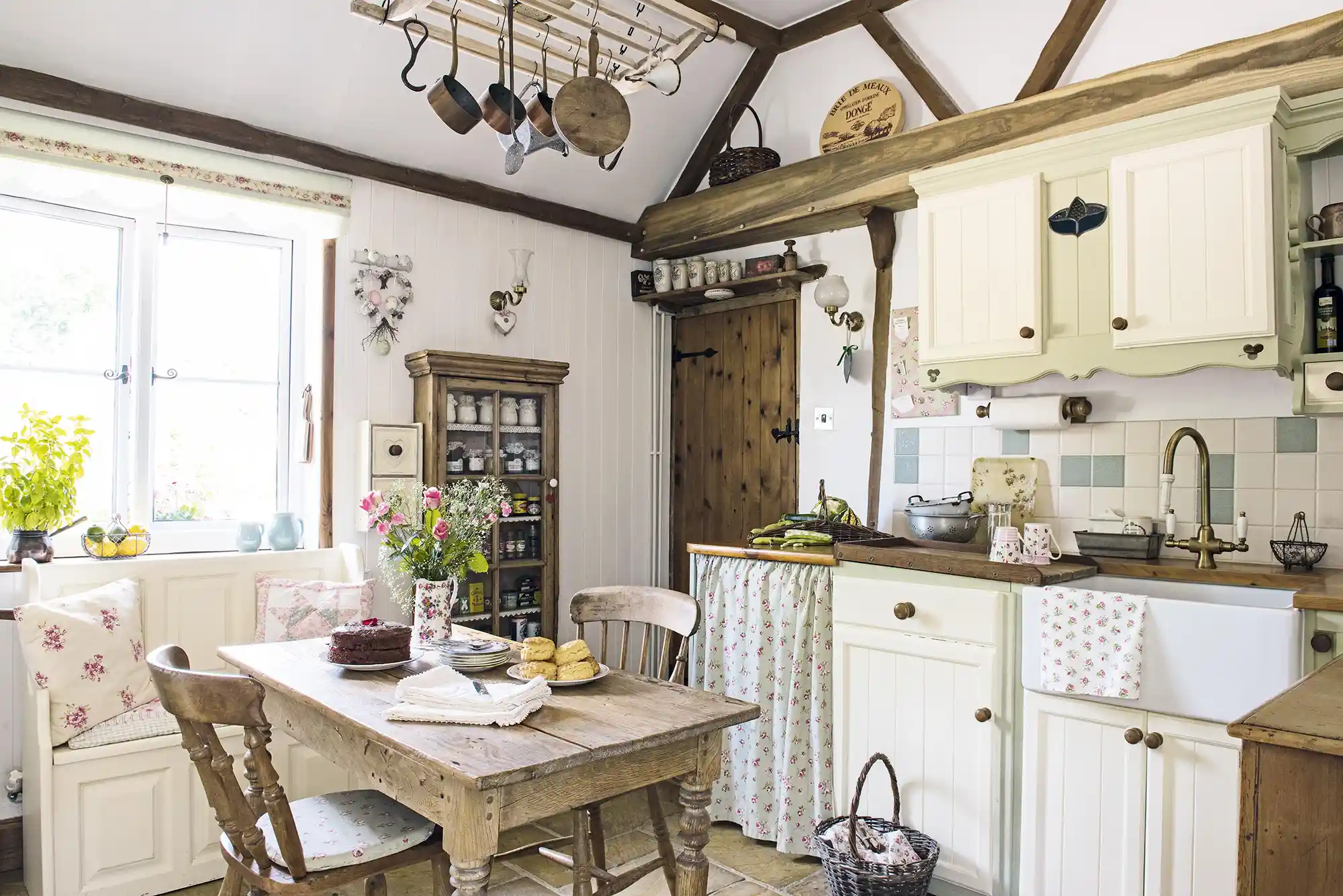
The kitchen makes the balance particularly clear: timber or painted cabinetry, a practical worktop, quiet detailing and modern appliances integrated into the composition. It can connect with dining spaces and the garden, but an island is appropriate only when circulation, dimensions and household needs support it.
The idea is more substantial than adding traditional handles to contemporary cabinets. Materials, colour, storage and daily use should connect the kitchen to the rest of the home.
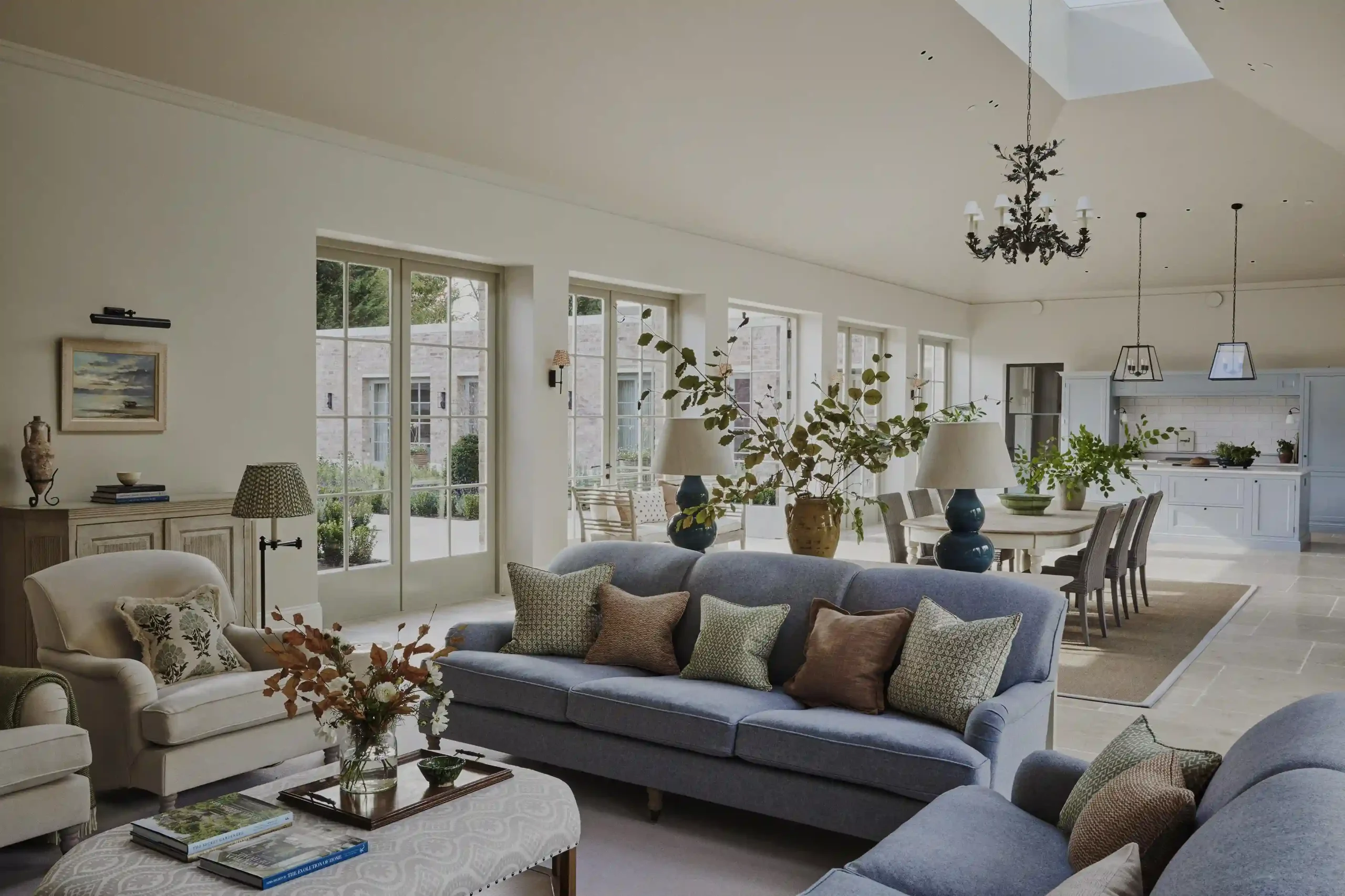
English Country and its contemporary interpretation
Both approaches value natural materials, comfort and a relationship with the garden. A traditional interpretation may retain more separate rooms and richer detailing; a contemporary one can introduce more flexible layouts, simpler details and integrated equipment. These are tendencies for comparison, not rules covering every home.
The deeper distinction is how the design responds to life. Inherited elements are selected for the identity and spatial quality they offer, then reorganised around current needs. A home can therefore be up to date in its systems and convenient in use while retaining a recognisable English character.
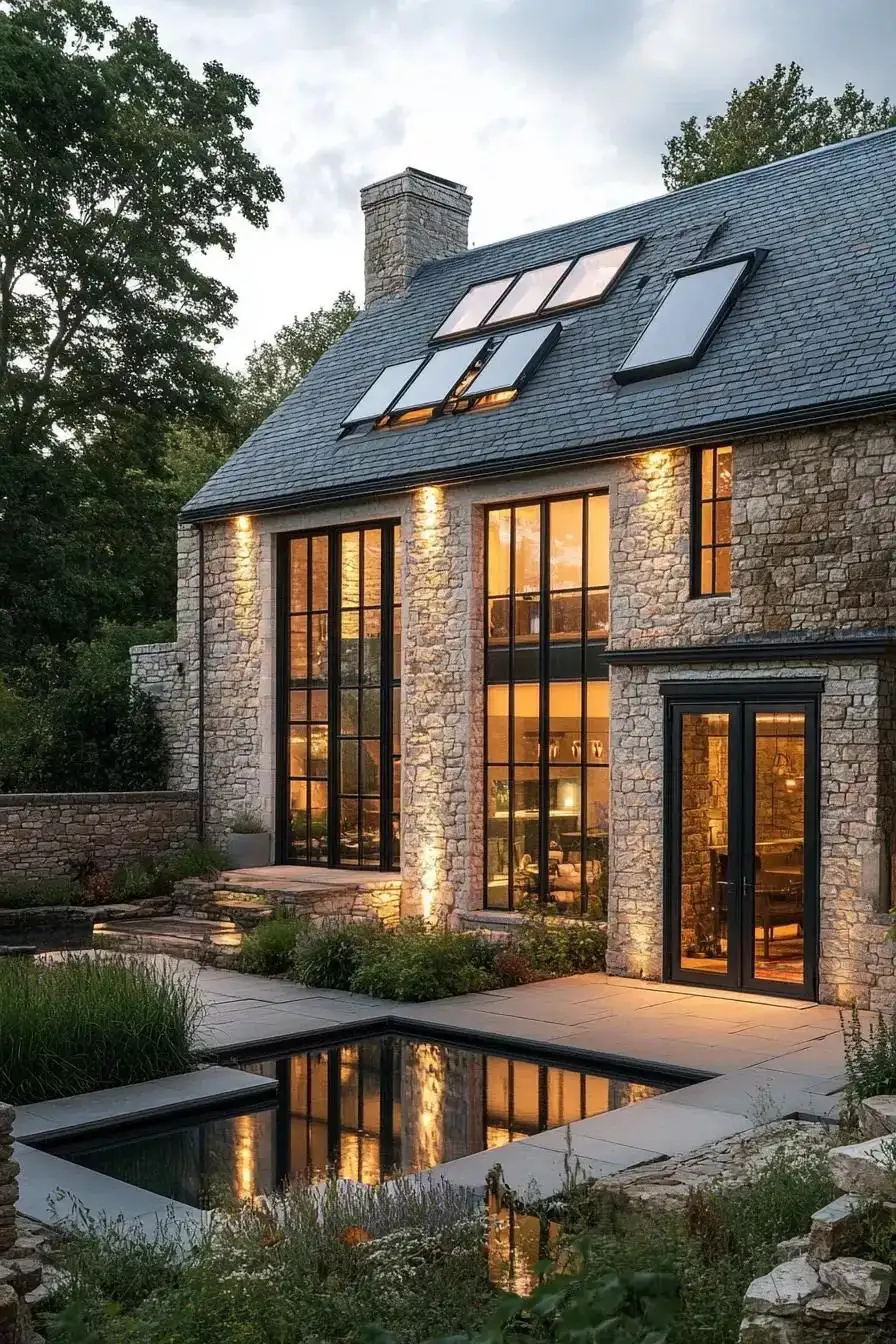
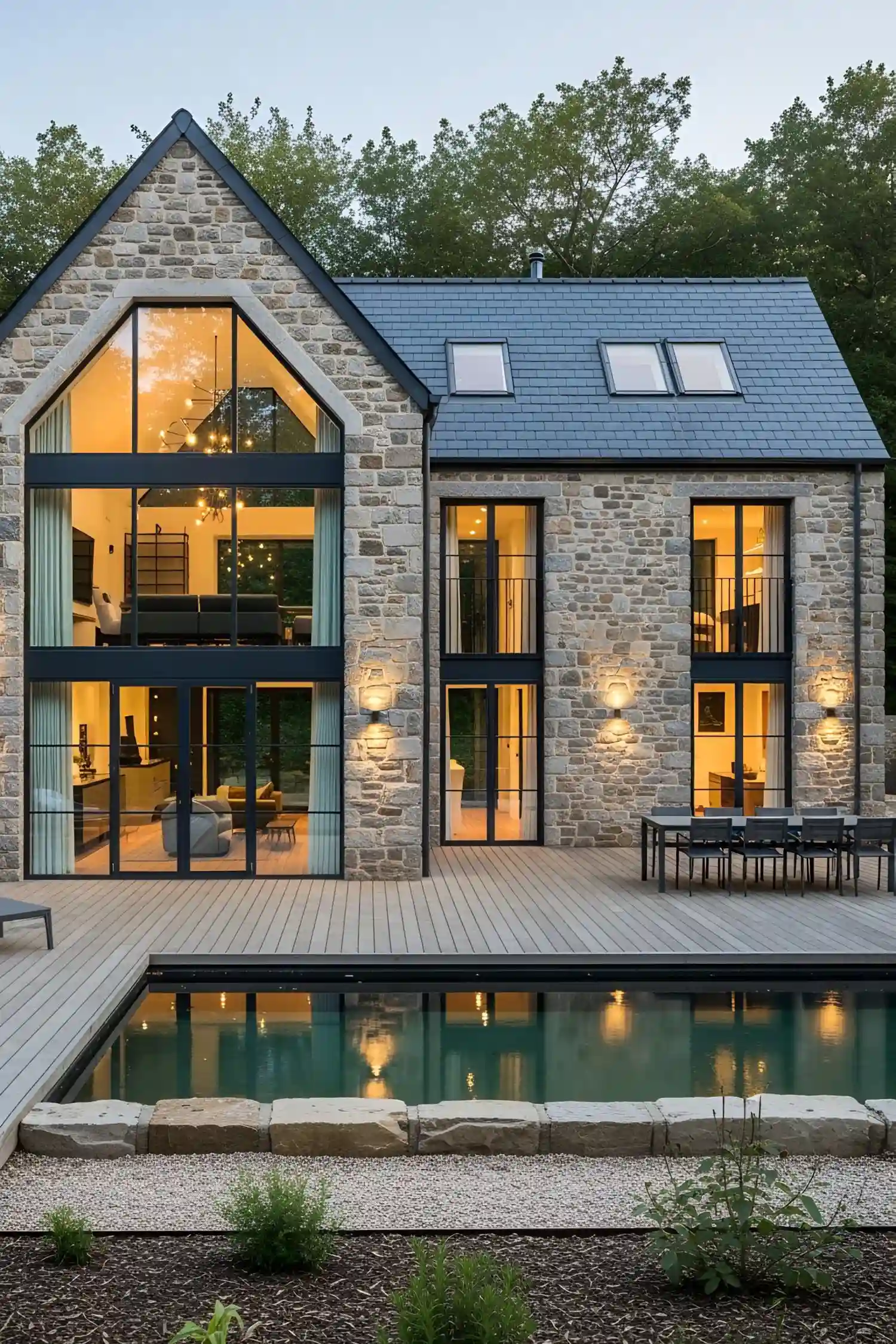
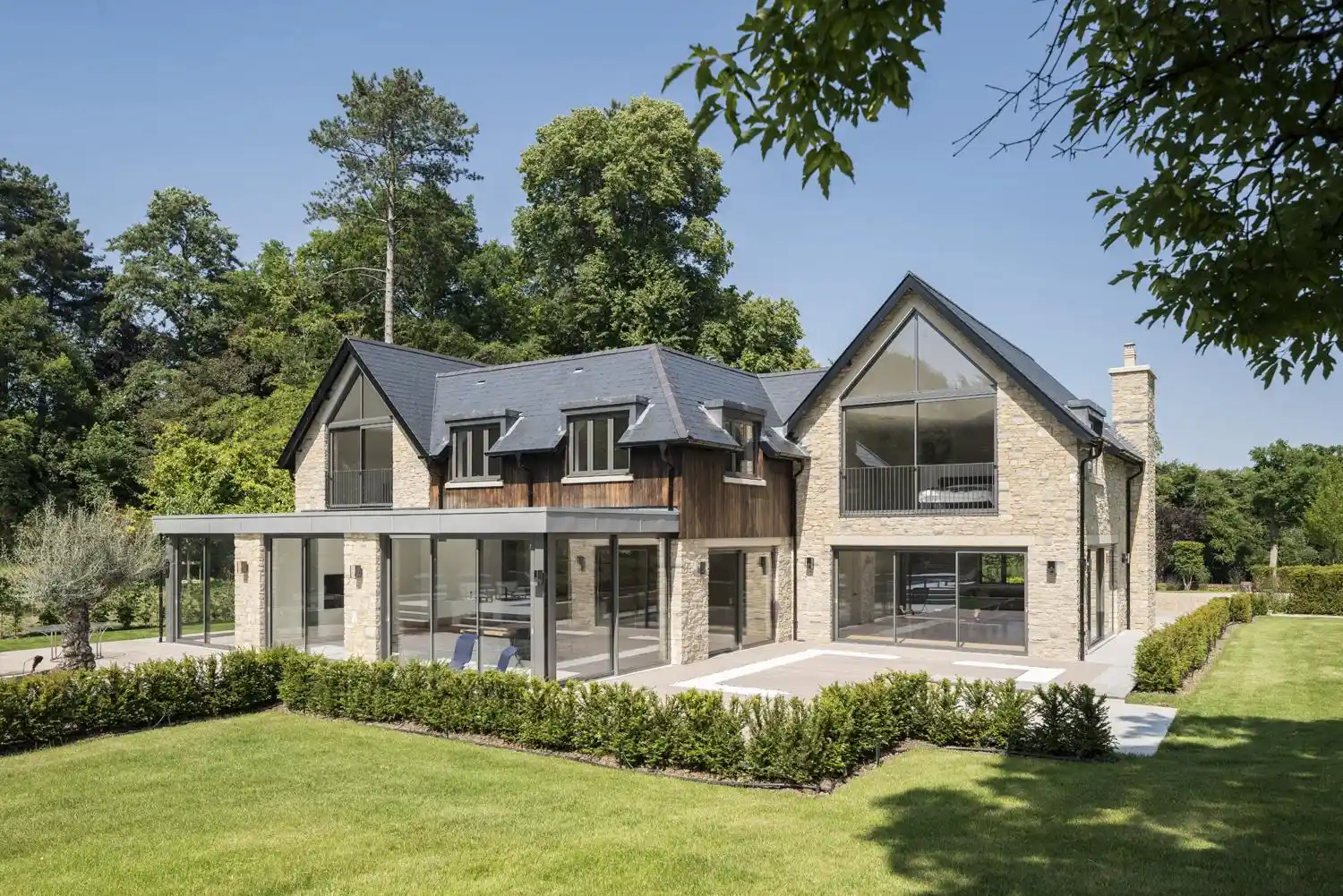
A brief comparison with related approaches
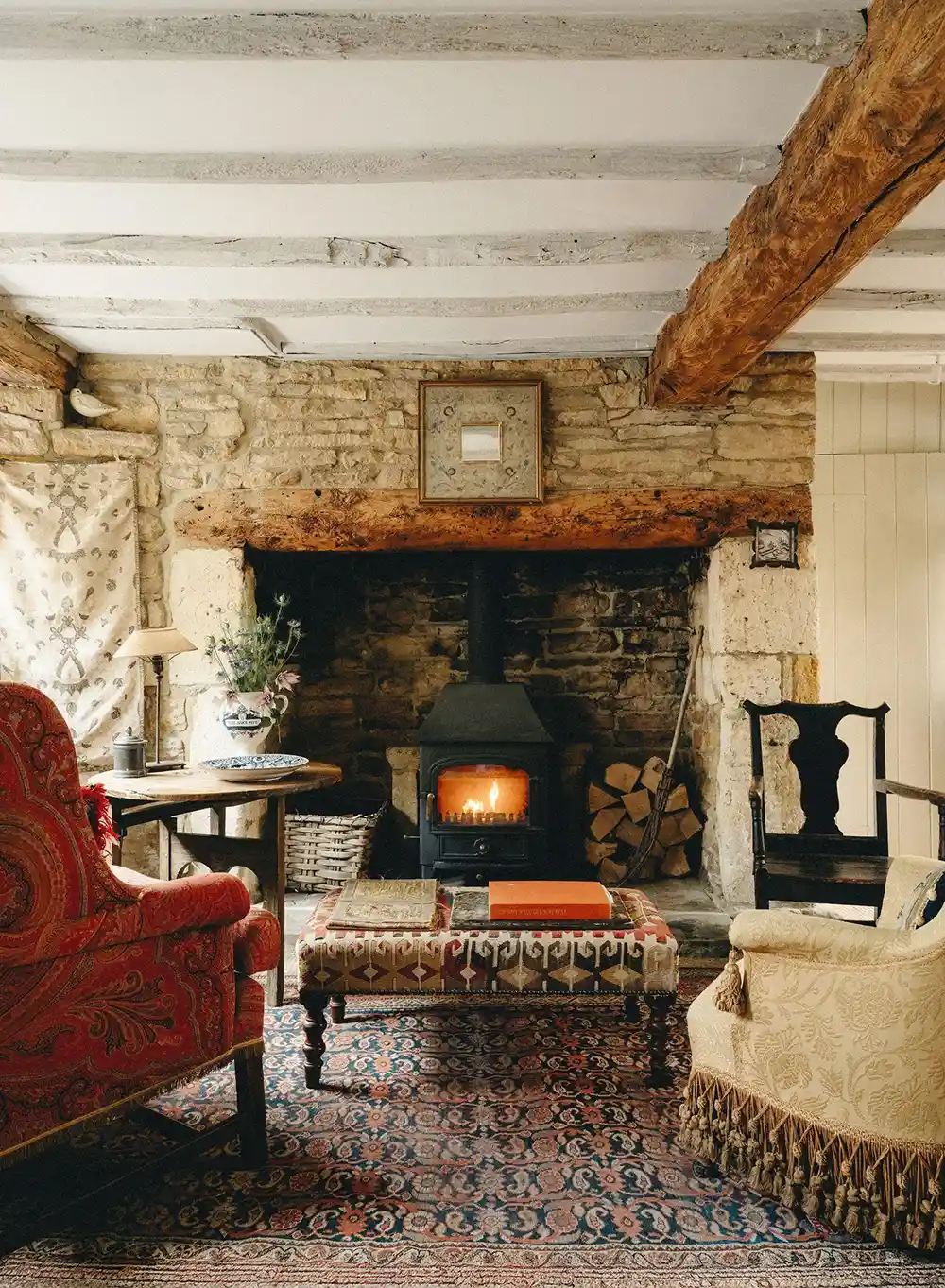
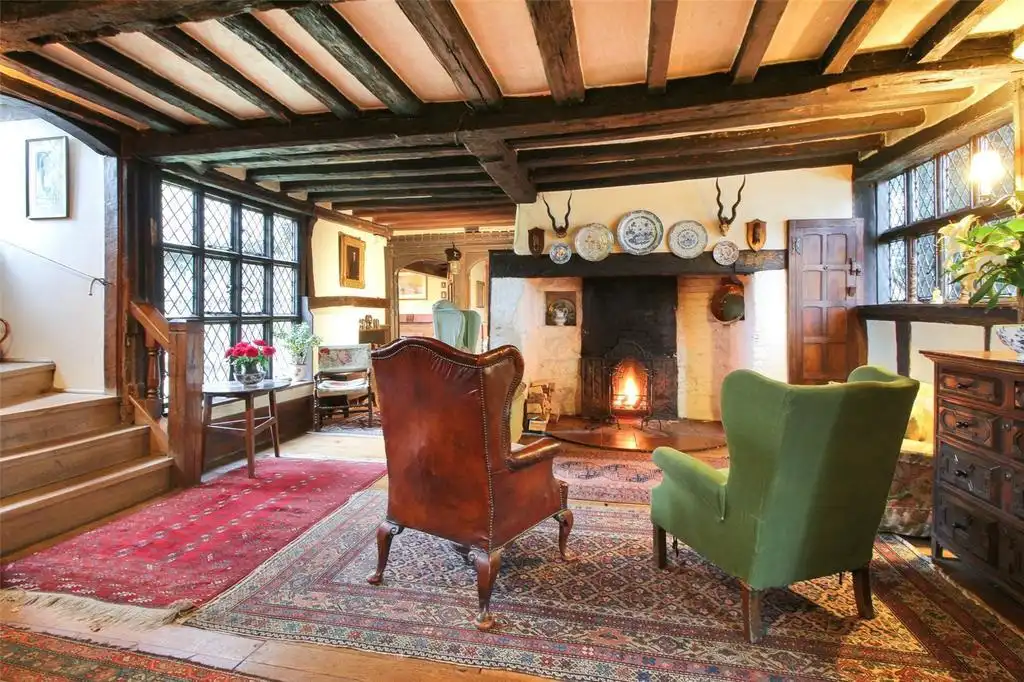
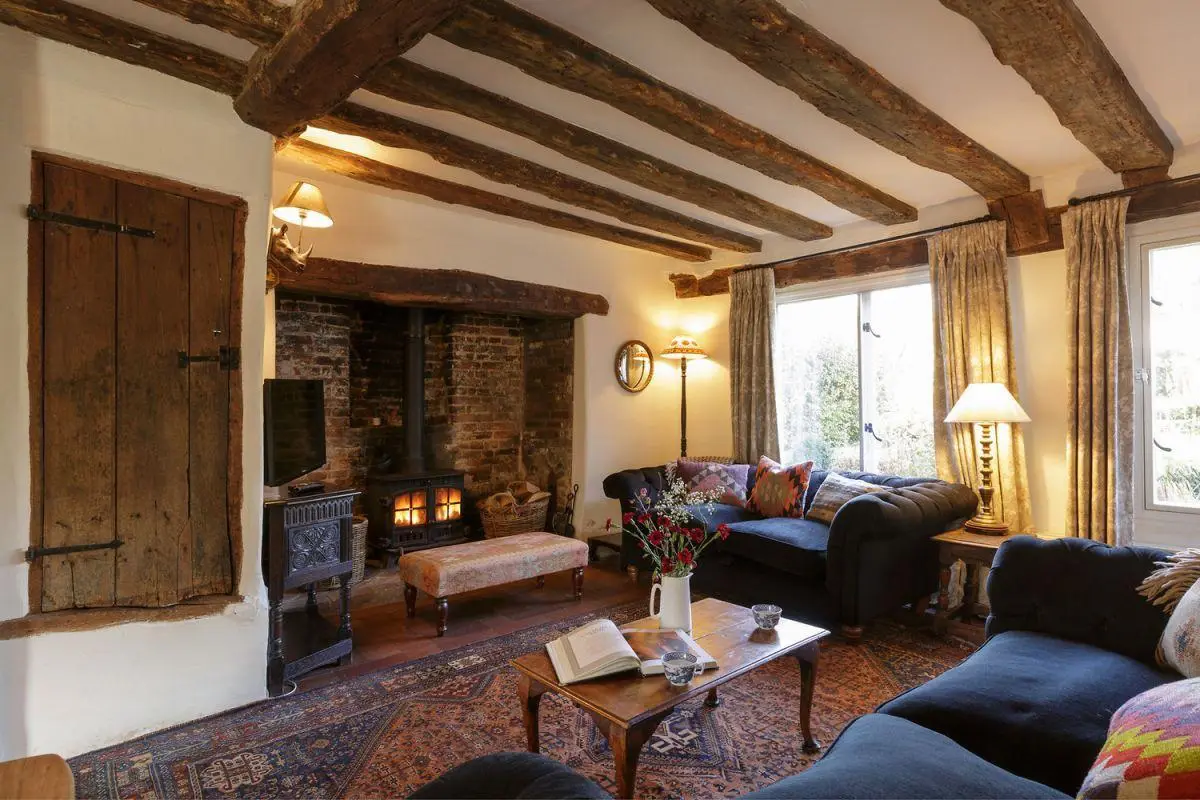
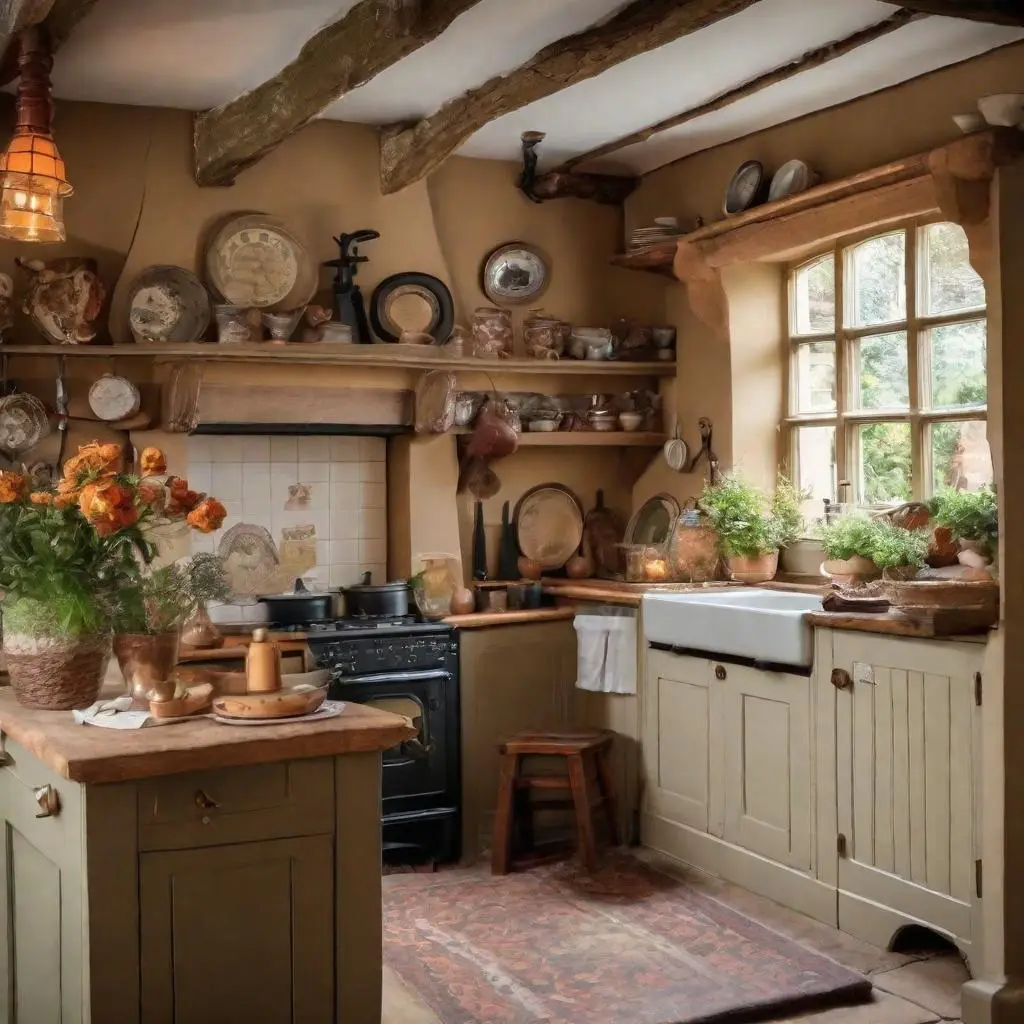
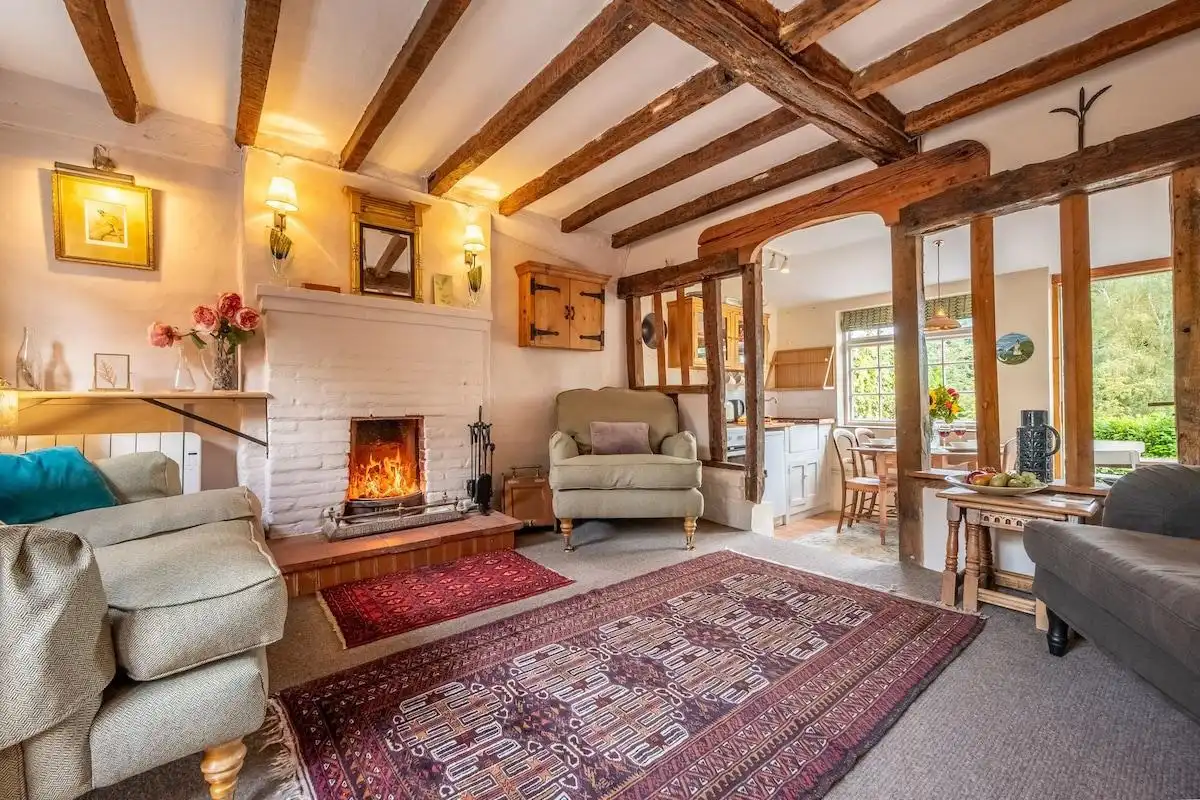
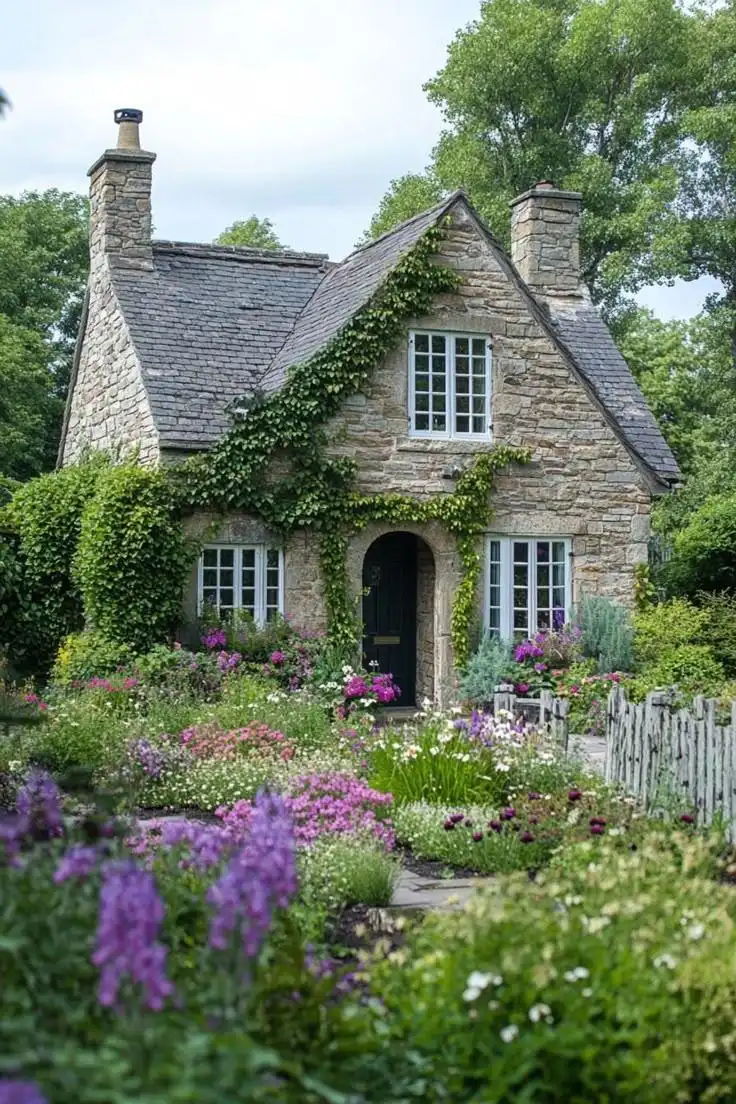
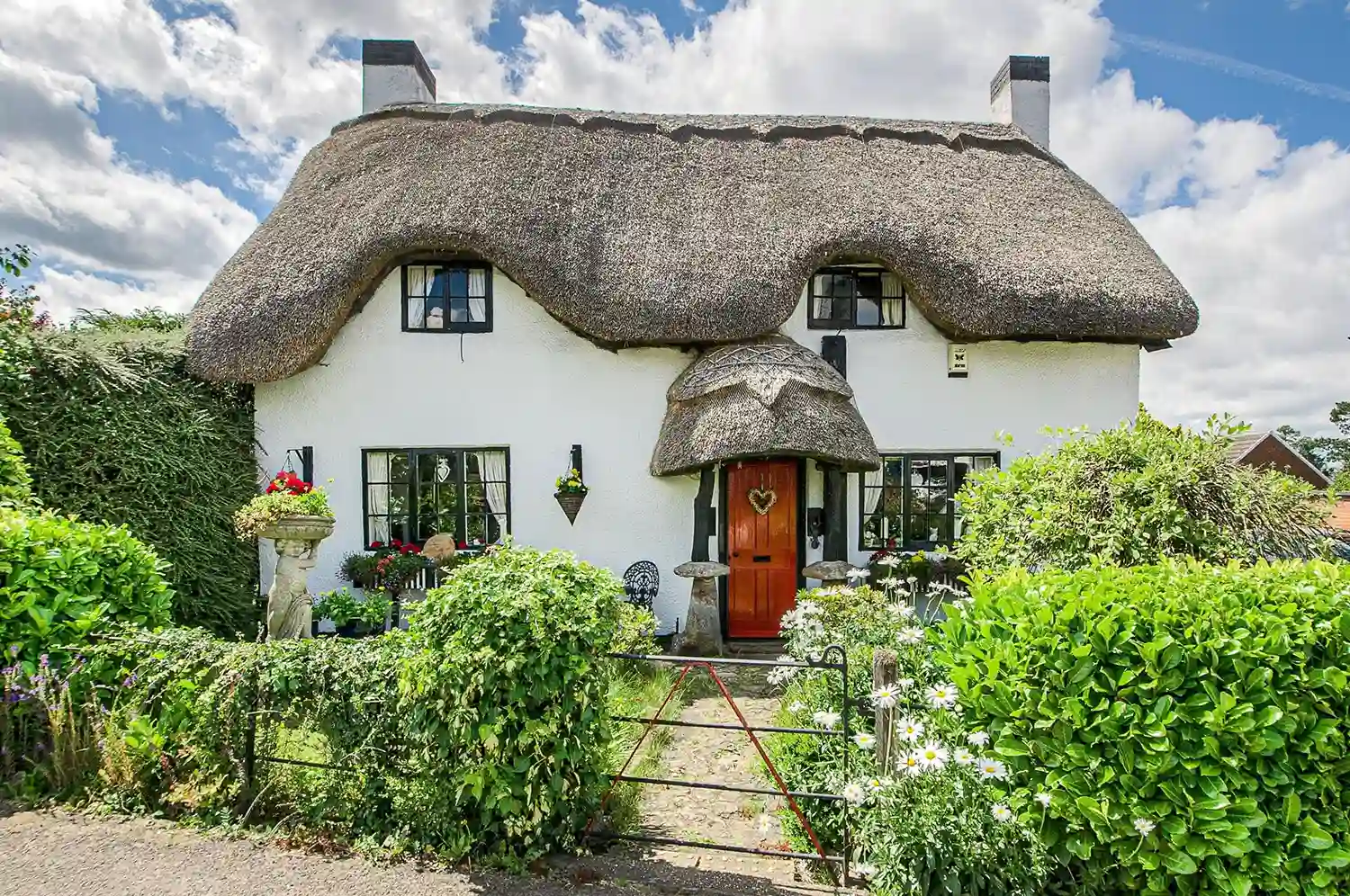
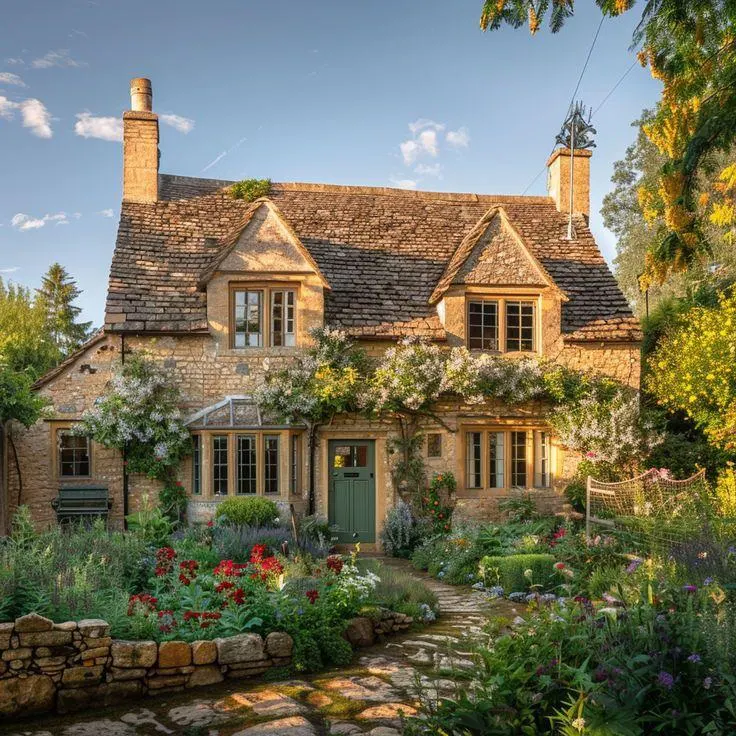
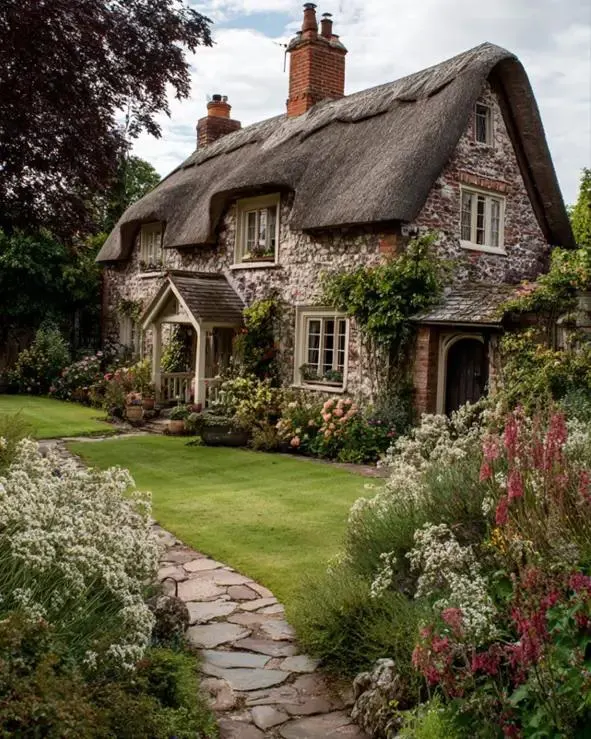
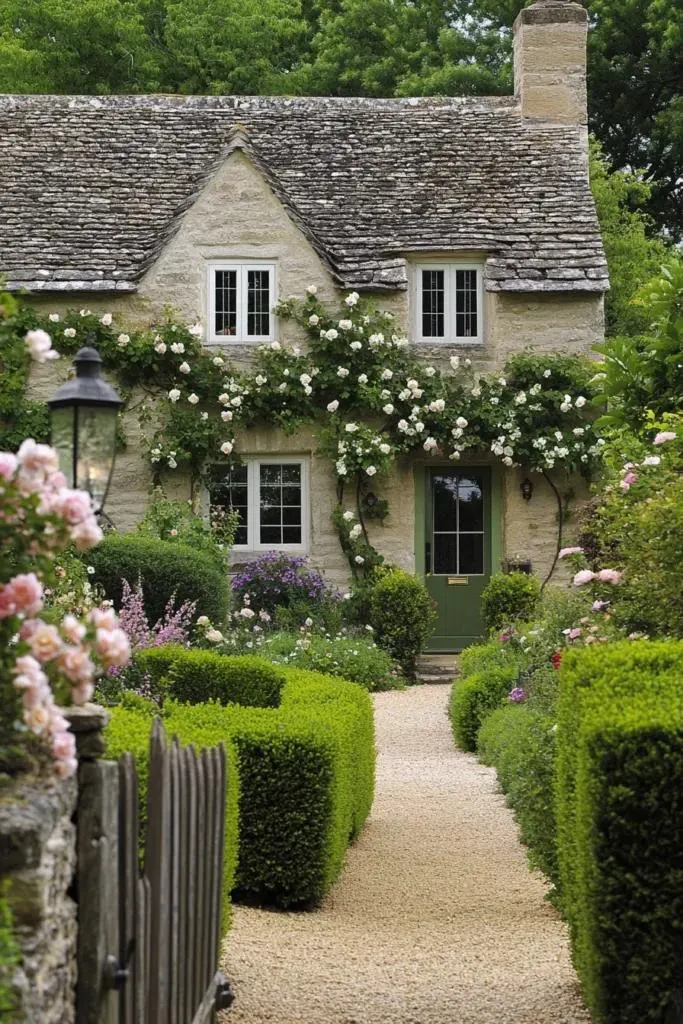
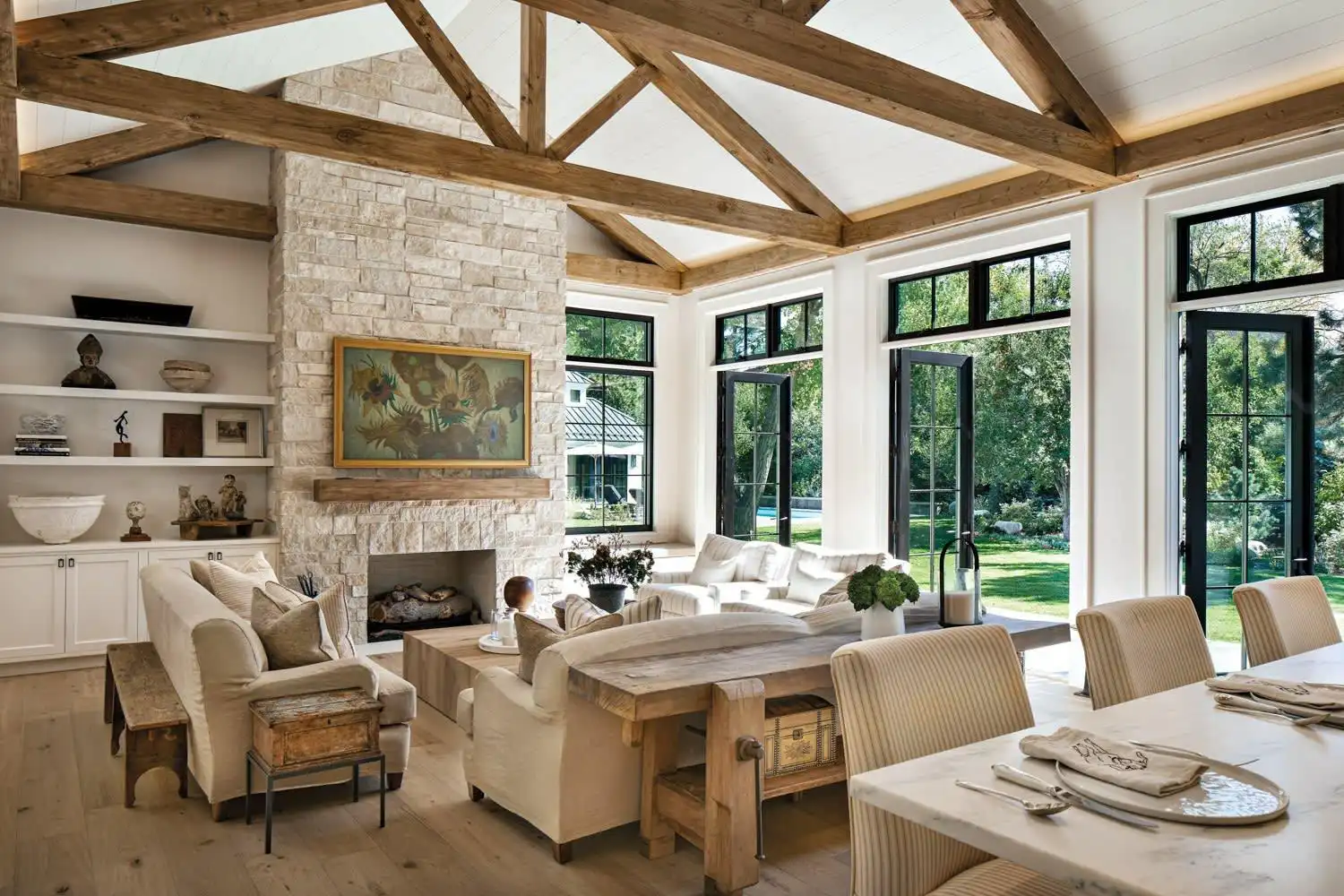
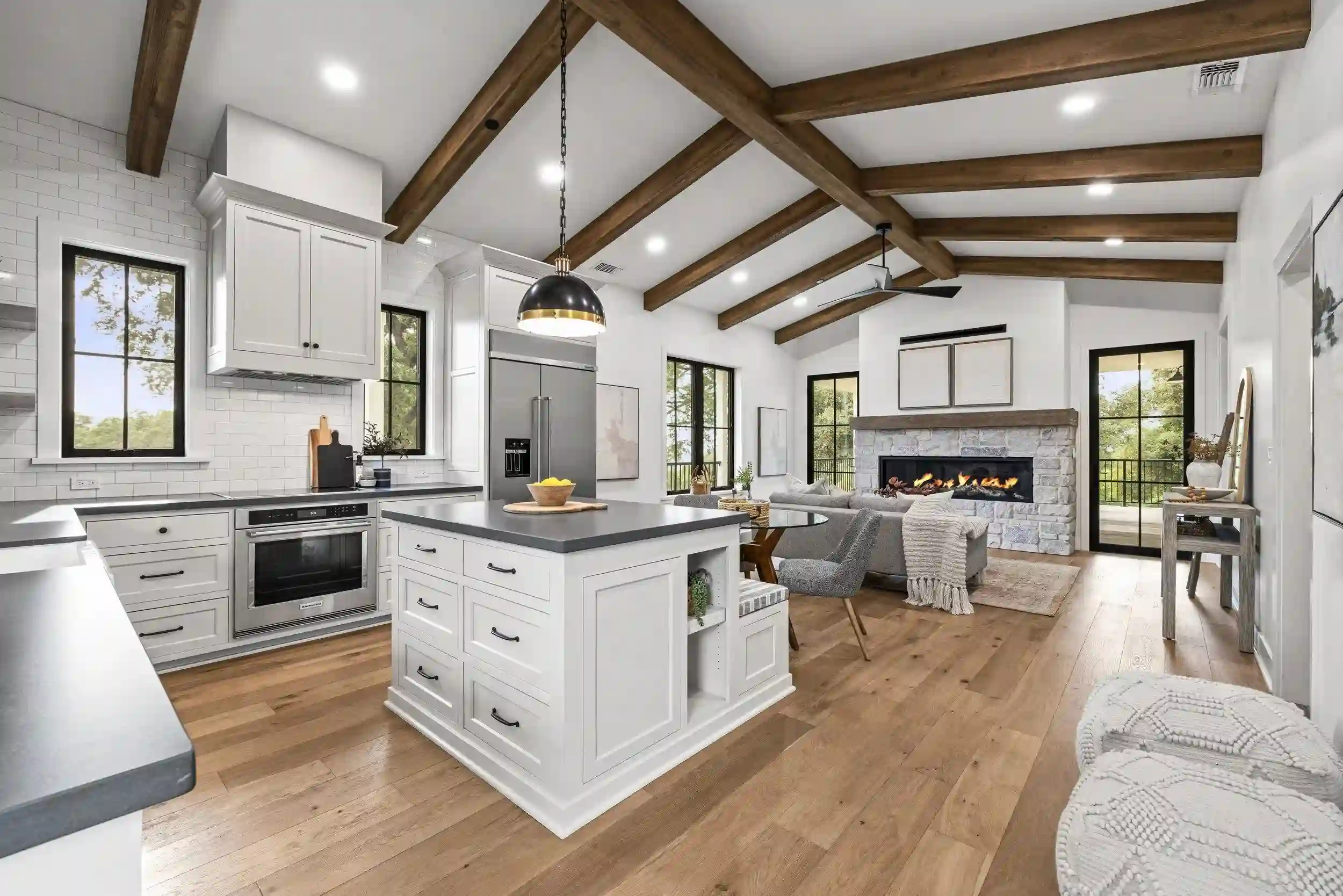
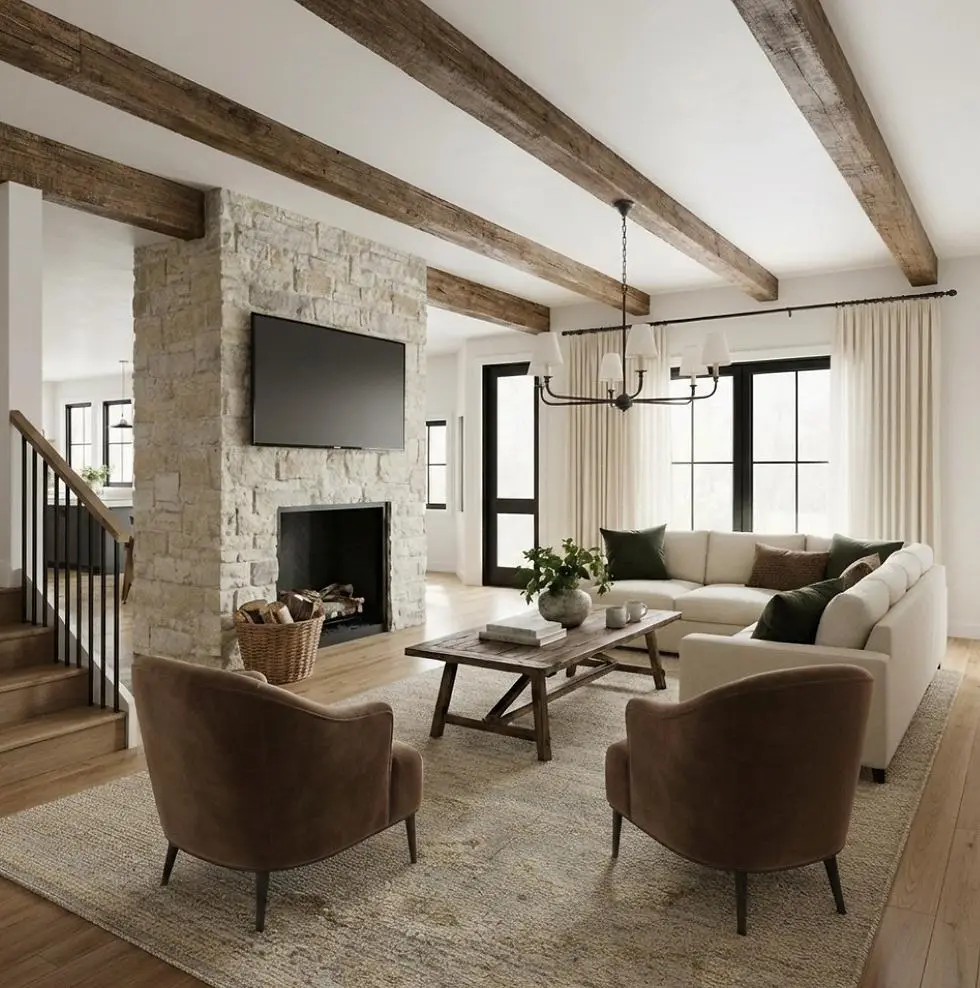
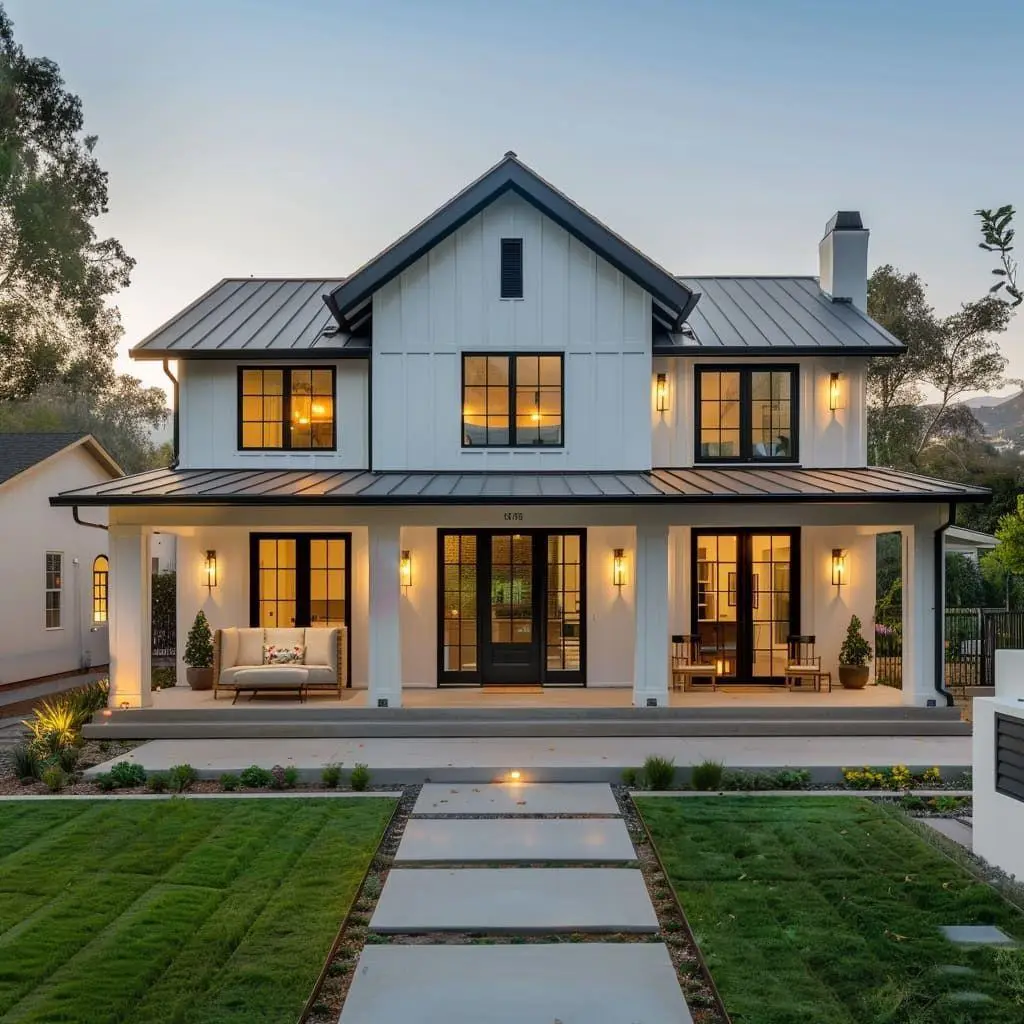
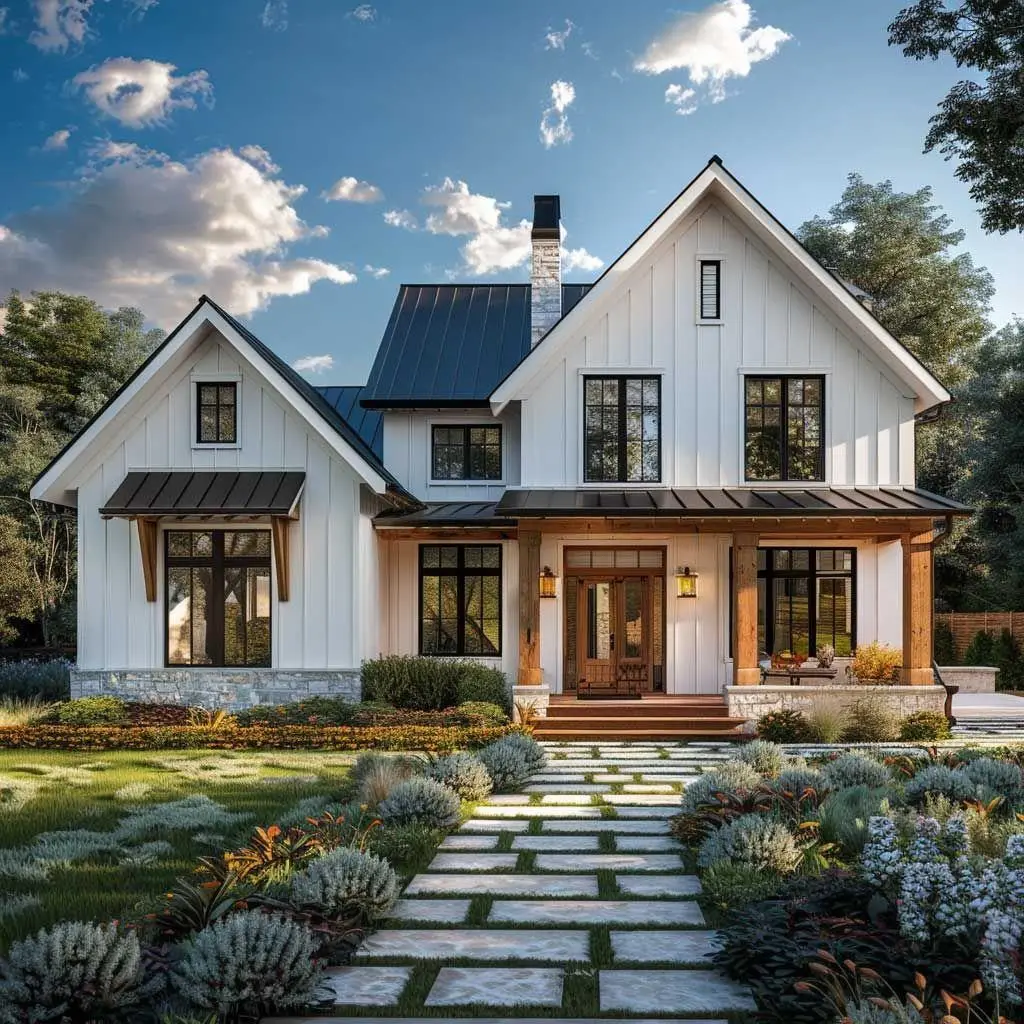
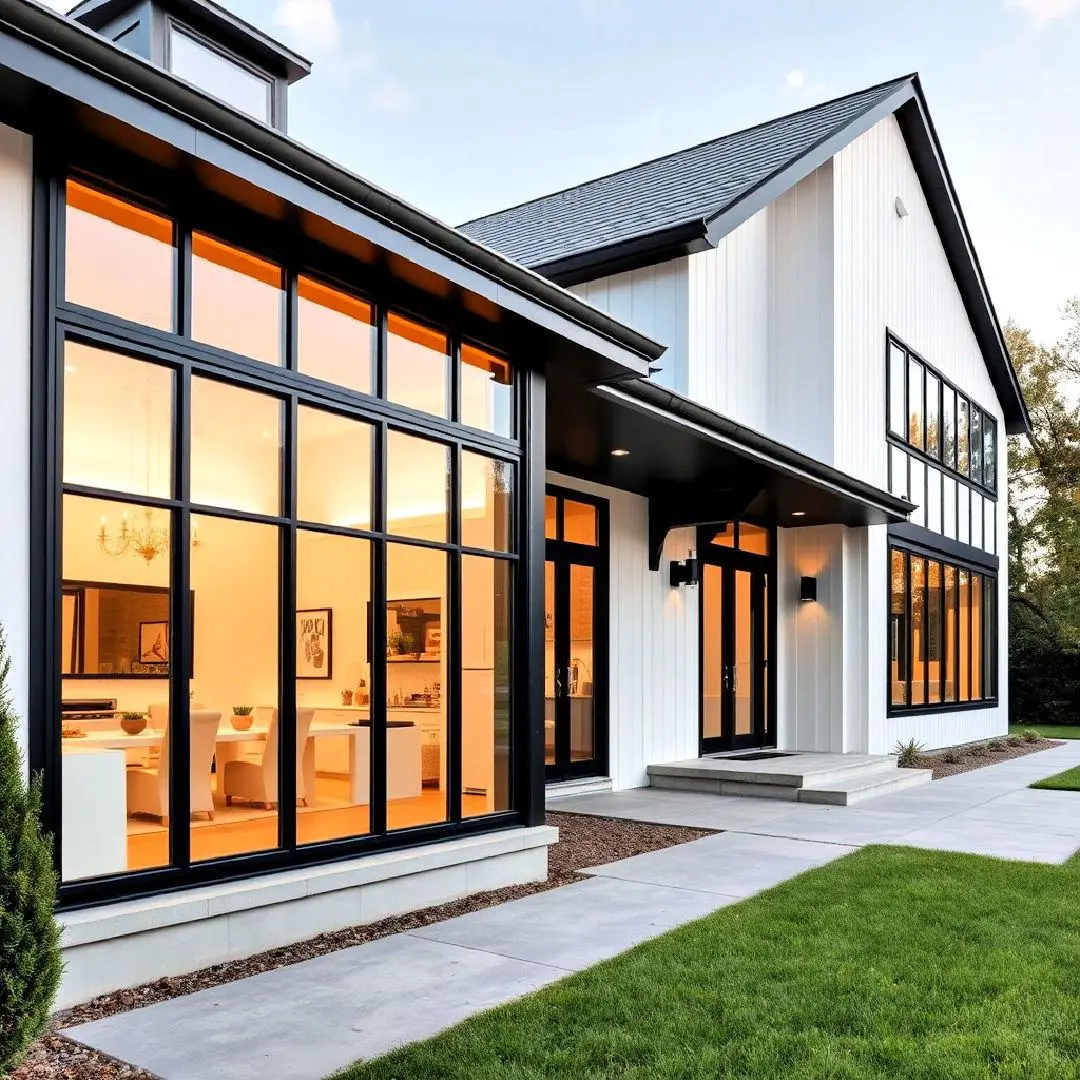
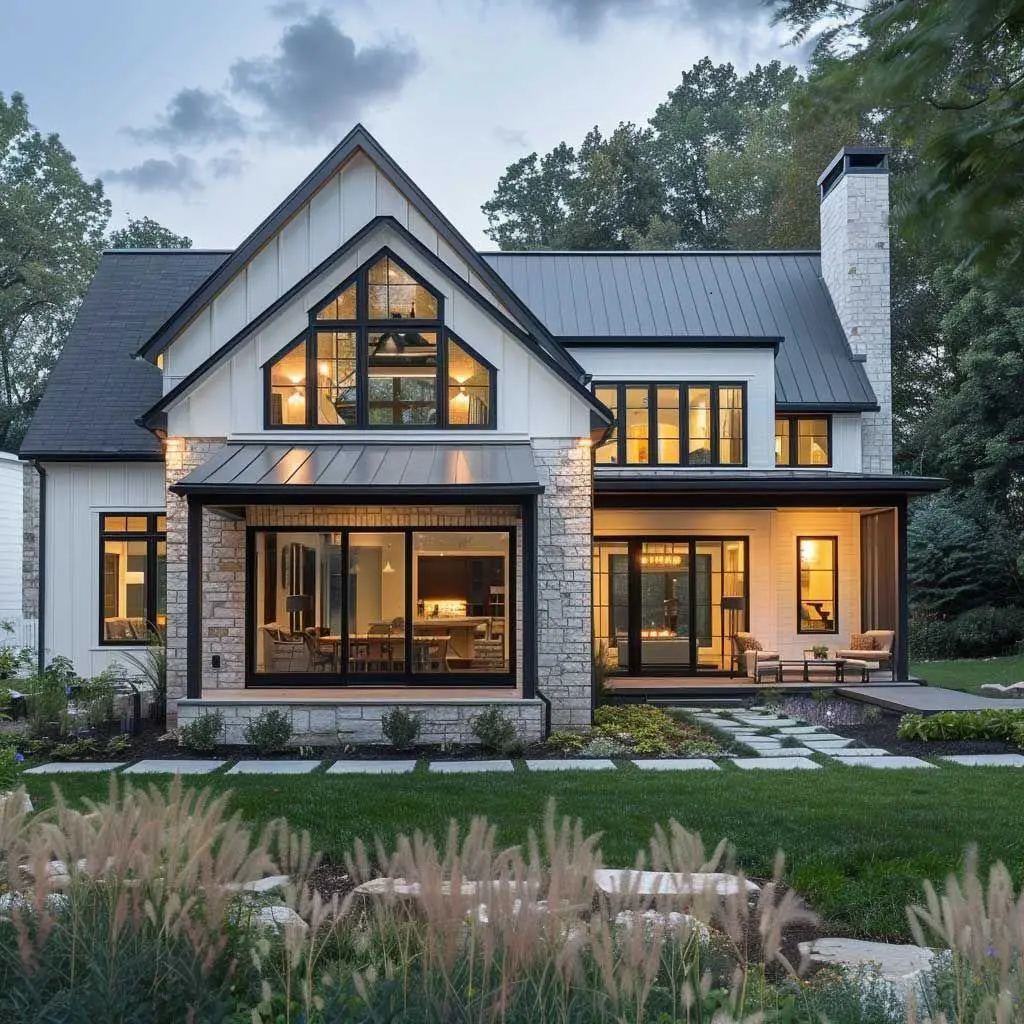
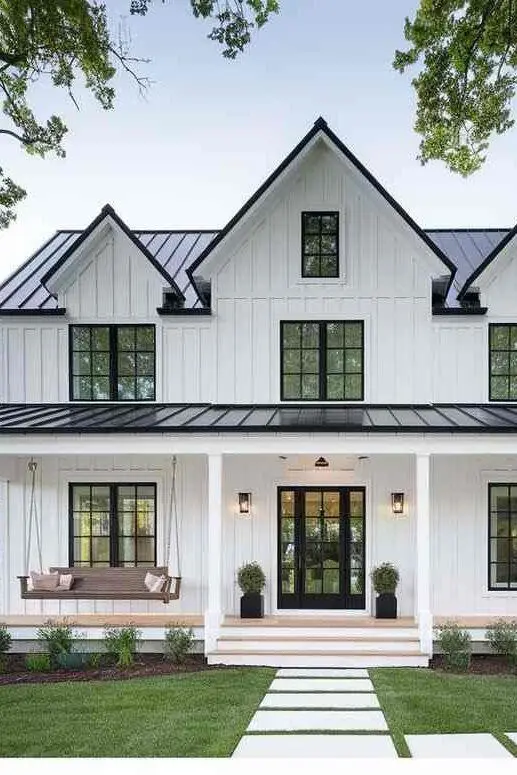
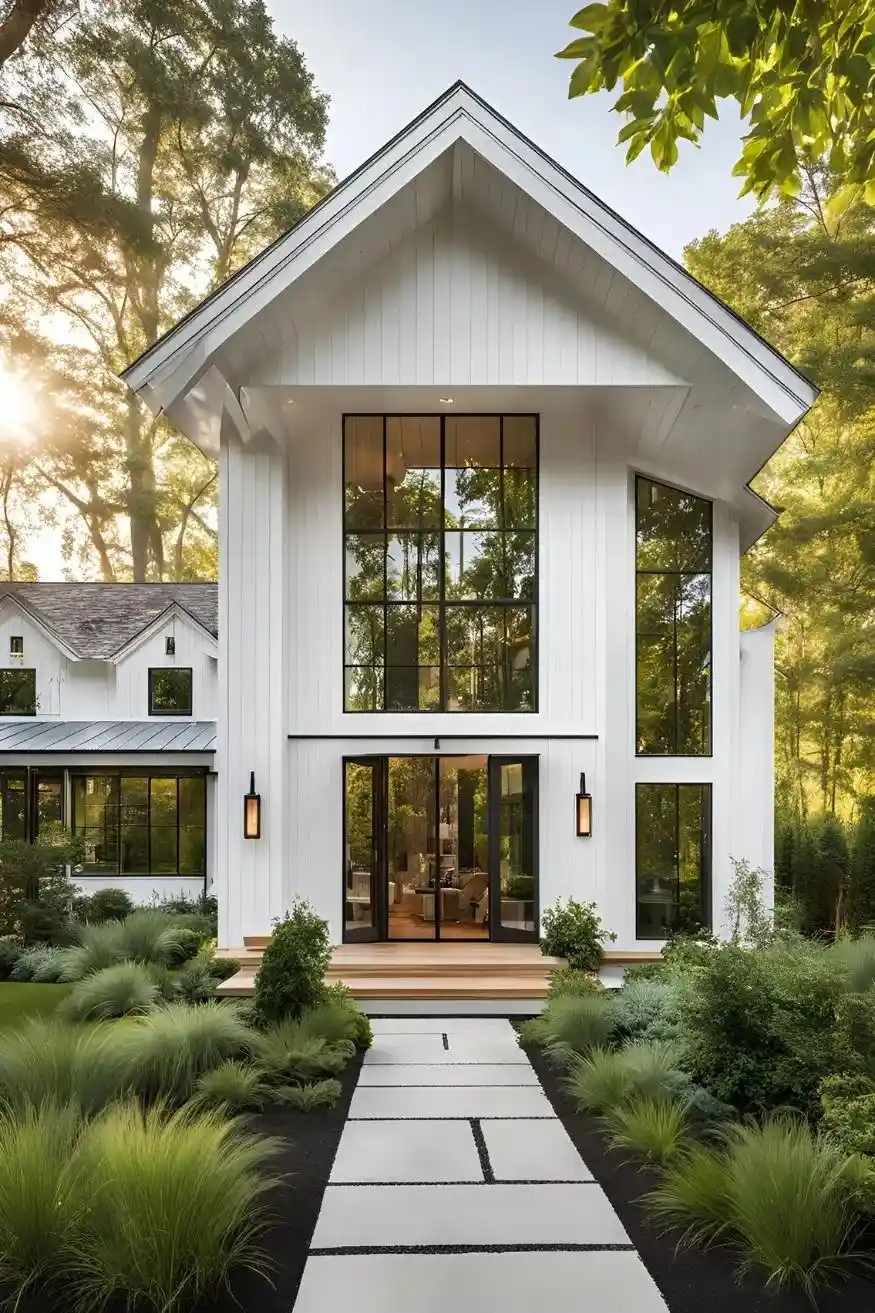
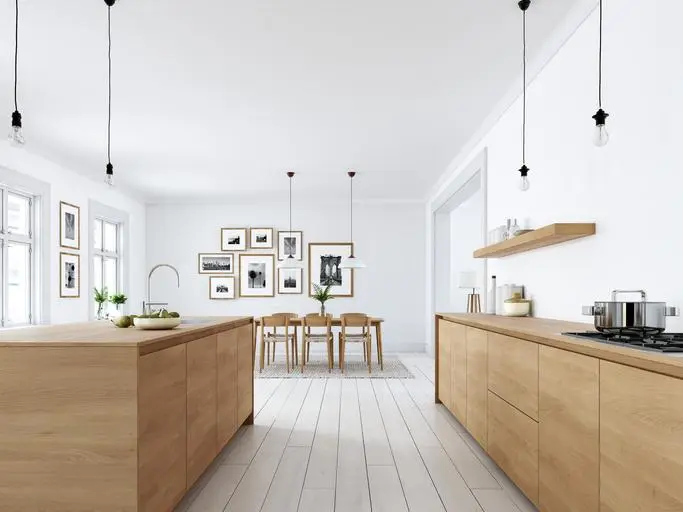
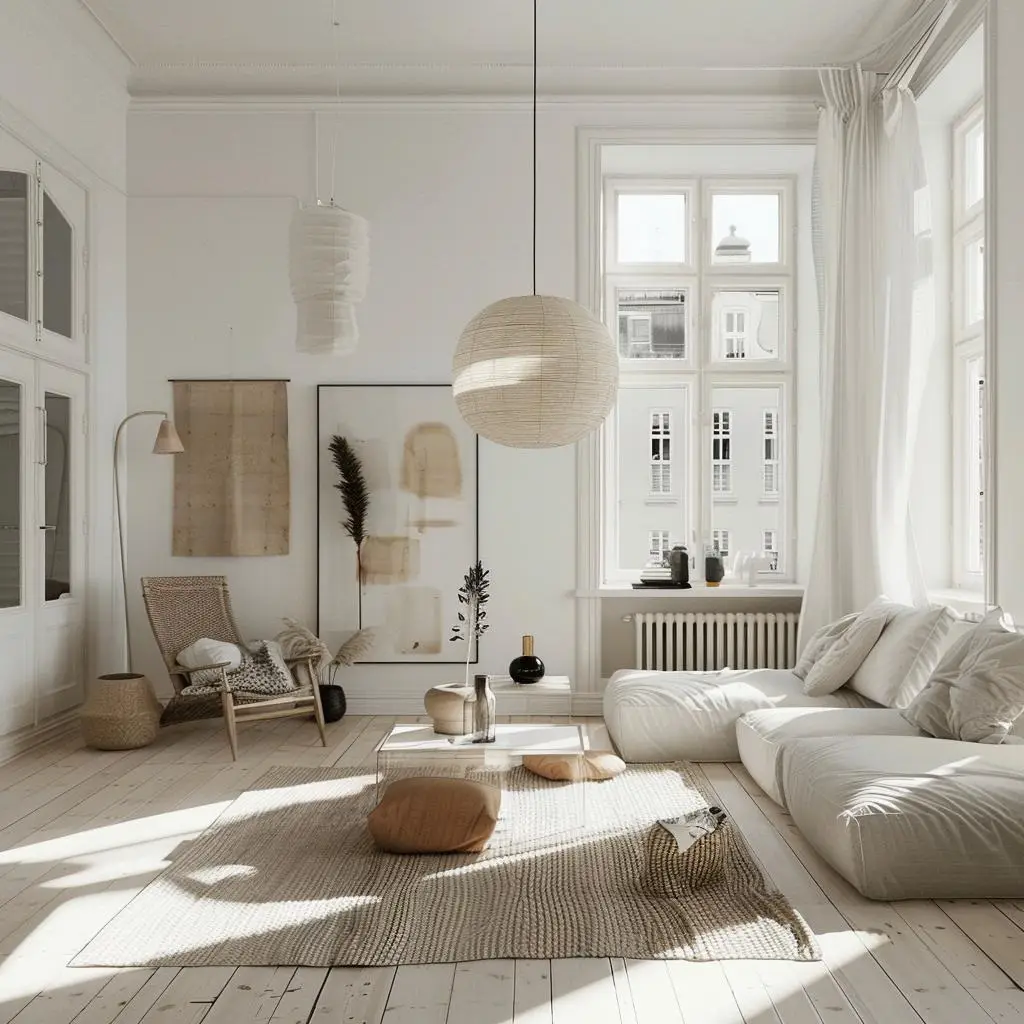
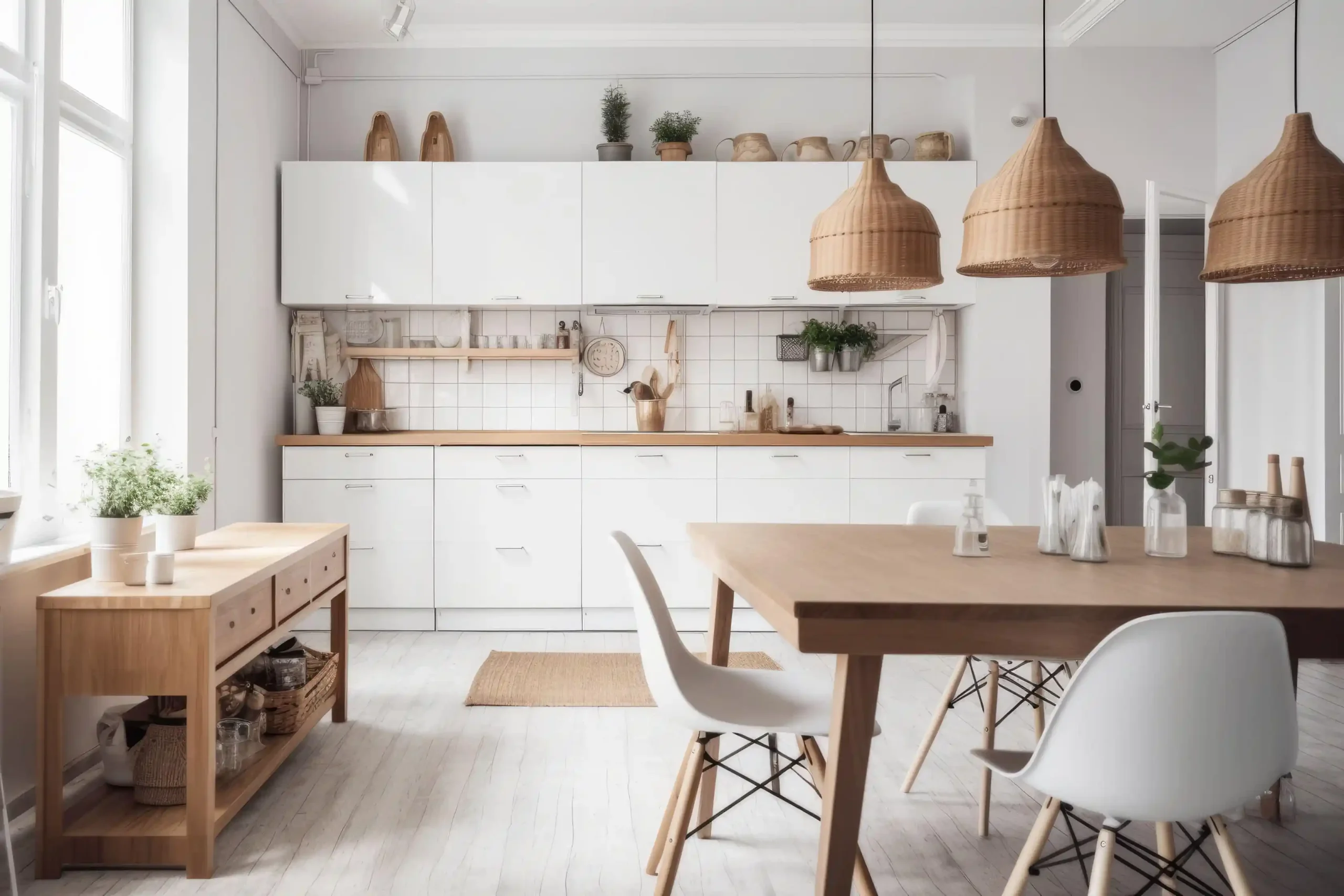
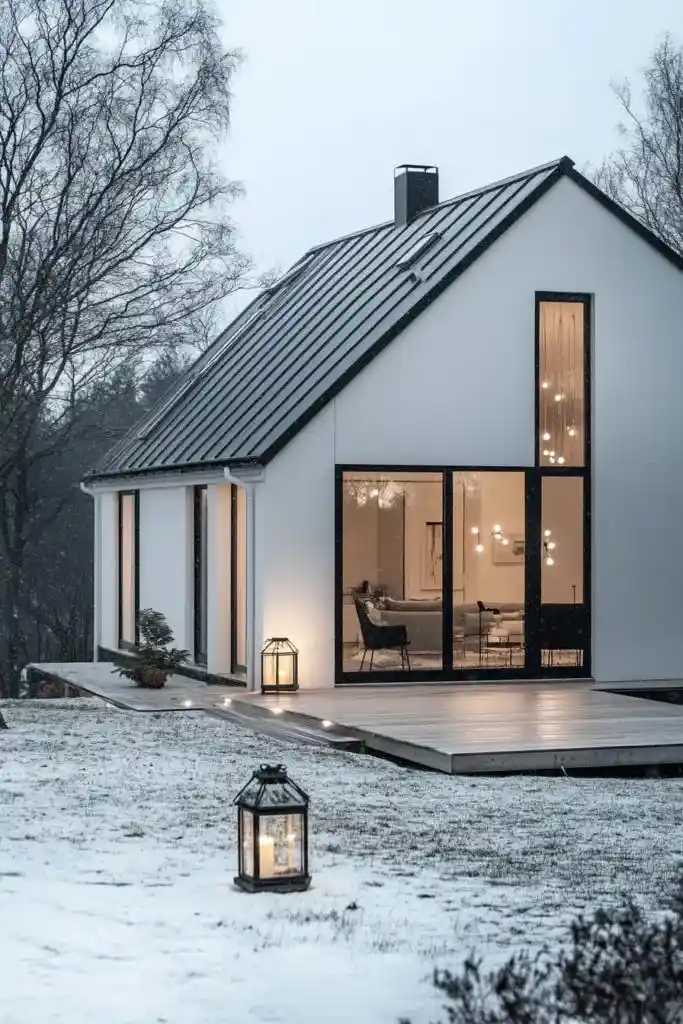
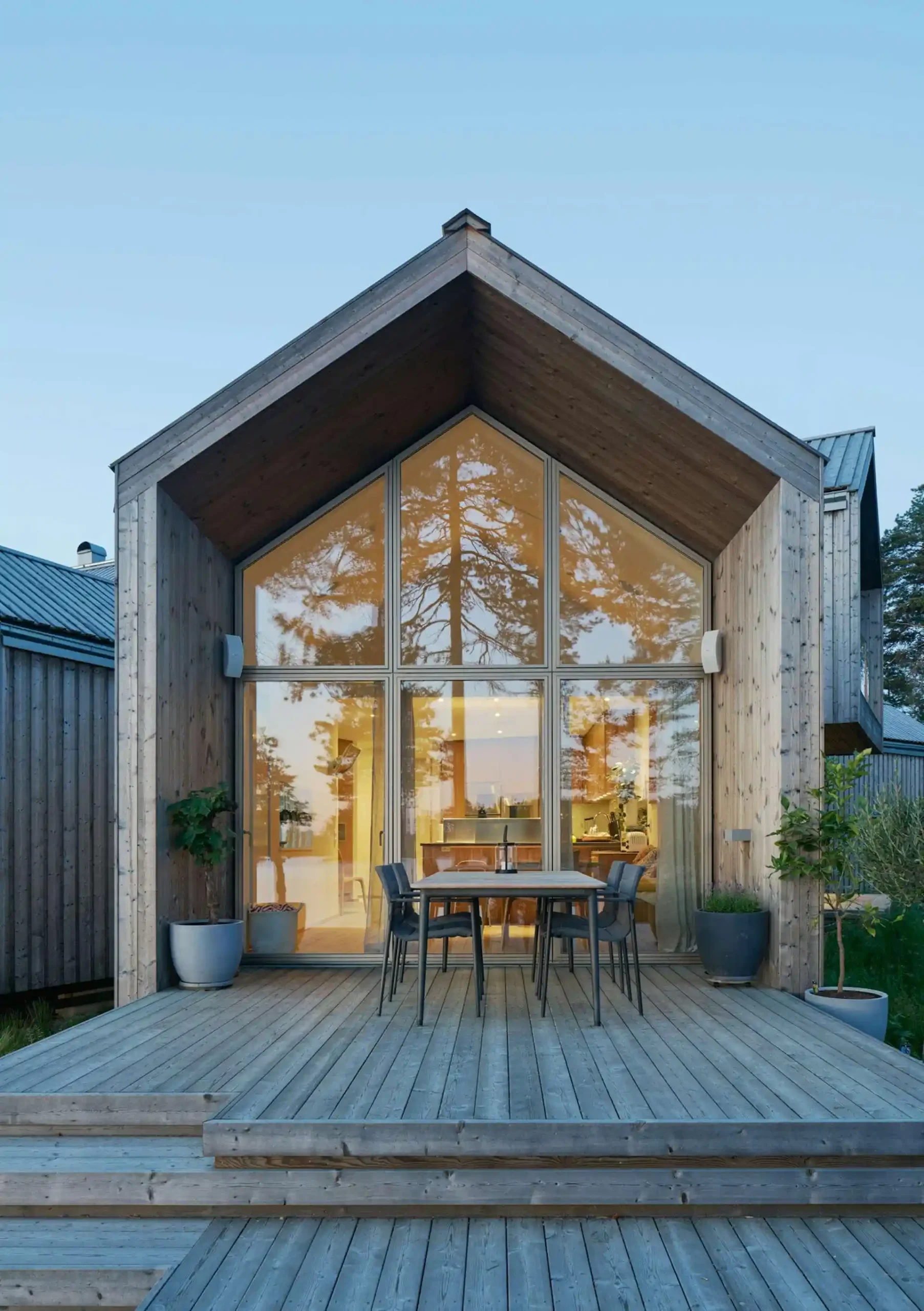
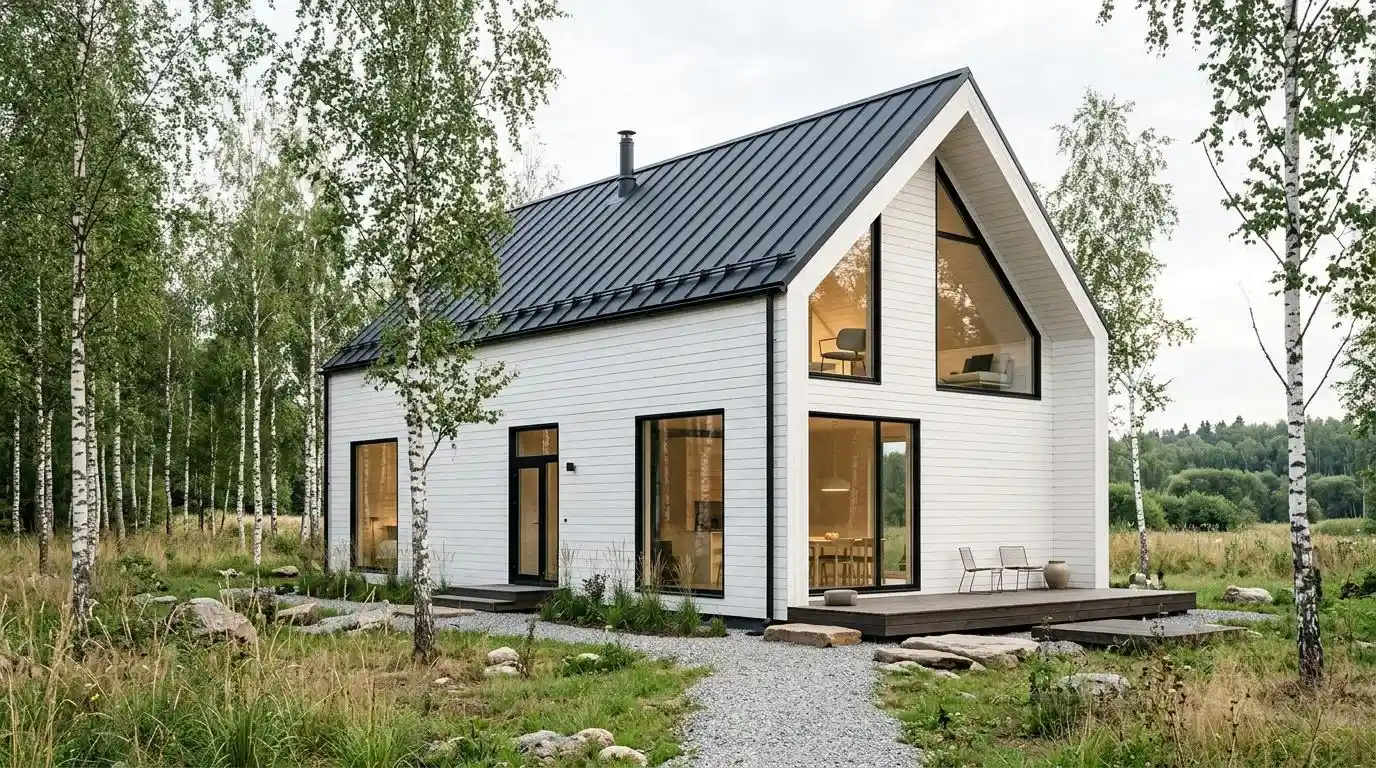
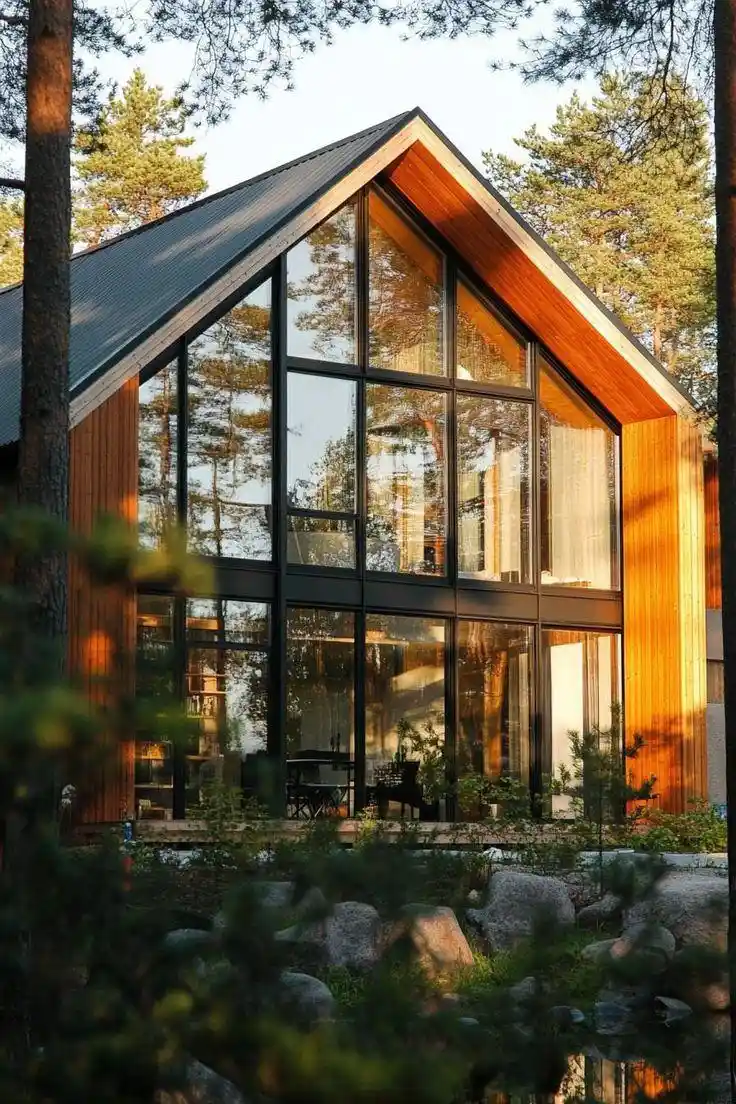
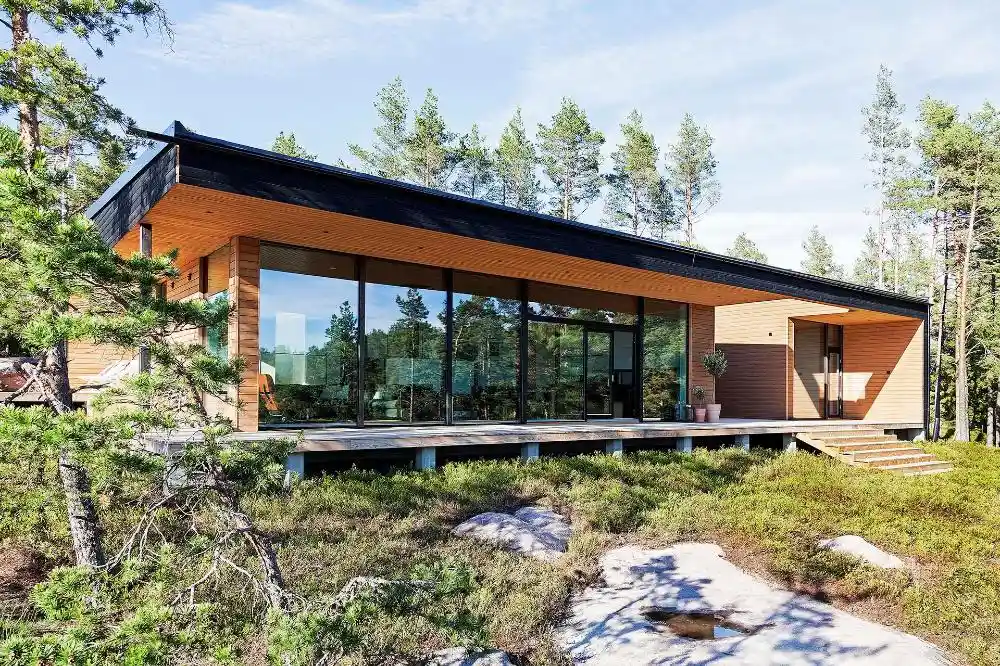
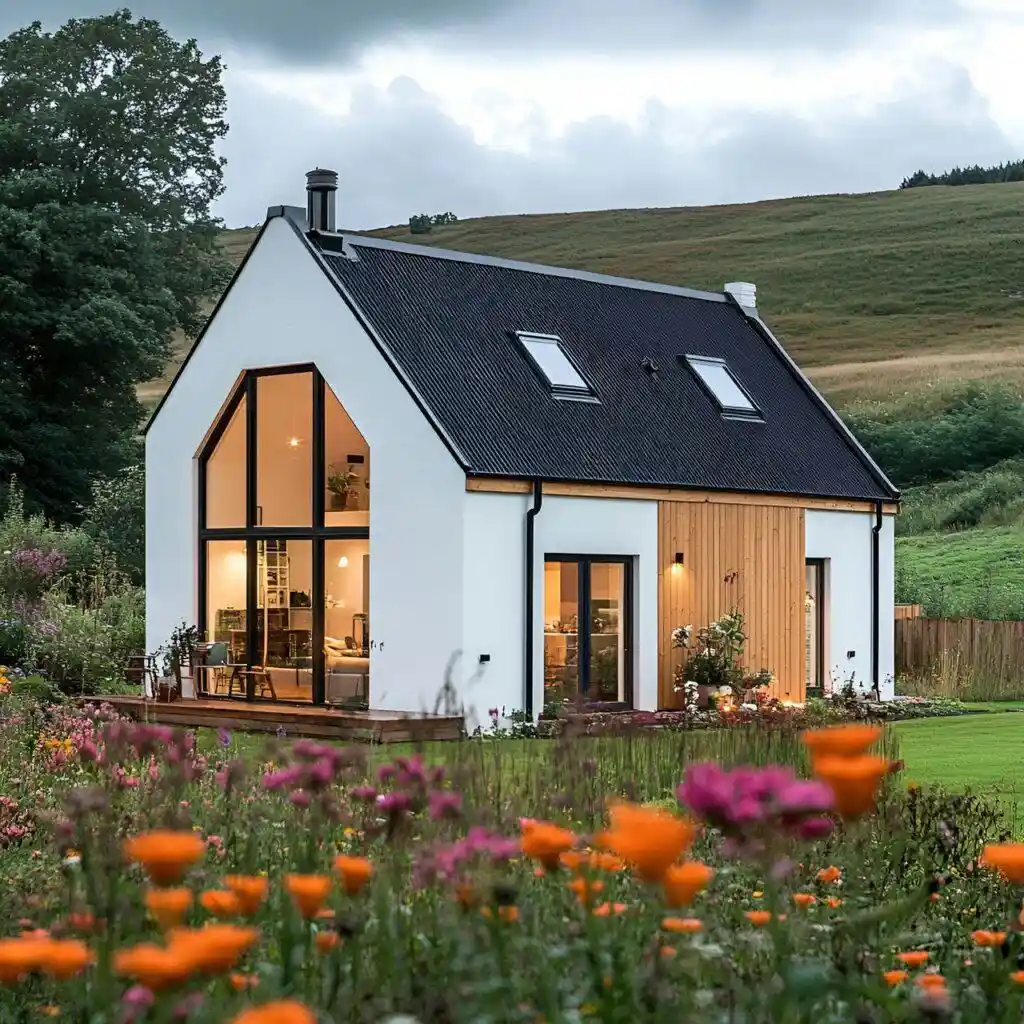
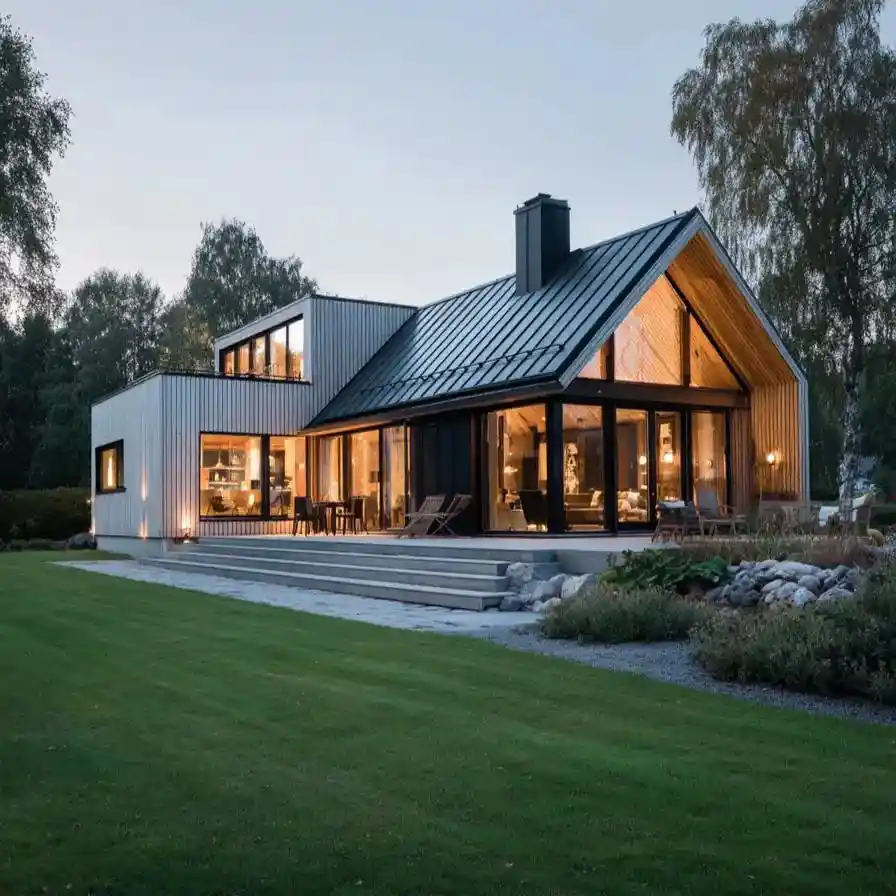
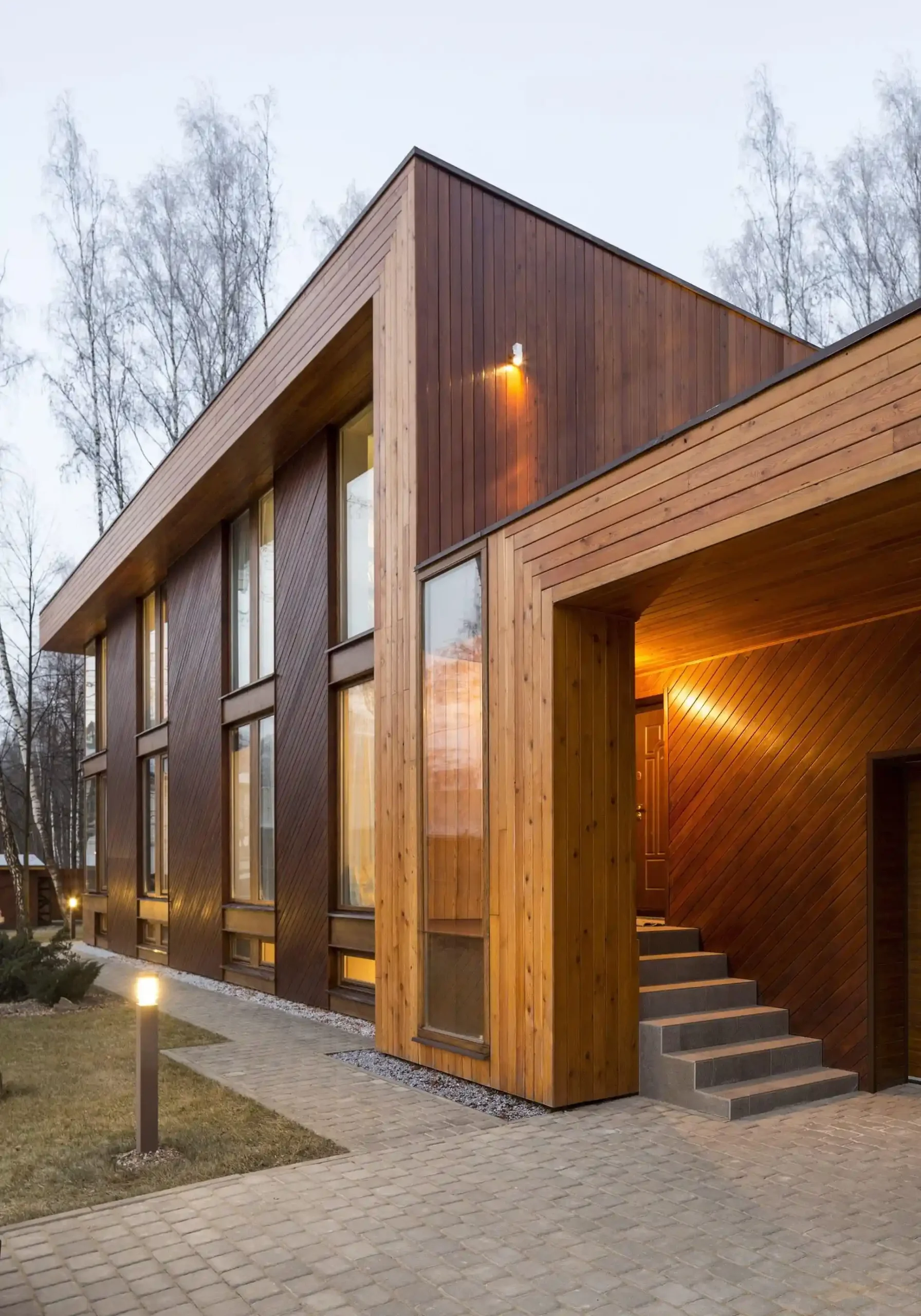
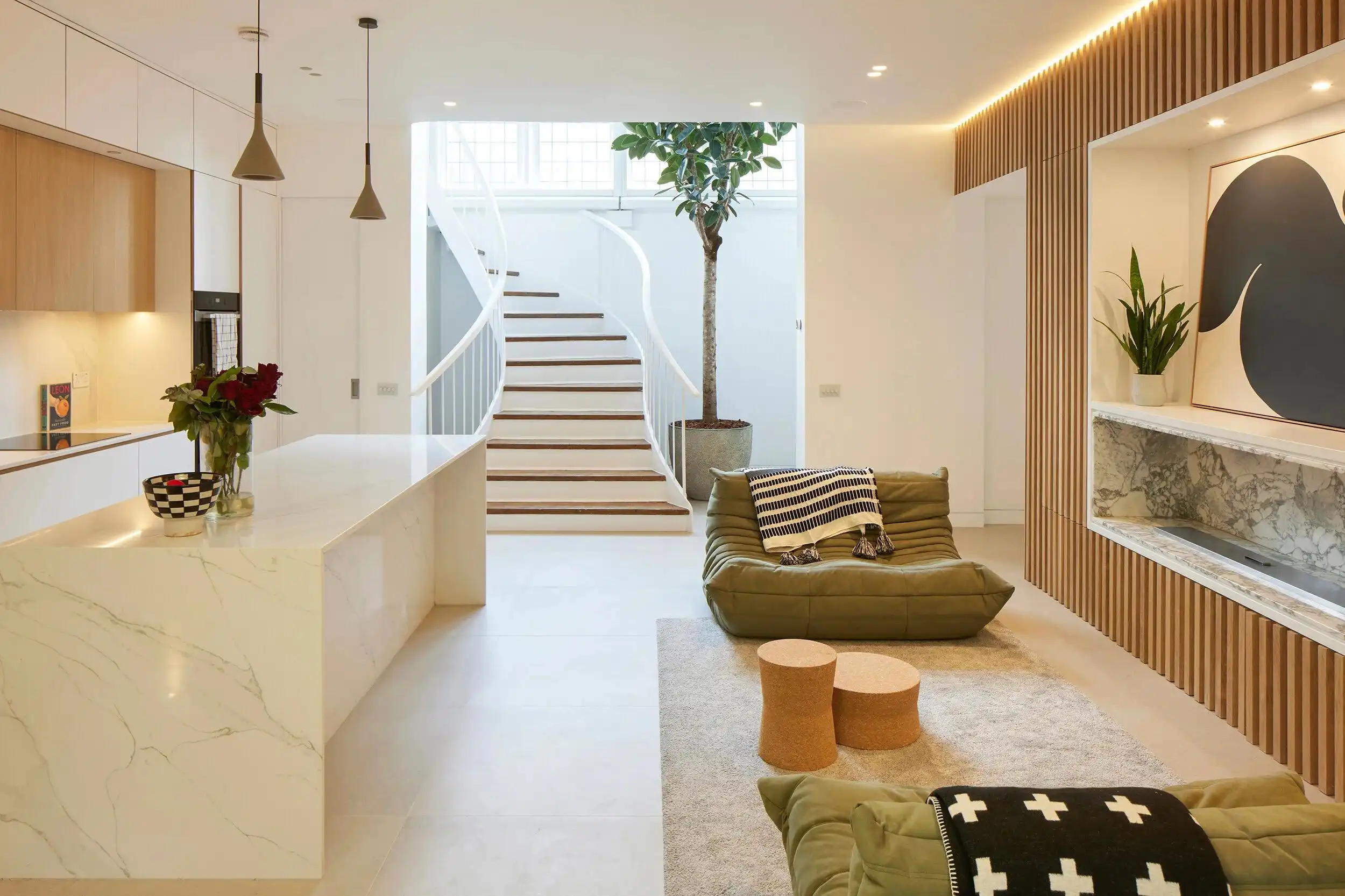
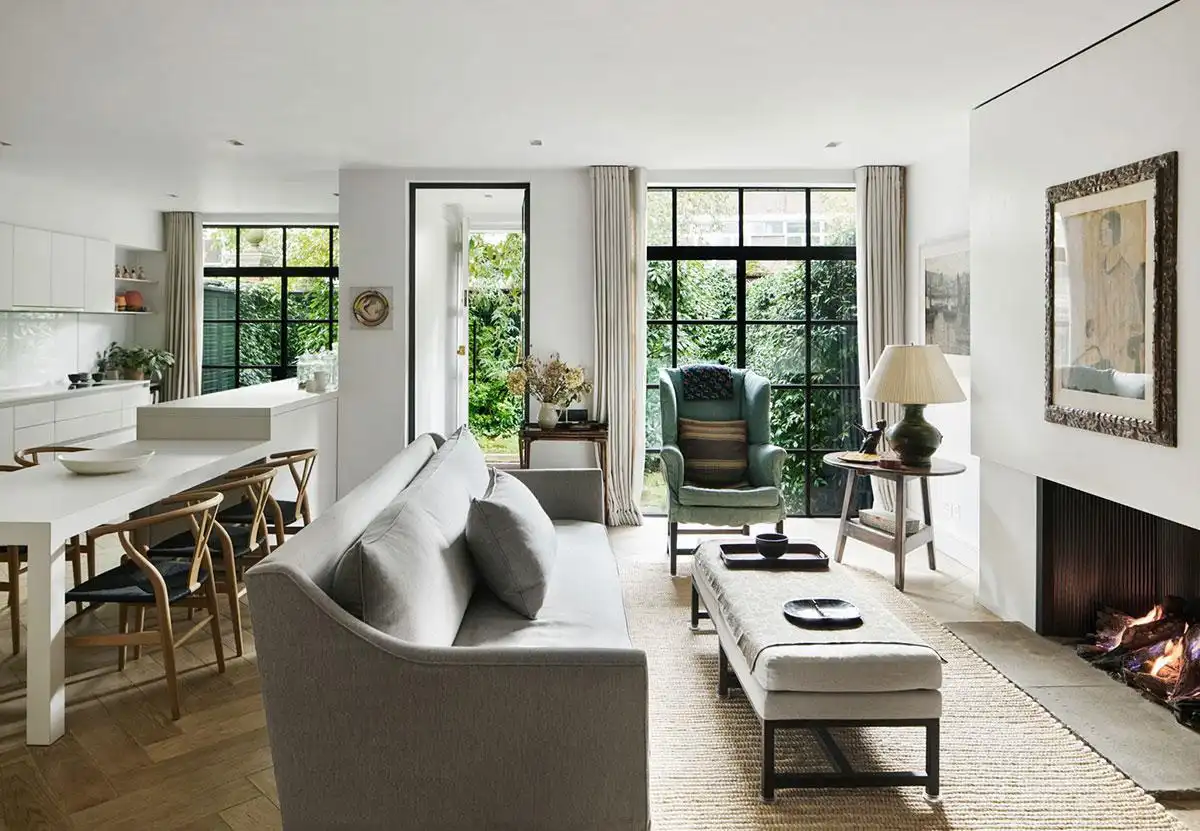
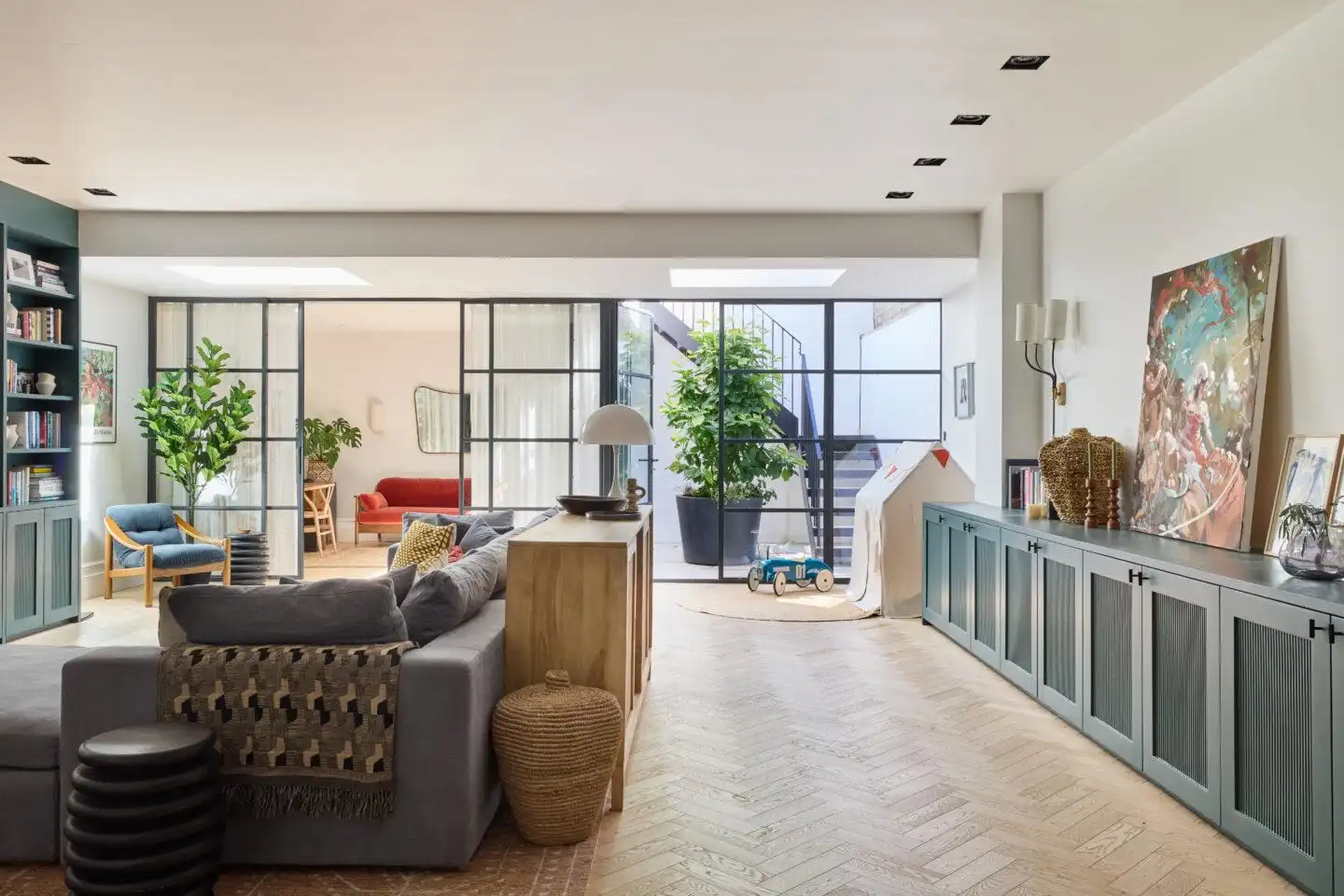
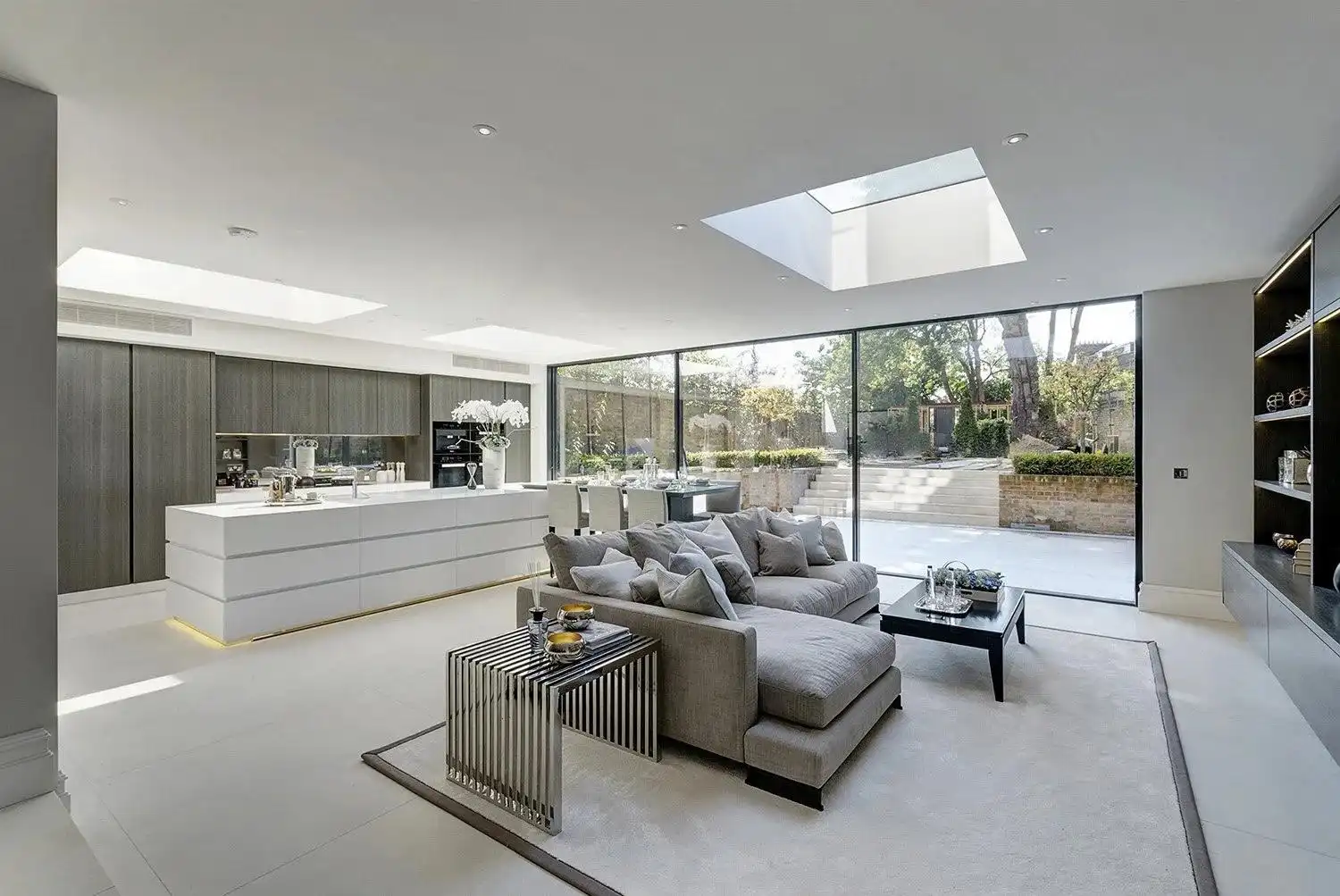
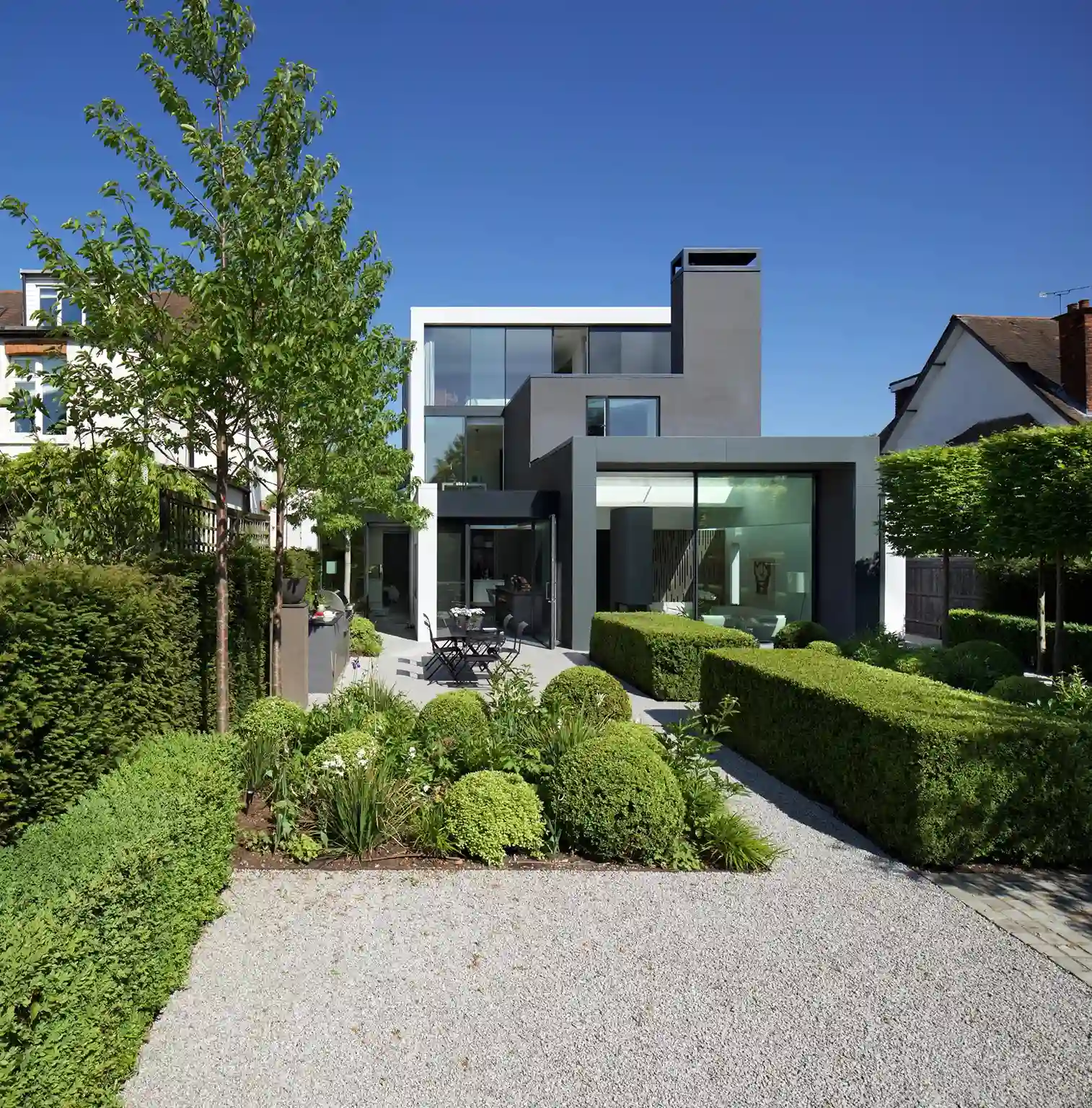
The following comparisons define the boundaries of Modern English Country; they are not comprehensive guides to the other styles. The accompanying images are illustrative comparison examples carried over from the Persian article. They should not all be read as examples of Modern English Country.
English Cottage: a more intimate scale
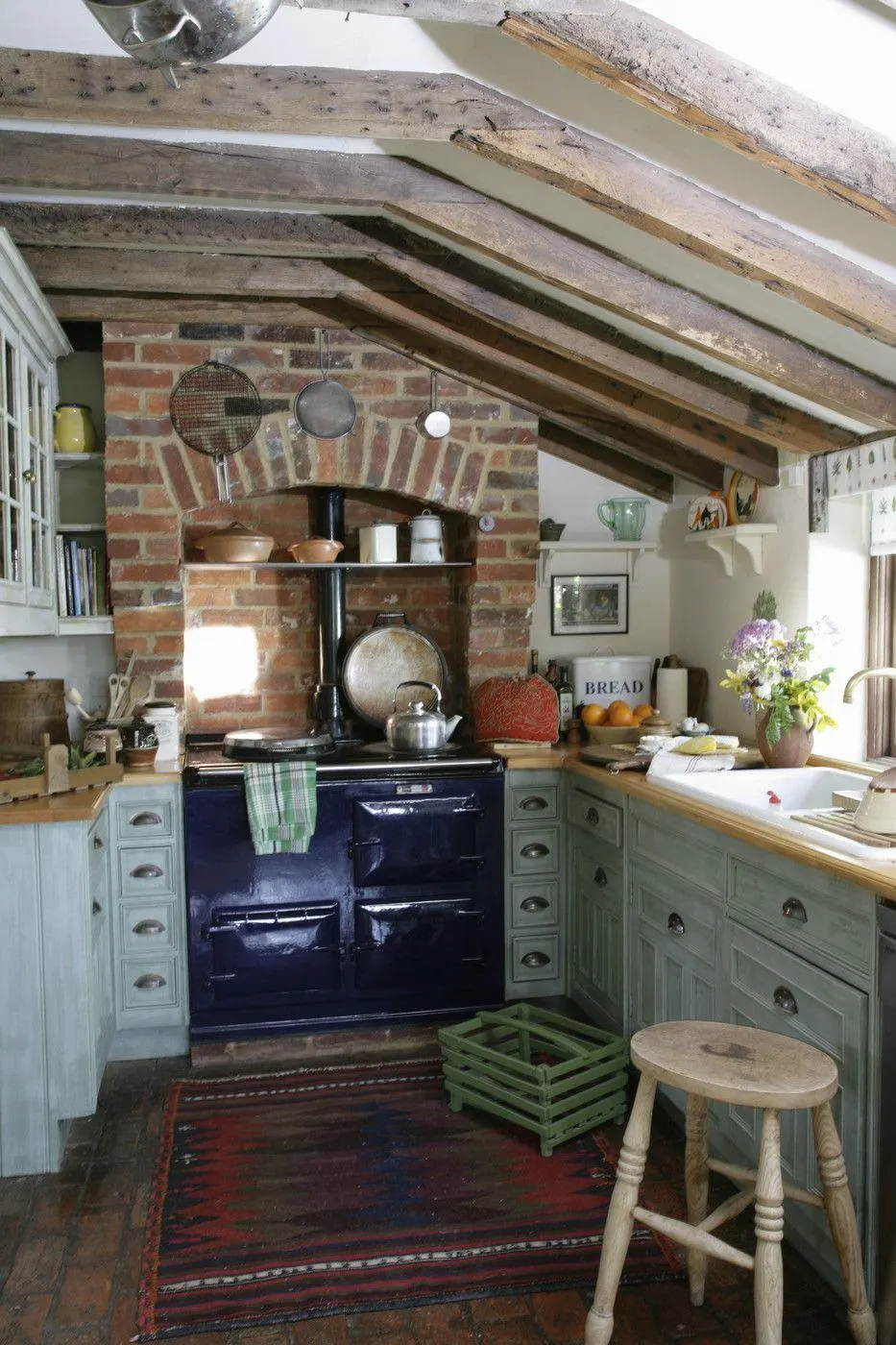
English Cottage is commonly associated with a smaller, intimate rural home and traditional detailing. Modern English Country can also inform a larger house, a new villa or a renovation. They share an interest in warmth and natural materials, but cottage also describes a building type and character, rather than necessarily a contemporary design approach.
Modern Farmhouse: overlapping qualities, different references
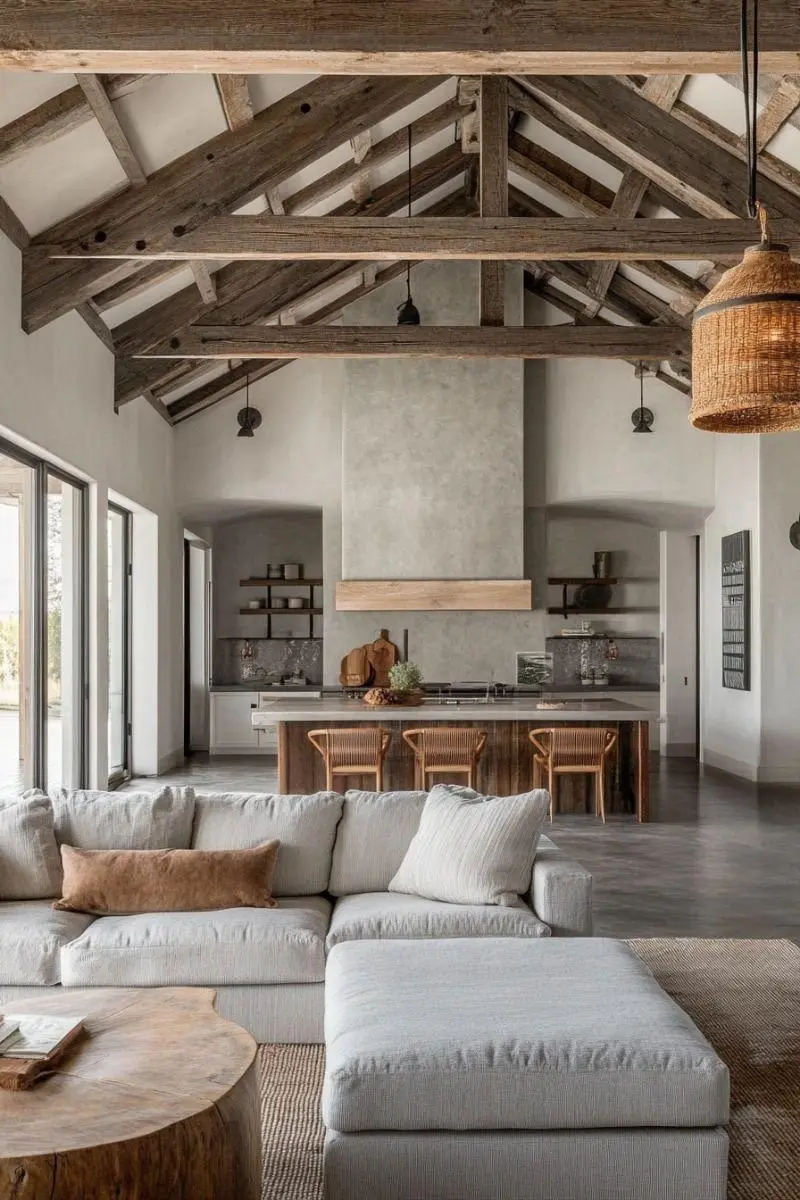
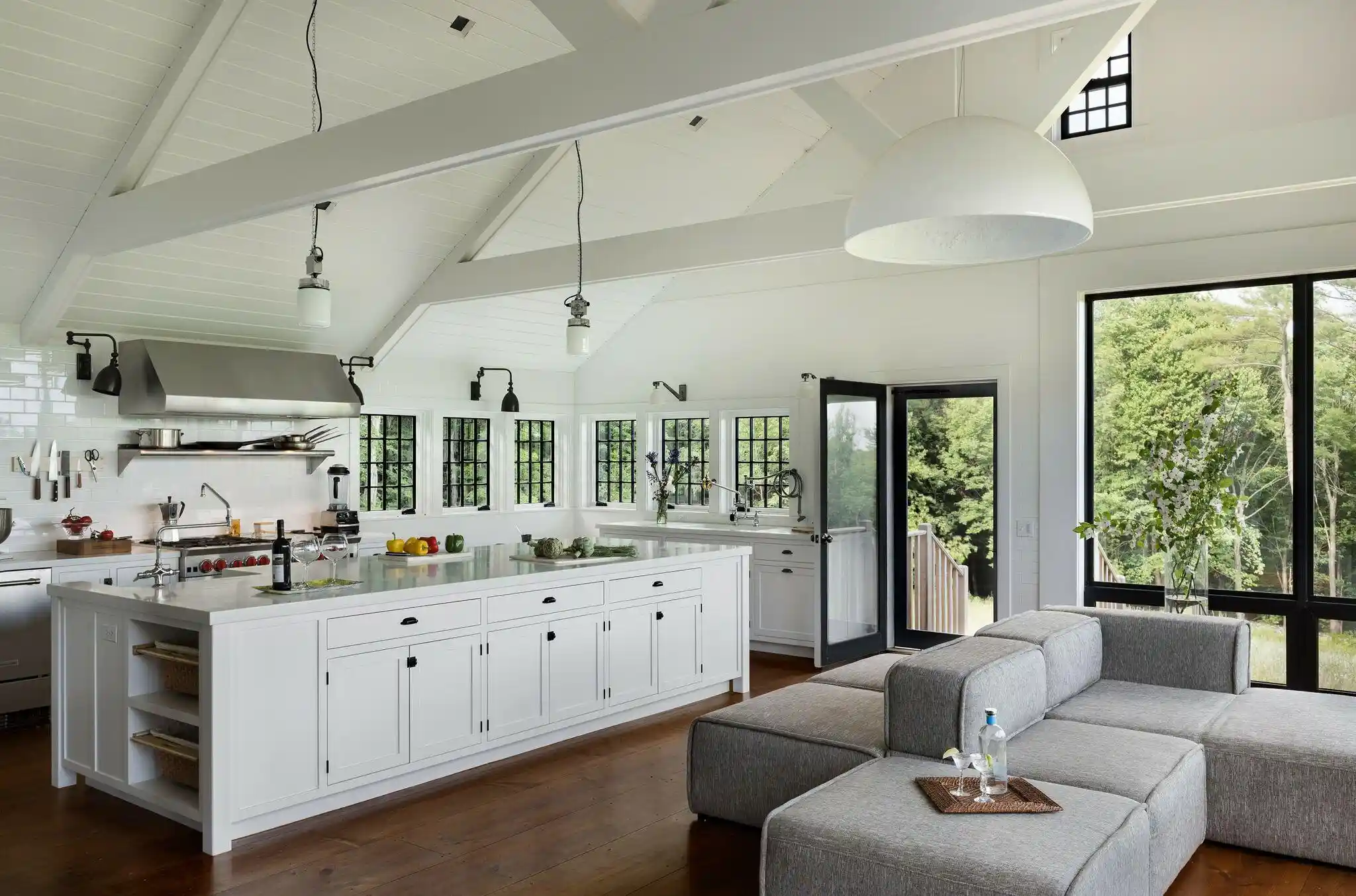
Modern Farmhouse may share timber, neutral colours and simple volumes with Modern English Country. Its references are associated with the farmhouse, particularly in many contemporary American interpretations. Modern English Country can retain a stronger connection with English residential traditions and a layered combination of furniture and textiles. There is considerable overlap, so a single finish cannot settle the distinction.
Scandinavian design: light and simplicity
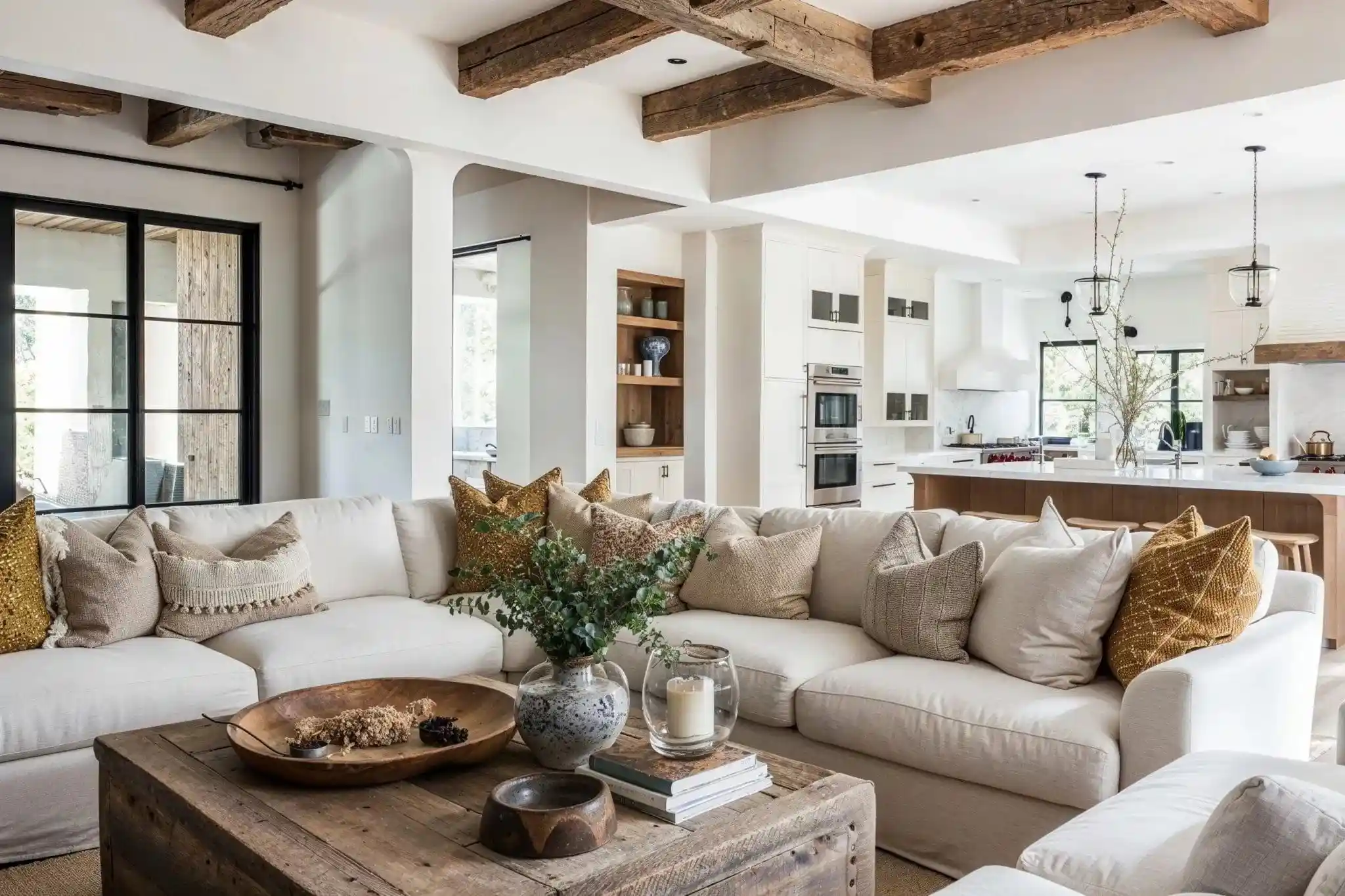
Natural materials, daylight and function are also prominent in Scandinavian design. Some interpretations are more pared back, whereas Modern English Country may give traditional objects, textiles and visual layers a more visible role. Both categories are diverse: it would be misleading to suggest that all Scandinavian interiors lack warmth.
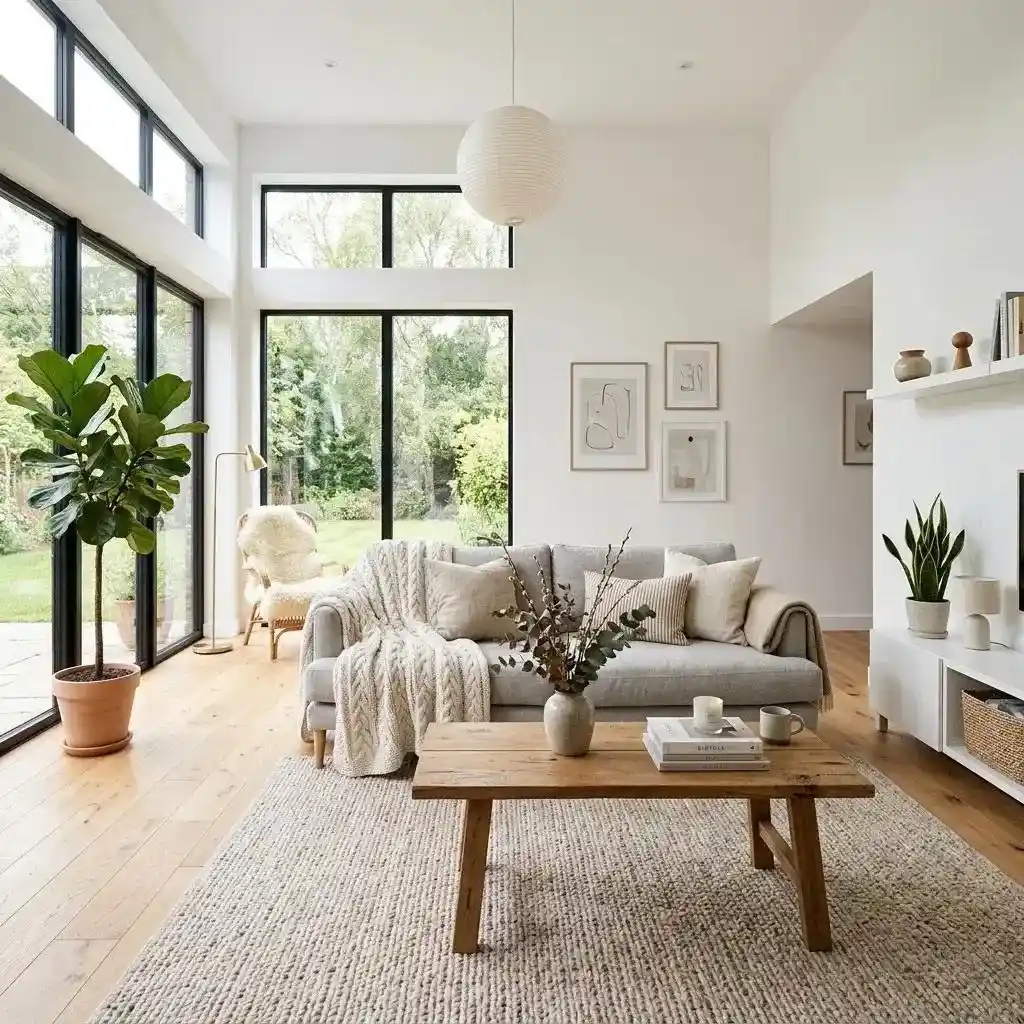
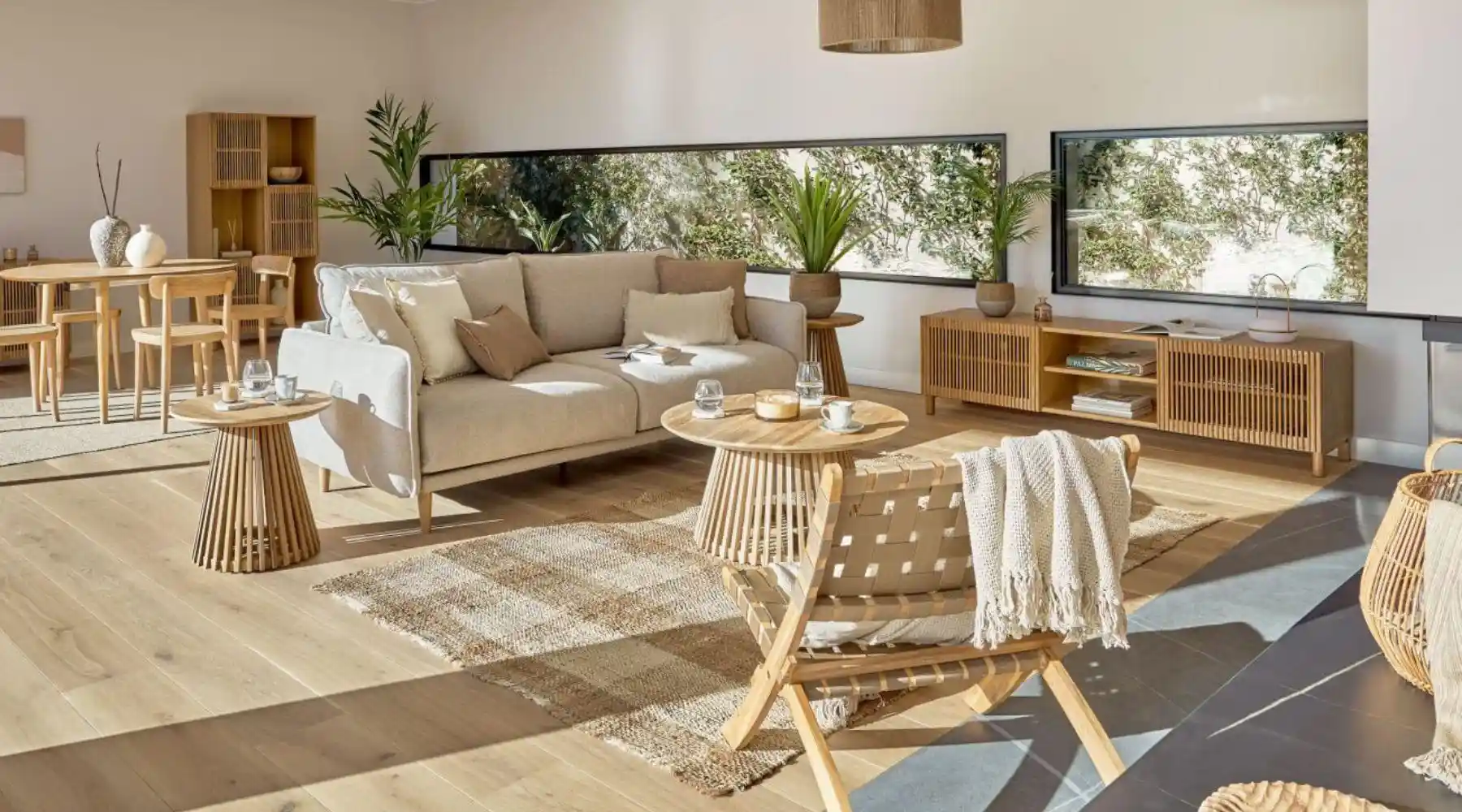
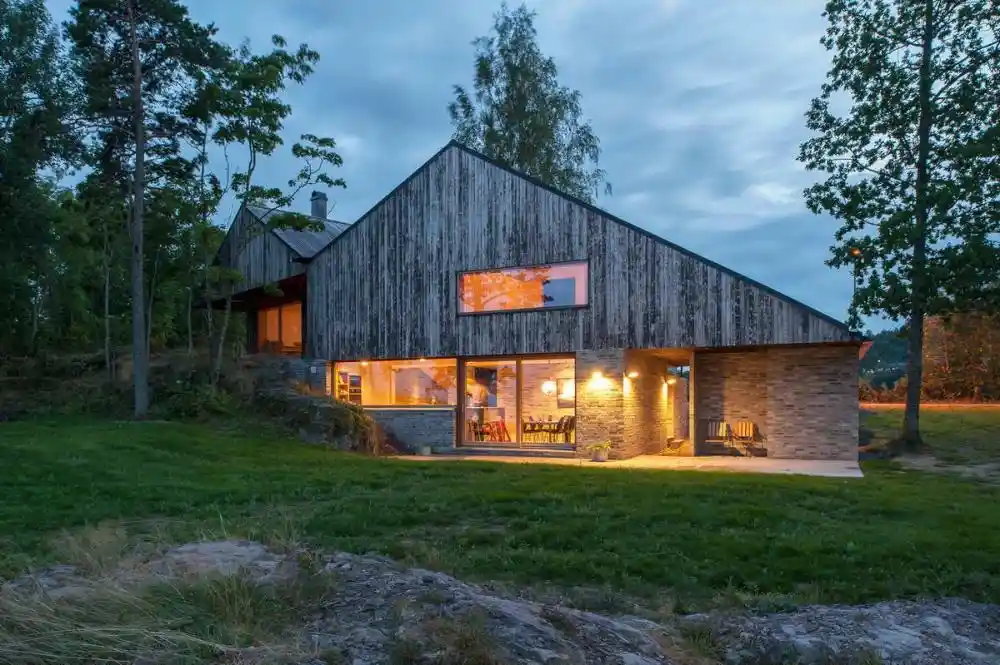
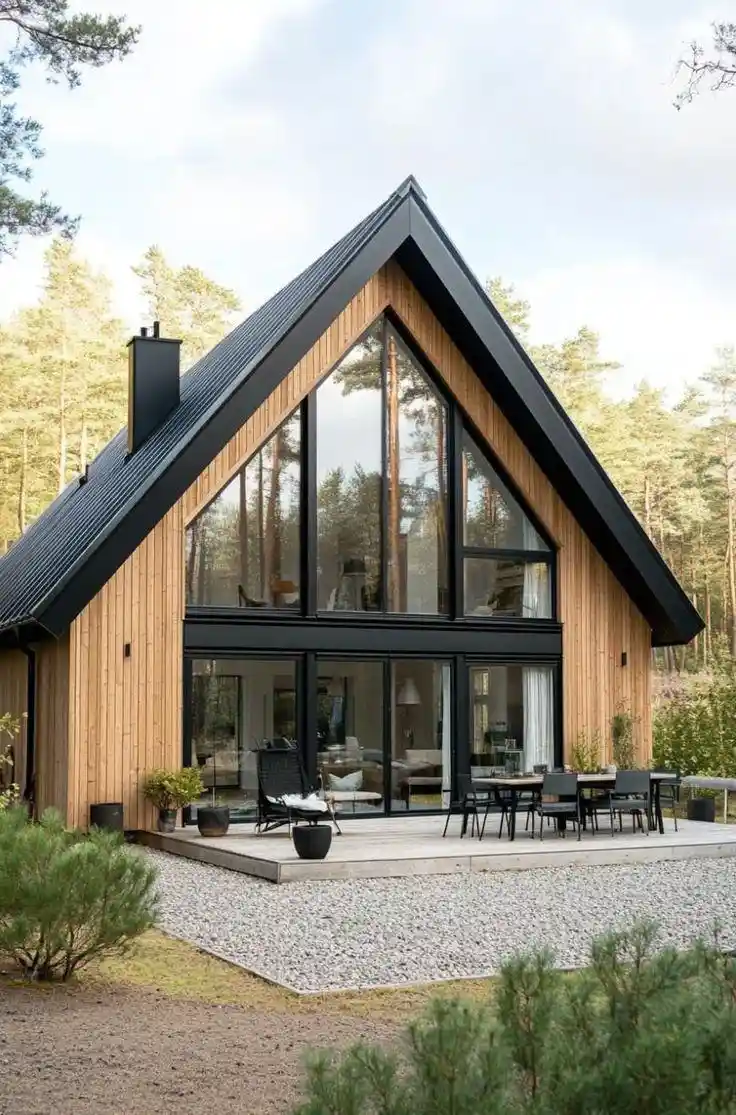
Contemporary English architecture: a wider field
Contemporary English architecture encompasses many approaches, materials and formal experiments. Modern English Country is one possible interpretation of contemporary residential design, not a synonym for every new building in England. Its defining connection is with rural domestic traditions, comfort and the garden.
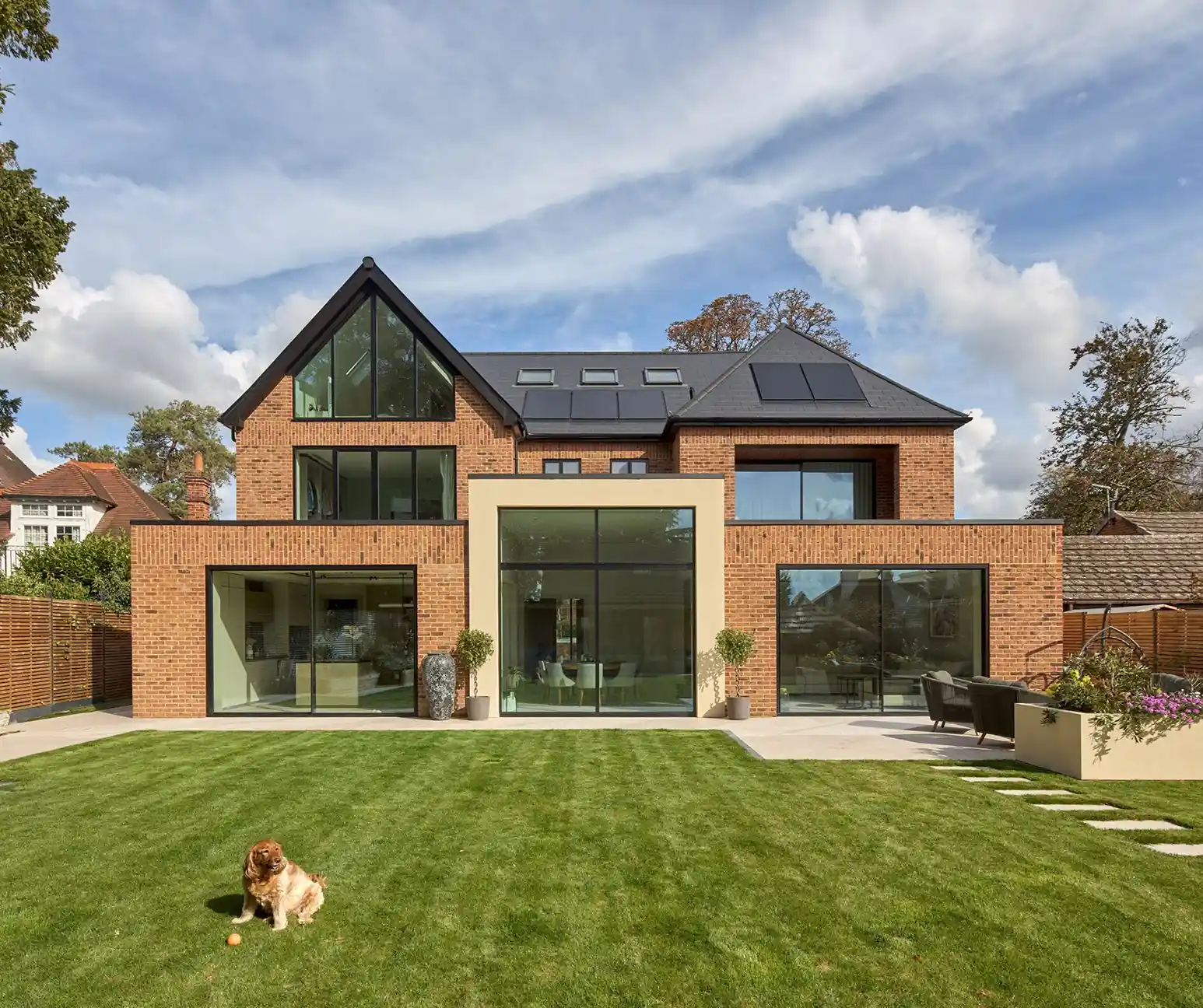
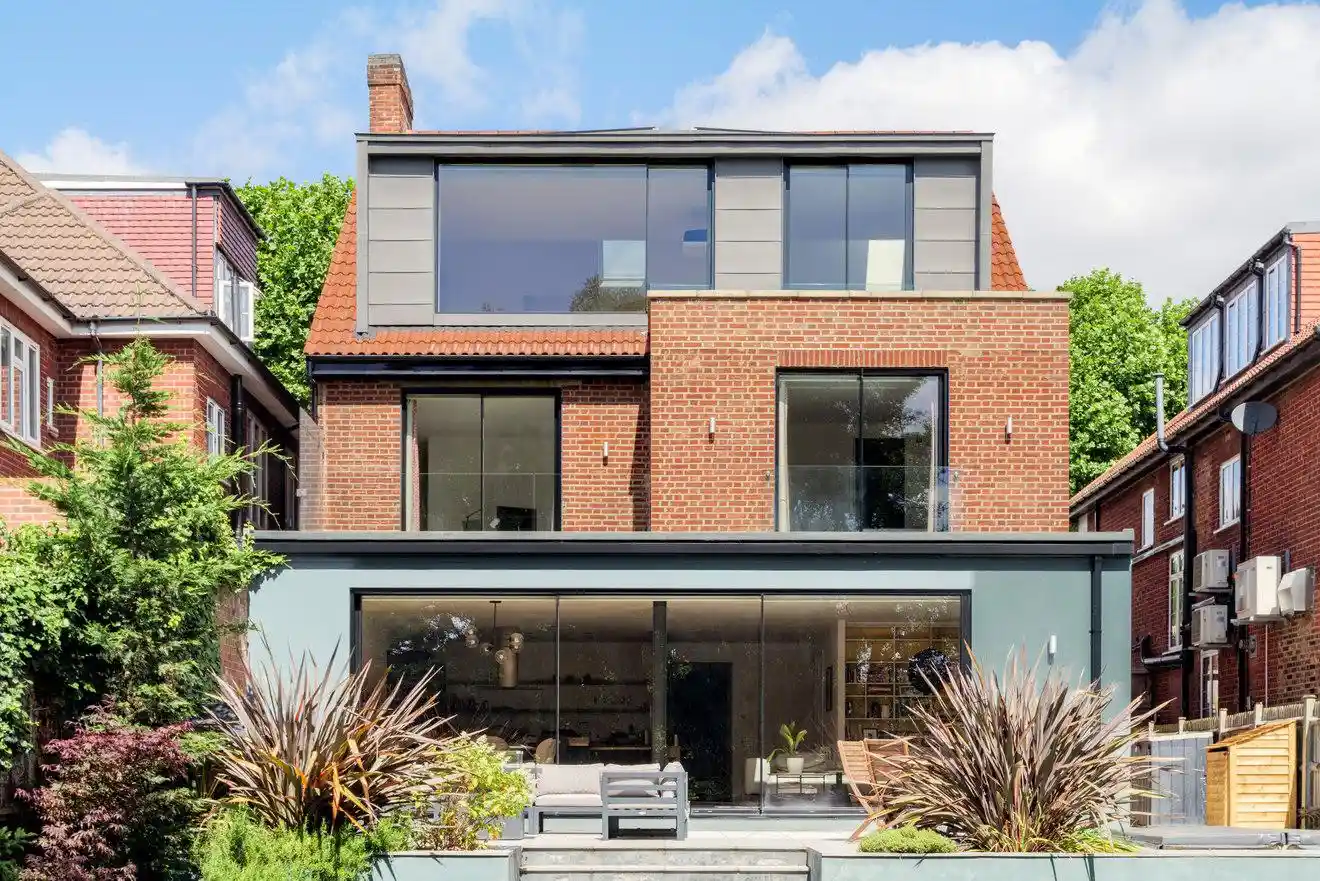
How can you recognise a coherent design?
Look at the relationship between decisions rather than counting traditional features. Do the materials work together? Do the windows serve daylight, views and privacy? Is the furniture comfortable and appropriately scaled? Does English character emerge from proportions and details rather than applied decoration? Will the rooms remain practical when people actually live in them?
Common pitfalls include excessive ornament, too many competing finishes, furniture chosen only for appearance and copying a facade without considering the site. Another weak approach combines superficial country motifs with an interior that has no relationship to them. Establishing a material palette, a scale of detail and priorities for everyday use helps avoid those problems.
Where can the approach be used?
Villas and detached homes offer a direct connection with a garden, making the idea particularly legible. A suburban home or renovation can also use it. In an existing building, valuable elements such as a stone wall or timber beams can remain alongside new spaces and equipment, subject to their condition and the project’s requirements.
An apartment interior can draw on the colours, textures, furniture and lighting without claiming that the entire building belongs to English rural architecture. The extent of the approach depends on the setting, budget and use of the space, rather than a fixed shopping list of country-style objects.
Conclusion
Modern English Country translates the qualities of English rural living into a contemporary home: natural materials, warmth, comfort and a connection with the outdoors. Its strength lies in the coherence of architectural and interior decisions, and in updating everyday life while retaining a sense of home.
Further reading on the historical background
For the background of suburban and country houses, see Historic England’s selection guide to suburban and country houses. This reference concerns historic buildings; it does not establish a separate formal classification for the contemporary approach discussed here.