Modern English Country: Architecture and Interior Design
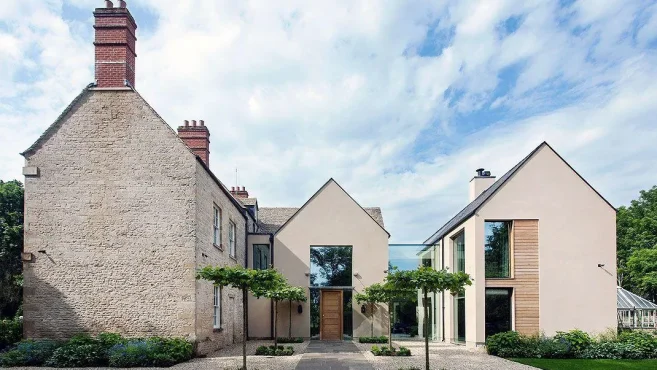
18 August 2026Introduction Modern English Country reinterprets the qualities of the English rural home for contemporary life. Natural materials, comfort and a close relationship with the garden remain central, while layouts become more adaptable and details more restrained. The result is a home with warmth and character, shaped around everyday use rather than a literal reconstruction of…
English Architecture: History, Homes and Contemporary Approaches
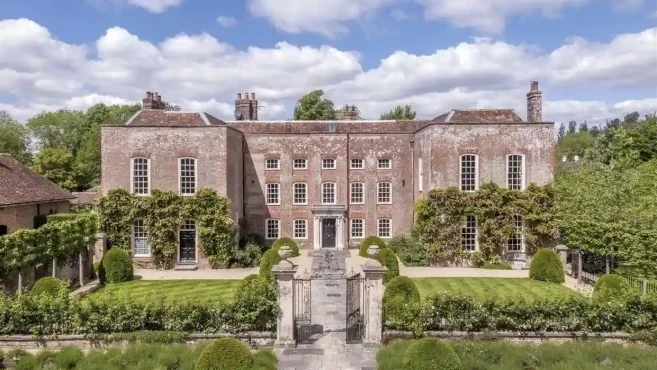
English architecture: three perspectives on one evolving tradition English architecture is not a single style that can be identified by a pitched roof or a brick facade. It is a broad field shaped over centuries by social change, construction practices, local traditions and exchanges with other parts of Europe. Religious, civic and domestic buildings all…

Remarkable Architecture: Dancing House, Machu Picchu and Pompidou
31 October 2022This second study of remarkable buildings by Farid + Arjmand looks beyond unusual appearance. The Dancing House, Machu Picchu and Centre Pompidou offer contrasting lessons about urban context, terrain and the expression of technical systems. Dancing House: movement within the city Frank Gehry and Vlado Milunić designed the Dancing House in Prague. Its contrasting volumes…

Three Remarkable Buildings: Architecture and Design
19 September 2022Remarkable architecture is more than an unusual silhouette. This study by Farid + Arjmand considers three buildings through their spatial organisation, construction and setting. The useful question is how each architectural idea becomes a coherent place. Taj Mahal: symmetry and material contrast Commissioned by Shah Jahan in memory of Mumtaz Mahal, the Taj Mahal in…

What Is Bionic Architecture? Learning from Natural Systems
8 August 2022Bionic architecture studies natural forms and processes as possible sources for architectural ideas. A shell, branching structure or protective surface may suggest an approach, but resemblance to nature is not proof of technical performance. The relevant question is what principle is being studied and how it can be adapted to a building’s materials, scale and…

Lesser-Known Architectural Approaches: Four Perspectives
9 May 2022Architecture extends beyond familiar labels such as modern and classical. Studying less frequently discussed approaches reveals different ways to organise space, express construction and connect buildings with culture. The labels are not equivalent: some describe historical movements, others cultural traditions or theoretical perspectives. This article introduces high-tech architecture, Mannerism, Japanese traditions and ideas associated with…

Gothic Architecture: Elements and Characteristics
28 February 2022Gothic architecture is recognised by pointed arches, ribbed vaults, buttresses and an emphasis on height and light. Its character comes from the interaction of these elements, not simply from a pointed window or decorative pattern. Understanding that interaction makes its buildings more readable. The emergence of Gothic architecture Gothic design developed in medieval Europe from…

How Architectural Style Shapes a Building
21 February 2022Architectural style shapes more than the appearance of a building. It influences proportions, openings, materials, spatial organisation and the relationship between a building and everyday life. A useful design approach responds to its users, climate and setting rather than treating a style name as a complete brief. Style as a coherent design approach A clear…

Postmodern Architecture: Examples Around the World
7 February 2022Postmodern architecture uses historical reference, symbolism, colour and multiple readings to reconsider some conventions of modernism. An unusual shape alone does not establish the category: a building must be read through its history, purpose and setting. The following examples distinguish clear references from useful comparison cases. How to read the examples Our articles on postmodern…

Roman-Inspired and Classical Facades: What Is the Difference?
10 January 2022Comparing Roman-inspired and classical facades begins with terminology. In contemporary Iranian building discussions, “Roman facade” often describes a facade borrowing columns, cornices and arches from classical vocabulary. It is not a precise historical category entirely separate from classical architecture. Shared references, different uses of words Classical architecture covers traditions broader than the current commercial use…