
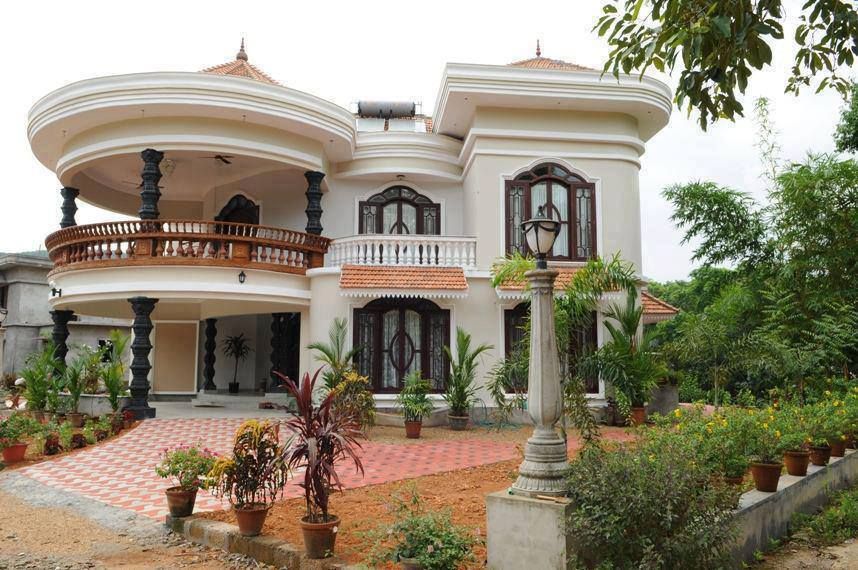
Designing a villa with a Roman-inspired facade starts with proportion and organisation, rather than the amount of ornament. In contemporary usage, the term describes a classical visual language; it is not an exact reconstruction of ancient Roman architecture. Suitability depends on the plan, climate, site and occupants rather than an assumption that every luxury villa needs the same style.
Classical elements and their roles
Columns, capitals, a legible entrance and window surrounds can organise the composition. Establish whether a column is structural or decorative. Explore projects with different facade approaches as references, while accounting for differences in scale. Details taken from a large building need reconsideration before being placed on a smaller villa.

Entrances, windows and symmetry
The entrance should explain the approach and correspond to the actual plan. Symmetry can create order, but should not compromise essential openings or room arrangements. Window surrounds need to relate to opening size and spacing. Assess inscriptions and sculpture against local project requirements and safety instead of assuming a universal permission or prohibition.
Colour and the scale of a villa
White, cream and pale grey are common choices, but not mandatory rules. Contrast, shadow and lighting determine how details are read. A single-storey villa can use fewer, well-proportioned elements. Villas may have one or several storeys; duplex normally refers to a dwelling across two connected levels, rather than a half-storey.

Restrained detailing and materials
These classical facade references show different visual approaches. In practice, the level of ornament should reflect building size and maintenance needs. Stone performance depends on its type, fixing and exposure. Cement-based finishes depend on preparation, workmanship and weather; neither option is invariably faster, cheaper or more durable.
Connecting exterior, landscape and interior
For facade design, coordinate garden levels, the entrance, openings and roof line. Detail fixings, drainage and maintenance access alongside the appearance. interior design can establish related proportions and materials inside. Continuity does not require copying every ornament or using identical style labels: spatial experience and function matter. This article focuses on classical composition at villa scale, leaving full construction specifications and detailed pricing to their own subjects.