
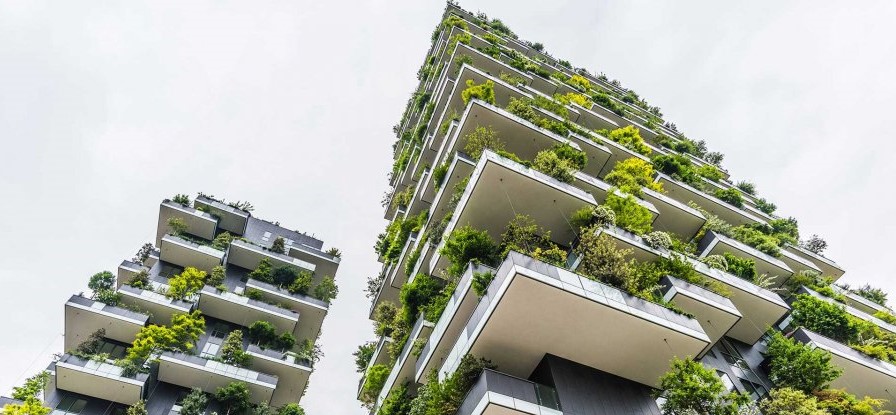
A facade influences a building’s environmental performance by controlling heat, light and air. Calling it sustainable requires more than a green appearance. Its design should connect climate, comfort, materials, maintenance and life-cycle cost with the performance of the whole building.
Environment, cost and occupants
Sustainability brings together environmental impact, affordability and people’s needs. Decisions include reducing energy demand, selecting suitable materials and allowing repairs. Local supply may reduce some transport requirements, but a local product is not automatically preferable without considering performance and service life.
Retaining trees or adding planting can help when suited to the site, water provision and maintenance plan. Environmental improvements should support comfort and use. Visual styles, including Roman-style facades, do not determine sustainability by themselves.

Insulation, windows and junctions
Assess continuous insulation, airtightness, glazing, frames and junction details. Walls, windows and roofs contribute differently to energy losses in different buildings; fixed percentages should not be applied universally. Envelope assessment and energy modelling can help compare proposals for a specific building.
Lightweight and repairable cladding
Lightweight components may simplify transport and installation, but weight alone is not a sustainability measure. Balance it with durability, connections, replacement access and component availability. Repairing useful existing parts can be preferable to replacing an entire system when it meets the project’s needs.
Shading and ventilation
Coordinate shading with glazing and insulation. Requirements vary with season and orientation. Natural ventilation needs assessment against climate, noise, air quality and operation; an opening does not guarantee year-round comfort. Consider summer solar exposure and winter conditions together rather than optimising one season in isolation.

Must a sustainable facade be smart?
No. A well-designed fixed solution may serve a building better than a complex moving system. Dynamic facades respond to a defined control strategy and need operation and maintenance. Compare their costs with expected benefits; neither economic payback nor the need for artificial intelligence should be assumed.
An algae facade example
Hamburg’s SolarLeaf project cultivates microalgae in panels and recovers biomass and solar thermal heat within an integrated system. This is a specialised technology, not an automatic benefit of algae growing on a building surface.

Start with measurable priorities
Establish a baseline and compare insulation, opening and shading options alongside maintenance, comfort and material life. Farid + Arjmand’s facade design work connects these choices to the project rather than adding technology simply because it carries a sustainable label.