
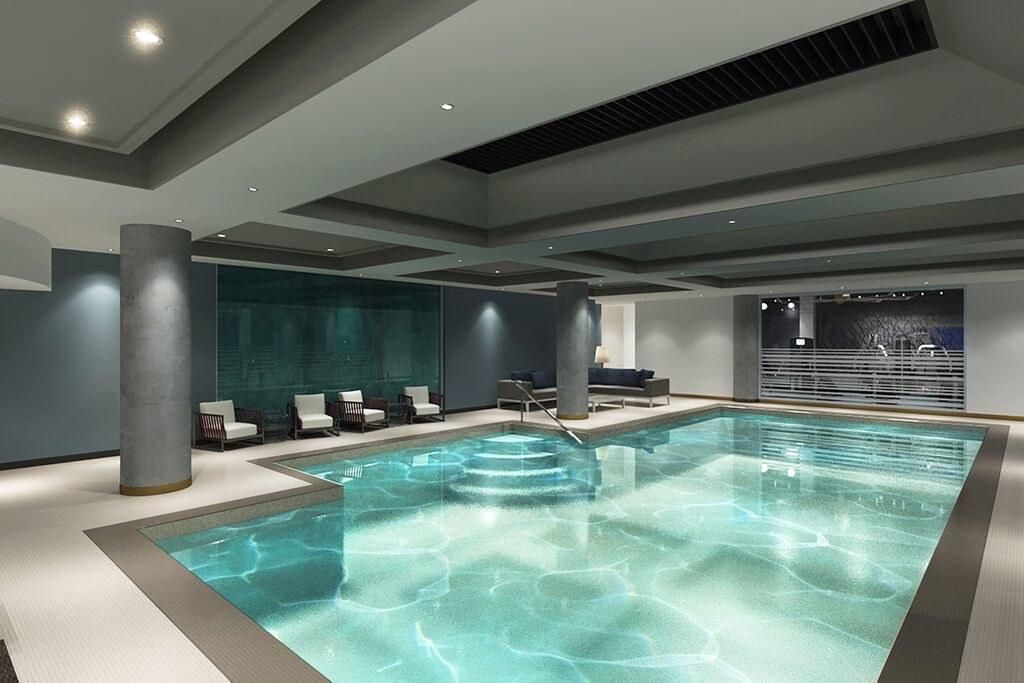
Swimming pool design brings together the shape of the water, construction, equipment and maintenance. A pool can improve the experience of a home, but it needs a running budget and a care plan as well as construction funding.
Establish whether the pool is private or public, who will use it and for which activities. Requirements vary with location and use; a domestic arrangement should not be transferred to a public facility without specialist review.

Location and shape
For an outdoor pool, consider sunlight, shade, wind, neighbours’ views and the relationship to seating and circulation. Landscape design integrates these decisions rather than placing the pool in leftover space.
An indoor pool requires early coordination of humidity, ventilation, envelope and finishes. Interior design connects the water with changing facilities, movement and surrounding surfaces, rather than simply selecting tiles. A rectangular or curved basin should support use and cleaning.

Depth and the basin profile
Depths must respond to users, activities and applicable requirements. There is no universal figure suitable for swimming, play and diving in every project. A deep section does not by itself make a pool suitable for diving.
Diving requires specialist assessment of the landing area, geometry, clearances and equipment against appropriate standards. Transitions between depths need to be clear. A decorative basin profile does not replace this review.

Materials and waterproofing
Concrete, lined and fibreglass systems differ in installation, flexibility and maintenance. Information from a fibreglass pool manufacturer explains that product category, but final selection also needs site, transport and installation assessment.
Waterproofing and connections around pipe penetrations and finishes are fundamental. Attractive tiles cannot compensate for unresolved waterproofing. Review repair access, coping and materials exposed to water and treatment products.
Water circulation and equipment
Coordinate filtration, treatment, controls and any heating with an accessible plant area. Skimmer and overflow systems require different details; their names should not be selected only from a reference image.
Clear water alone does not establish water safety. Operation, maintenance and quality monitoring must suit the system and use. Include energy, water and replacement components in the budget alongside construction.
Lighting, safety and maintenance
Lighting should reveal edges and circulation routes and support evening use. Equipment around water needs to be suitable for its location and coordinated by the relevant specialists. Our article on building facade lighting provides wider architectural lighting context, not pool electrical specifications.
Review slip resistance, controlled access, depth identification and maintenance arrangements. Inspection points, drains and equipment should remain accessible. A successful design supports comfortable use and practical care, rather than only a convincing final image.