
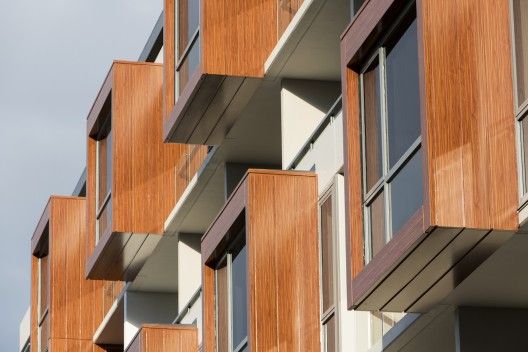
An apartment facade connects individual homes and shared spaces with the urban scene. Its design needs to address plans, privacy, light and maintenance rather than a single attractive front view. Different styles can serve the same underlying goal: an envelope that fits residents’ lives and the site.
Begin with homes and facade rhythm
Relate windows, balconies and floor divisions to actual rooms. Review daylight, outlook and privacy before changing window dimensions. Rhythm should not repeat an element at the expense of function. Assess corners and side elevations from pedestrian routes as well as the main frontage.

A new idea within its context
These contemporary facade references can prompt different possibilities, but the street and neighbouring buildings need assessment. Novelty does not establish quality. Check local approvals and constraints before selecting projections or changing materials.
Materials and colour
Compare modified timber, metals, finishes and concrete through exposure, service life and maintenance. A newer product is not automatically more durable. Contrast can clarify the composition, but colour works through proportion and lighting rather than a claim that all modern architecture lacks it.
Local references and privacy
Brick and perforated screens can reinterpret familiar architectural elements without copying an old building. Test screening against daylight and views in daytime and at night: machine-cut patterns do not automatically guarantee privacy. Coordinate openings with the needs of each home.
Light wells and shared maintenance
A light well forms part of residents’ experience even if it is absent from the street view. Choose cleanable surfaces and practical repair access. Planting requires suitable light and irrigation. Decisions about the shared envelope also need coordination among the relevant owners and users.

Modern and Roman-inspired approaches
These Roman-inspired facade principles describe a different visual language from a modern composition. Style labels alone do not predict residents’ feelings; assess scale, detailing and context. The facade design service connects those decisions with performance and implementation. Detailed pricing and individual material specifications remain distinct subjects.