
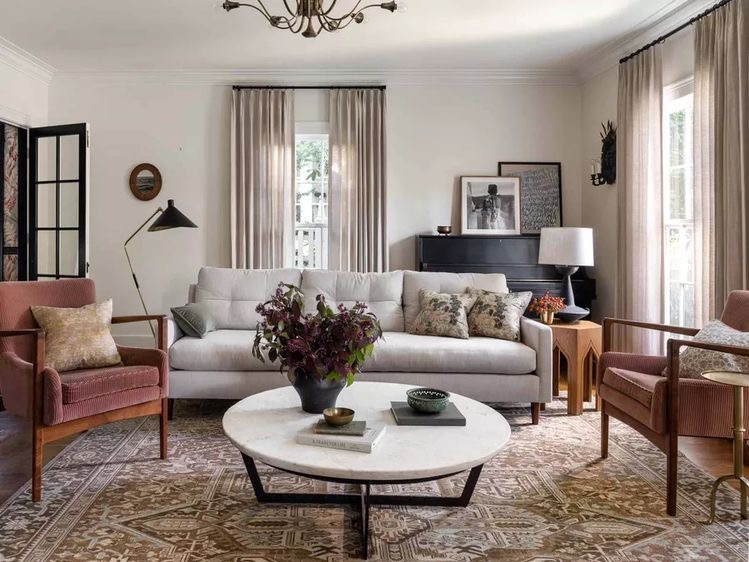
English interiors cannot be reduced to one fixed style. Different periods and movements have shaped the tradition, often sharing an interest in material quality, comfort, detail and spaces that feel lived in.
This article focuses on interior elements and their composition. The history of buildings is explored separately in English architecture. Comparisons with postmodern architecture examples can reveal differences without treating them as one tradition.

History as a background, not a single formula
Tudor, Georgian and Victorian periods and the Arts & Crafts movement contributed different domestic vocabularies. Furniture and details vary, so a room with a fireplace or patterned wallpaper cannot automatically be assigned to one period.
In interior design, proportion, craftsmanship and comfort can inform a contemporary home without recreating a historical house. Test each element against room size, daylight and the way the space is used today.

Colour and layers
Cream, beige, brown, green and other nature-inspired tones can create a coherent background. Deeper blue, red or dark green may appear in furniture, textiles or a selected surface. The balance matters more than a prescribed list.
Floral, striped, checked and damask patterns appear in different examples; they do not all need to be combined. Repeat a controlled set of colours and balance pattern scales so the layers remain readable rather than crowded.
Furniture and sociable seating
Choose furniture for comfort, workmanship and scale. Older and contemporary pieces can sit together when proportions and colours connect them; a matching suite is not essential.
Arrange seating for conversation and straightforward access. In a small room, two comfortable chairs and an open route may work better than a large ornate collection. Details can range from carved components to simpler forms according to the chosen interpretation.
Timber, curtains and fireplaces
Timber may appear in doors, shelves, tables or selected wall details. Curtains and textiles add depth, but their scale and fullness should respond to windows, daylight and circulation rather than a decorative formula.
A fireplace forms a focal point in many traditional homes but is not a requirement for every English-inspired interior. Arrange seating around it without interrupting use or access. A working fireplace also needs appropriate technical design, beyond its visual surround.
Contemporary interpretations
Modern English can simplify detail while retaining comfortable furniture, timber, rich colours and textiles. Modern English Country reinterprets the warmth of rural homes and their relationship to nature; it is discussed fully in a separate article.
Modern Farmhouse shares some rural values and natural materials, but it is not exclusively English. Contemporary English Interior may communicate identity through proportions and finishes rather than reproduce historical elements.
English Eclectic and controlled variety
An eclectic reading combines furniture, art and textiles from different periods. Colour, scale and composition create the relationship; age or novelty alone does not make the collection coherent.
Begin with a comfortable layout and clear circulation, then add layers gradually. Choose a focal point and leave breathing space around it. Warmth and character emerge from objects that suit everyday life rather than an accumulation of ornament.