
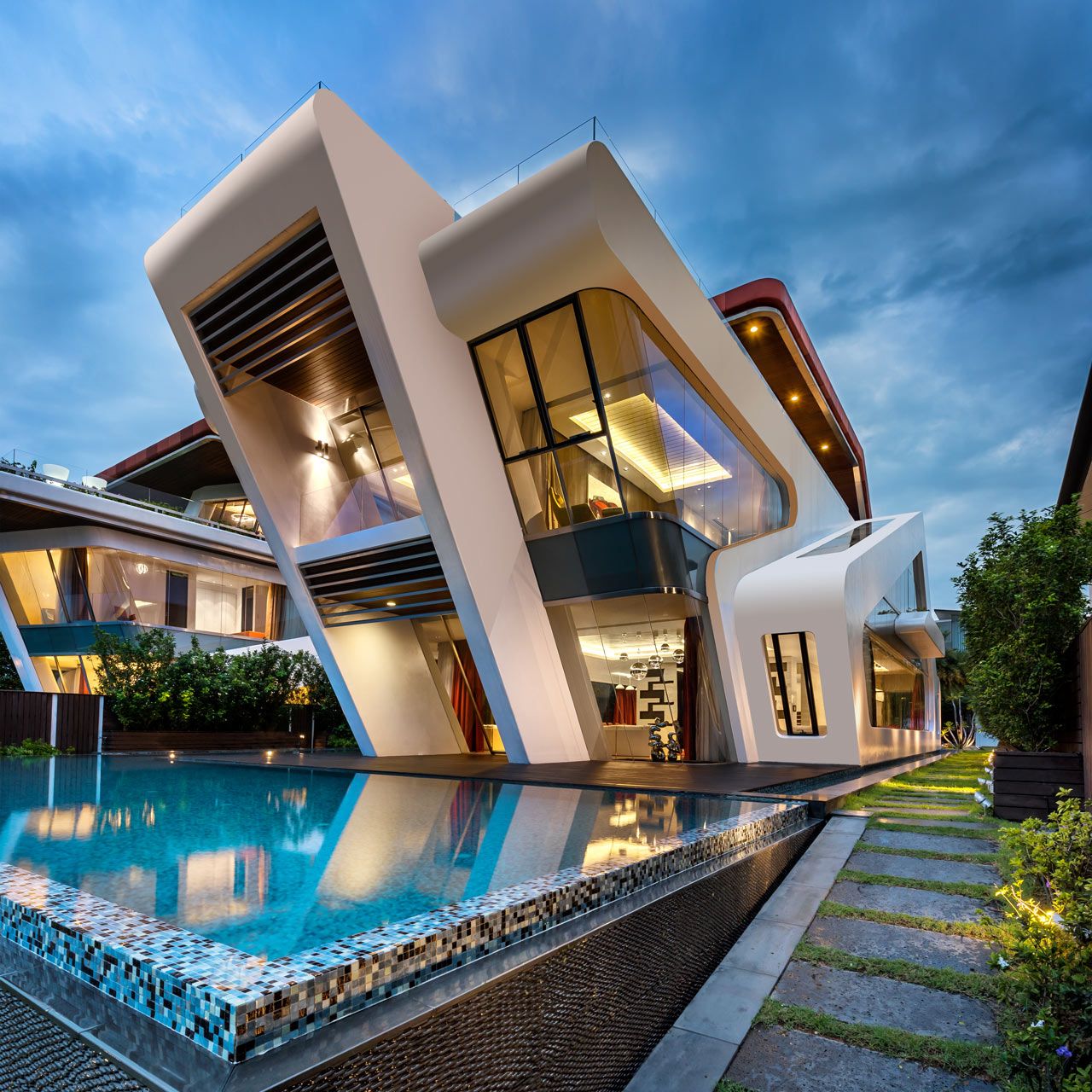
Facade design fees are different from the cost of buying and installing a facade. Fees reflect expertise, time and agreed deliverables, while construction includes materials, fixings, access and site work. Area or style alone cannot support a reliable comparison. This article explains cost factors rather than providing a fixed price or current tariff.
What determines the design fee?
Consider working area, number of elevations, height, available drawings and the need to survey existing conditions. An initial concept differs from a model, junction details, construction drawings and engineering coordination. Establish the number of alternatives, meetings, revisions and information level before requesting a proposal.

Style and materials within the scope
A Roman-inspired stone villa facade may involve different detailing from a more abstract composition. These facade references show visual options, not construction prices. Neither the classical nor modern label establishes a universal fee.
Material choices and estimates
Stone and brick vary by type, dimensions and detailing. Modified timber is not absolutely waterproof and needs appropriate care. Bayramix is an applied finish, while large ceramic pieces require a suitable installation system. New materials are not invariably cheaper or better; a product name does not establish durability or whole-wall thermal performance.
Other systems and installation costs
Glass costs depend on glazing, frames, junctions and performance. Composite panels need assessment of product composition, fixings and fire requirements. Trade-named finishes require specific product information. Cast-in-place concrete and precast pieces differ in weight, fabrication and installation. These are estimating considerations rather than comprehensive material specifications.

Separate design from construction
Construction proposals can include materials, substructure, labour, equipment, access and removal of existing finishes. Some items are measured by area, but quantities and units vary; not every cost is a simple square-metre rate. Compare proposals with equivalent assumptions and a clear validity date.
A clear brief before requesting a quote
Provide the site, drawings, photographs, objectives and expected detail level. Specify deliverables and exclusions. The RIBA guide to architectural fees explains scope-based considerations, not an Iranian tariff. For facade design, agree stages, revisions, coordination and delivery dates in writing. A useful estimate belongs to a defined project rather than being one number for every facade.