
Architecture extends beyond familiar labels such as modern and classical. Studying less frequently discussed approaches reveals different ways to organise space, express construction and connect buildings with culture. The labels are not equivalent: some describe historical movements, others cultural traditions or theoretical perspectives.
This article introduces high-tech architecture, Mannerism, Japanese traditions and ideas associated with Charles Jencks. Bohemian interiors are discussed separately; grouping these subjects for study does not make them a single movement.

High-tech architecture
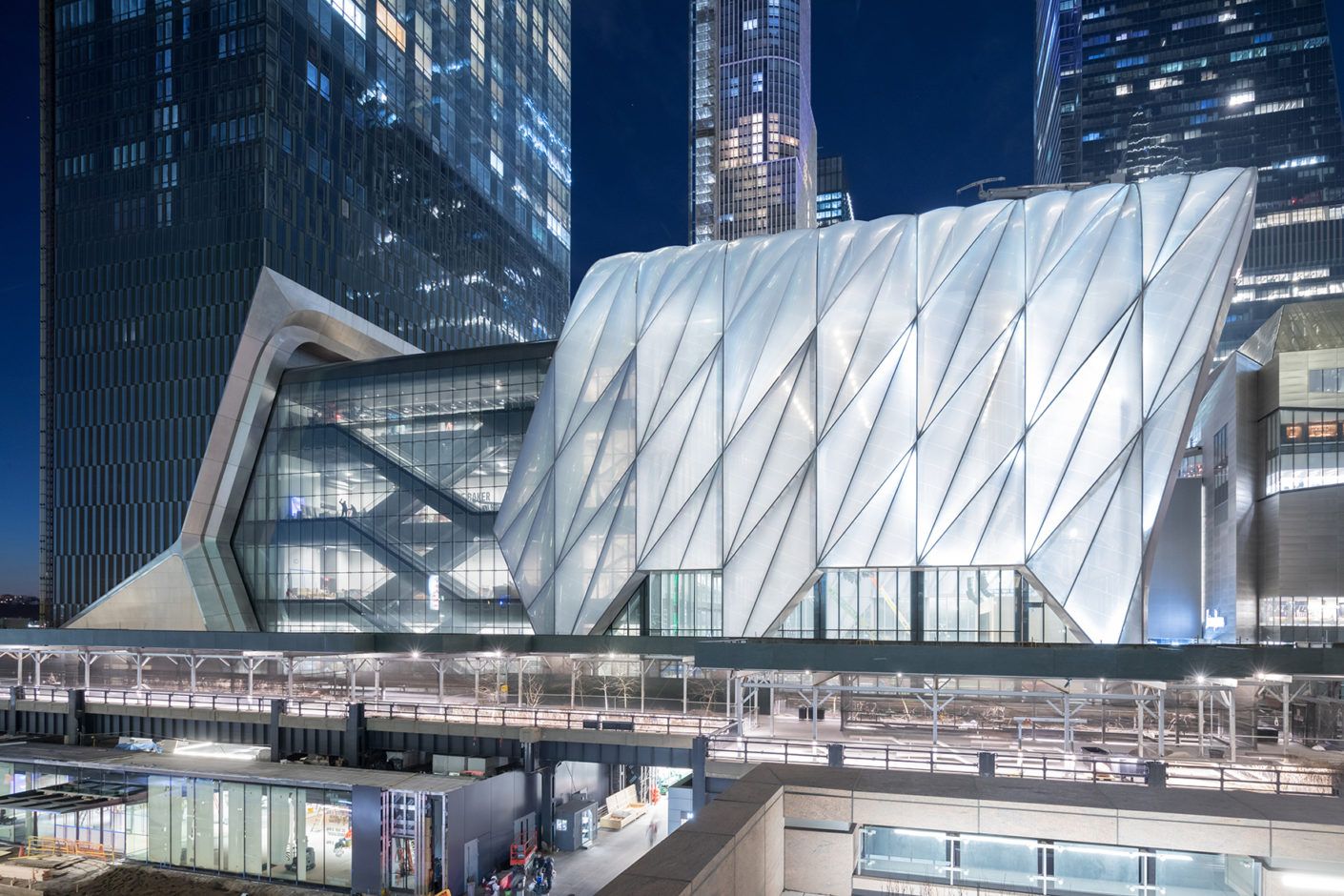
High-tech architecture makes structure, connections and building services part of architectural expression. Glass and metal are common, but materials alone do not determine whether a building belongs to this approach.
The Centre Pompidou in Paris, designed by Renzo Piano and Richard Rogers and opened in 1977, is a well-known example of technical elements contributing to the building’s identity. Advanced technology in an earlier period does not make the Egyptian pyramids examples of the contemporary high-tech movement. In facade design, expressing a real construction joint differs from adding a decorative metal component.

Mannerism
Mannerism is studied in relation to sixteenth-century art and architecture and the later Renaissance. Classical proportions and conventions may be deliberately disturbed to produce visual tension or an unexpected spatial experience.
Elaborate ornament alone does not establish a Mannerist design. Read the relationship between columns, openings, stairs and the sequence of spaces. A building’s historical context offers more evidence than resemblance to an isolated reference image.
Japanese architectural traditions
Japanese architecture is not one unchanging style. Many examples nevertheless explore a close relationship between rooms and gardens, filtered daylight and adaptable boundaries formed by movable elements.
In interior design, these ideas can inform flexible use, careful circulation and reduced visual clutter. Low furniture and a neutral palette do not by themselves create a meaningful Japanese approach. Choices should respond to the occupants’ lives, materials and actual setting.
Jencks and a cosmological reading of architecture
Some of Charles Jencks’s interpretations connect architecture with ideas about the universe and the complexity of natural systems. Treat this as a theoretical and critical perspective rather than assigning every freely shaped building to a separate style.
A critic’s interpretation can differ from an architect’s stated intentions. Reading a project through Jencks’s ideas is therefore different from claiming that its designer explicitly followed them.
Comparing approaches without copying labels
Compare the period, cultural setting, spatial organisation and construction logic. Then identify the decision that can help the current project. A building need not reproduce a complete historical vocabulary to learn from it.
An architecture firm should be able to explain how its idea responds to users, climate and construction constraints. A recognised label does not guarantee quality; the value lies in turning knowledge into coherent and workable design decisions.