
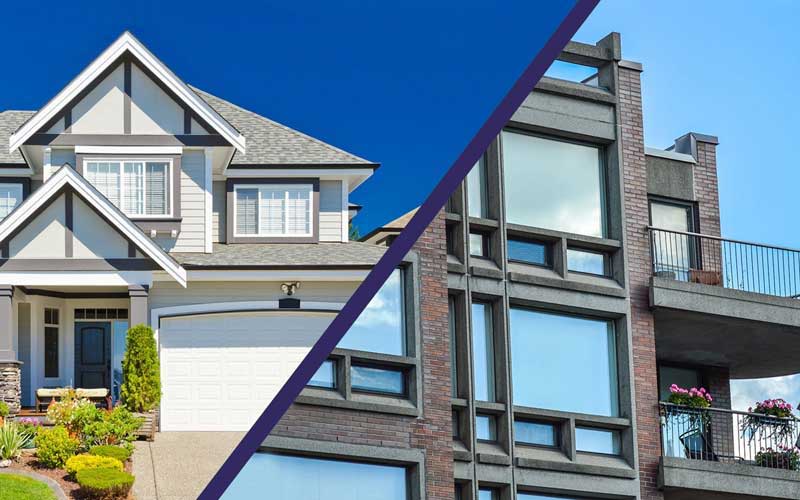
A facade contributes to a building’s identity and relationship with its surroundings. Coordinate it with the plan, structure and services from the outset, even when cladding is installed later. Villas and apartment buildings have different priorities according to the site, occupants and number of units, rather than one being inherently better architecture.

Use and privacy
A villa may be a permanent home or a place for occasional stays, while apartments accommodate several households and shared spaces. Understanding villa style selection helps establish identity without confusing architectural style with occupancy. Both building types need daylight, comfort and privacy; the project determines how these are achieved.
Plans and repeated openings
Apartment rooms and balconies often repeat over floors, making opening alignment and coordination between units important. A villa may connect to a garden on several sides, but still faces site, structural and regulatory constraints. Villas are not necessarily larger, and design flexibility does not mean that requirements can be ignored.
Controls and services
Smart controls may operate shading, lighting and equipment, but do not determine the cladding material by themselves. Coordinate outdoor equipment and routes with the elevation and consult services specialists about infrastructure. Detailed controls specifications are a separate subject from this facade comparison.

Materials and context
In facade design, select a material system for exposure, appearance, budget and maintenance. Consider junctions at windows, balconies and changes of finish, alongside the building’s relationship to the street or garden. A system may suit both types with different detailing; there is no universal villa-only or apartment-only material.
Maintenance and cost
Facade area, height, access and fixing methods influence construction and upkeep costs. Multi-unit buildings also need clear responsibility for shared elements. Compare alternatives with equivalent specifications, rather than inferring cost solely from the architectural style or building type.

Start with project information
Gather plans, orientation, unit numbers and intended outdoor use, then prioritise privacy, light and maintenance. These facts make the villa–apartment comparison useful and prevent applying an attractive solution to an unsuitable setting.